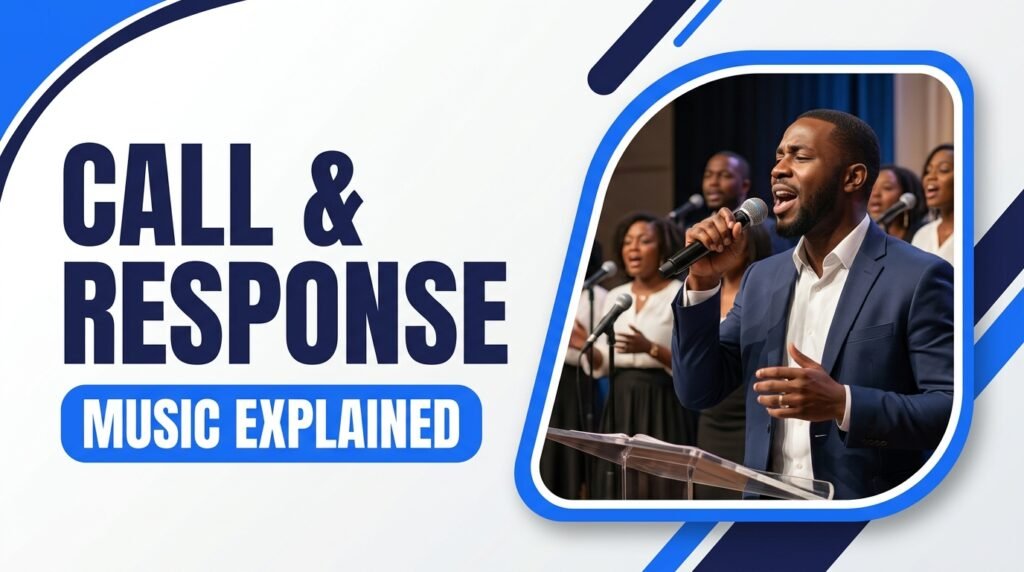
Have you ever heard a singer perform a line and then watched a choir or audience sing something back? This back-and-forth pattern is called call and response in music. It makes songs more interactive and gives performers a way to communicate with their listeners.
This musical technique appears in many styles, including gospel, jazz, blues, folk, reggae, and popular music. Sometimes a lead singer starts the exchange, and a group answers. In other performances, one instrument plays a short phrase, and another instrument responds.
In this guide, you will learn what call and response means, where it came from, how it works, and how musicians use it in different types of music.
What Is Call and Response in Music?
Call and response in music is a musical pattern in which one singer, musician, or group performs a short phrase called the call, and another singer, musician, or group answers with a response.
It works like a musical conversation. One person starts the exchange, and another person replies.
The response can repeat the original phrase, answer a question, or introduce a different musical idea. It may use the same melody or a completely different rhythm.
For example:
- Leader (Call): Are you ready to sing?
- Group (Response): Yes, we’re ready!
This simple exchange demonstrates how two groups can communicate through music.
Call and response can happen between:
- A lead singer and a choir.
- A solo musician and a band.
- Two different instruments.
- A performer and an audience.
- Two groups of singers.
The pattern can be simple or complex. Some responses repeat the same words, while others change throughout the performance.
Example 1:
A lead singer performs, “Everybody clap your hands!” The audience answers, “Clap your hands!”
This example shows how a performer can use call and response to encourage audience participation.
How Does Call and Response Work?
Call and response follows a simple musical structure. One performer starts with a phrase, and another performer or group answers it.

The exchange usually follows three steps:
1. The Caller Starts the Phrase
The caller is the person or group that begins the musical exchange.
The caller might sing a short sentence, play a melody, or perform a rhythm on an instrument.
2. The Responders Answer
The responders listen to the first phrase and provide an answer.
Their response may repeat the original words, complete a musical idea, or introduce a different phrase.
3. The Pattern Repeats
The caller and responders continue exchanging phrases throughout the song.
The pattern may repeat several times, with changes in rhythm, melody, volume, or lyrics.
Example 2:
Caller: Where are we going?
Responders: To the place where dreams come true!
This example uses a question-and-answer pattern. The first singer asks a question, and the group provides an answer.
Example 3:
Caller: Clap your hands!
Responders: Clap, clap, clap!
Here, the group responds with a rhythm instead of repeating the caller’s complete phrase.
History of Call and Response in Music
Call and response has deep roots in African musical traditions. In many African communities, music has been a shared activity involving singing, dancing, storytelling, and group participation.
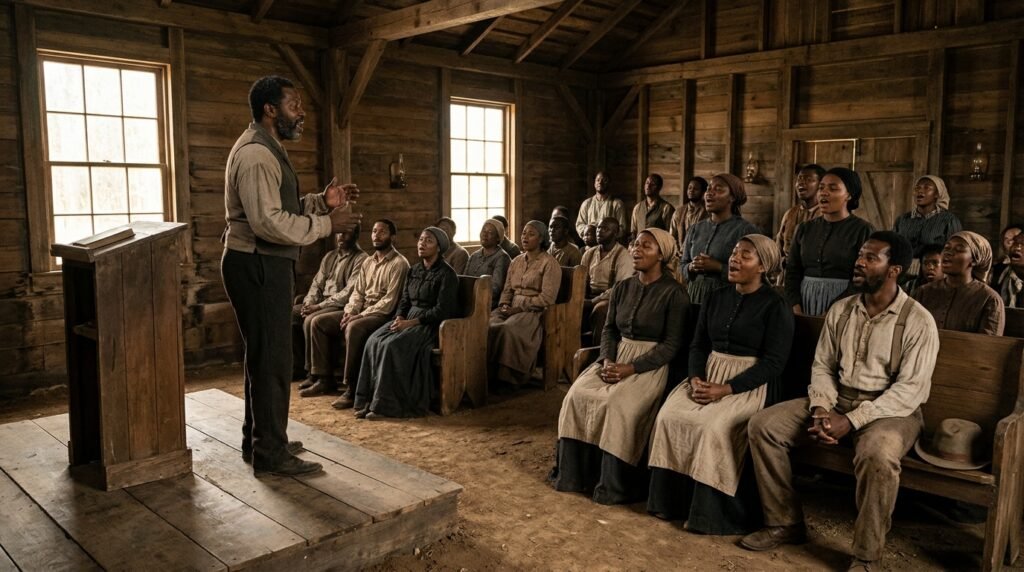
A lead singer might begin a phrase while the rest of the group responds with a repeated chorus. This structure helped people take part in music together.
Call and Response in African Musical Traditions
In traditional African music, call and response has been used in songs, ceremonies, dances, and community gatherings.
The pattern often combines singing, drumming, clapping, and movement. The lead performer may change the words or melody while the group keeps a familiar response.
This creates room for improvisation, which means making up or changing musical ideas during a performance.
Call and Response During American Slavery
Enslaved Africans brought musical traditions with them to America. Over time, these traditions continued and changed under slavery.
African American workers used songs and musical exchanges during difficult working conditions. Some work songs helped groups keep a shared rhythm while performing physical tasks.
Call and response also became a major feature of African American spirituals, which were religious songs created and sung by enslaved people and their descendants.
A lead singer often performed a line, and a group answered with a repeated refrain.
Growth in Gospel, Blues, and Jazz
As African American music developed, call and response became an important part of several musical styles.
In gospel music, a solo singer may lead a choir or congregation.
In blues, a singer may perform a lyric, followed by a guitar or harmonica phrase.
In jazz, musicians may exchange short musical ideas during an instrumental performance.
Today, the technique also appears in reggae, funk, rock, hip-hop, and popular music.
Example 4:
Lead Singer: Guide me through the night!
Choir: We will follow the light!
This original example shows how a gospel-style performance can use a lead voice and choir to create a shared musical message.
Types of Call and Response in Music
Musicians use different forms of call and response. The structure depends on the performers, instruments, and style of music.
1. Vocal Call and Response
Vocal call and response happens when one singer or group sings a phrase and another singer or group answers.
It is common in gospel, folk, spirituals, and group songs.
Example 5:
Lead Singer: Can you hear the music?
Choir: We can hear it loud and clear!
The lead singer starts the phrase, while the choir responds with a matching vocal line.
2. Instrumental Call and Response
Instrumental call and response happens when one instrument plays a musical phrase and another instrument answers.
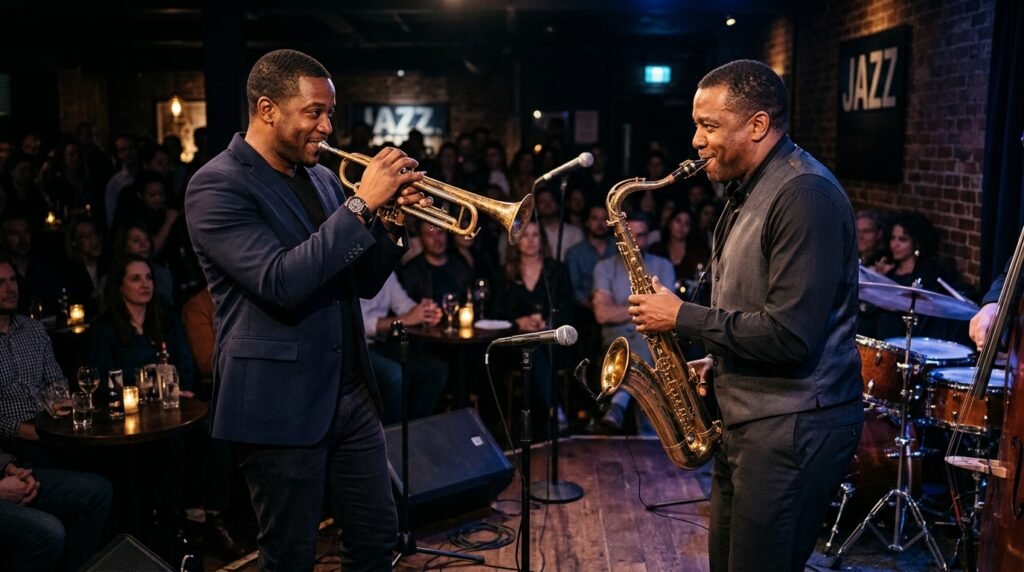
For example, a trumpet might play a short melody, followed by a saxophone playing a different phrase.
This style is common in jazz, blues, and instrumental music.
Example 6:
Trumpet: Plays a short, rising musical phrase.
Saxophone: Answers with a lower, descending phrase.
The two instruments create a musical conversation without using words.
3. Question-and-Answer Call and Response
This form uses a musical question followed by an answer.
The first performer may sing a question, and the second performer responds with words or a melody that completes the idea.
Example 7:
Caller: Who is ready for the show?
Group: Everybody here is ready to go!
This structure is useful in audience participation, children’s songs, and group performances.
4. Rhythmic Call and Response
In rhythmic call and response, the caller performs a short rhythm, and the group repeats or changes it.
It may involve handclaps, drums, percussion instruments, or body movements.
Example 8:
Leader: Clap, clap, stomp!
Group: Clap, clap, stomp!
This pattern helps performers develop rhythm and work together as a group.
Call and Response Examples in Different Music Genres
Call and response appears in many music genres. Each style uses the technique in its own way.
1. Gospel Music
Gospel music is one of the best-known styles associated with call and response.
A lead singer may sing a line about faith, hope, or praise. The choir or congregation answers with a repeated phrase.
This creates a strong connection between the singer and the people listening.
Example 9:
Lead Singer: Keep your faith alive!
Choir: Keep your faith alive!
The choir repeats the lead singer’s message, helping the audience join the performance.
2. Blues Music
In blues music, a singer often performs a line that is followed by a guitar, piano, or harmonica response.
The instrument may repeat the melody or play a short phrase that adds emotion to the song.
For example, a singer may perform a line about a difficult day, and the guitar answers with a few expressive notes.
This technique makes the music feel like a conversation between the singer and the instrument.
3. Jazz Music
Jazz musicians often use call and response during improvisation.
One musician plays a short musical idea, and another musician answers with a related idea.
A trumpet player might start an exchange, followed by a saxophone or piano.
This gives musicians room to react to each other while keeping the performance connected.
4. Folk Music
Many folk songs use call and response to make group singing easier.
A lead singer performs a line, and the audience or chorus responds with familiar words.
Traditional work songs and sea shanties are examples of musical traditions that use this type of exchange.
5. Reggae Music
In reggae music, a lead singer may perform a lyric while backing singers repeat a phrase or provide an answer.
This pattern adds rhythm and gives the chorus a strong group sound.
Some reggae performances also encourage audiences to sing along.
6. Rock and Pop Music
Call and response is also used in rock and pop music.
A lead singer might ask a question while backing singers or instruments provide the answer.
It can also happen between the singer and the audience during a live concert.
For example, a singer may call out a short phrase, and the crowd repeats it.
7. Hip-Hop Music
In hip-hop, call and response can happen between a rapper and backing vocals or between a performer and the crowd.
A rapper might deliver a short line, followed by a group repeating the final words.
This technique is often used to encourage audience participation during live shows.
Famous Songs That Use Call and Response
Several well-known songs show how call and response works in different music styles.
Here are some useful listening examples:
1. “Day-O (The Banana Boat Song)” by Harry Belafonte
This traditional Jamaican folk song features a lead singer and group responses.
The repeated “Day-O” phrase makes the exchange easy to recognize and sing along with.
2. “Oh, Happy Day” by Edwin Hawkins Singers
This famous gospel recording uses a lead singer and choir to create a strong vocal exchange.
It is a useful example of how call and response can support group singing.
3. “Mannish Boy” by Muddy Waters
This blues recording features vocal phrases and instrumental responses.
Listen to how the music uses repeated lines and instrumental sounds to create a back-and-forth pattern.
4. “My Generation” by The Who
This rock song includes vocal exchanges and repeated phrases that help create audience-friendly musical moments.
5. “Banana Boat Song” in Group Performances
The song is especially useful for teaching call and response because its repeated group phrases make the musical structure easy to hear.
These songs show that call and response is not limited to one genre or culture.
Why Is Call and Response Important in Music?
Call and response serves several purposes in music. It helps performers communicate, gives listeners a chance to participate, and creates a clear musical structure.
1. Encourages Audience Participation
Call and response gives listeners an active role in a performance.
Instead of simply listening, people can sing, clap, or answer the performer.
2. Creates Musical Communication
The technique allows singers and musicians to exchange ideas.
A musical response can repeat, change, or build on the original phrase.
3. Makes Songs More Memorable
Repeated responses can make a song easier to remember.
Listeners may quickly learn the response even if they do not know every verse.
4. Builds Group Connection
When people sing or play together, they share a common musical activity.
This can create a sense of community during concerts, church services, school activities, and cultural events.
5. Supports Improvisation
Call and response gives performers room to change their phrases.
A musician can create a new musical idea, and another musician can answer it.
Example 10:
Band Leader: Are you feeling the rhythm?
Audience: Yes, we feel the rhythm!
The performer uses the response to connect with the audience and keep the energy of the performance moving.
How to Create a Call and Response Song
You do not need advanced musical skills to create a simple call and response song.
Follow these steps:
Step 1: Choose a Simple Theme
Start with an easy subject, such as friendship, school, teamwork, or celebration.
Step 2: Write the Call
Create a short phrase that a lead singer or musician can perform.
Keep the words simple and easy to understand.
Step 3: Write the Response
Create an answer that matches the call.
The response can repeat the original words or provide a suitable reply.
Step 4: Choose a Rhythm
Select a steady rhythm that both the caller and responders can follow.
You can use clapping, drums, or simple percussion.
Step 5: Practice the Exchange
Have one person perform the call and another person provide the response.
Repeat the pattern until everyone feels comfortable.
Step 6: Add Musical Changes
Once the group knows the pattern, change the volume, rhythm, melody, or speed to make the performance more interesting.
Example 11:
Leader: What makes our team strong?
Group: Working together all day long!
This simple example can be used in a classroom, school activity, or group music lesson.
Call and Response vs. Question and Answer in Music
Call and response and question-and-answer music are closely related, but they are not always exactly the same.
| Feature | Call and Response | Question and Answer |
|---|---|---|
| Main idea | One performer starts and another responds | One musical phrase asks or suggests something and another answers |
| Words | May use statements, phrases, or rhythms | Often uses a question and a direct answer |
| Performers | Singers, groups, or instruments | Singers or instruments |
| Purpose | Creates musical interaction | Creates a clear musical exchange |
| Example | A singer performs a phrase and a choir repeats it | A singer asks a question and the group answers |
A question-and-answer exchange is one type of call and response. However, not every call and response pattern needs to include a question.
Common Mistakes to Avoid When Using Call and Response
Although call and response is easy to learn, a few mistakes can make a performance less effective.
- Making the call too long: Long phrases can make it harder for responders to remember the answer.
- Using an unclear response: The group should know exactly when and how to respond.
- Ignoring the rhythm: Both sides should follow a shared beat or musical structure.
- Repeating without variation: Small changes in rhythm, volume, or melody can keep a performance interesting.
- Not listening to the other performers: Call and response works best when each side pays attention to the other.
Practice and clear timing can help avoid these problems.
FAQs About Call and Response in Music
What is an example of call and response in music?
A simple example is a singer performing, “Are you ready?” followed by a group answering, “Yes, we are!” This shows how one performer starts a phrase and another responds.
What are the two parts of call and response?
The two main parts are the call and the response. The call is the opening phrase, while the response is the musical answer.
What types of music use call and response?
Call and response appears in gospel, blues, jazz, folk, reggae, rock, pop, and hip-hop. It is also found in many traditional African musical styles.
Is call and response a musical technique?
Yes. Call and response is a musical technique that uses an exchange between two performers, groups, or instruments.
Where did call and response originate?
Call and response has deep roots in African musical traditions. It continued and developed in African American music, including work songs, spirituals, gospel, blues, and jazz.
Why is call and response used in gospel music?
Gospel singers use call and response to create interaction between the lead singer, choir, and congregation. It also helps people participate in worship through singing.
What is the difference between a call and a response?
A call is the first musical phrase. A response is the phrase that follows it. The response may repeat the call or provide a different musical answer.
Can instruments use call and response?
Yes. Instruments can exchange musical phrases just like singers. For example, a trumpet may play a short melody, and a saxophone may answer it.
Is call and response used in modern music?
Yes. Modern performers use it in pop, hip-hop, rock, reggae, and live concerts. Singers may also encourage audiences to repeat words or phrases.
How can students practice call and response?
Students can practice by listening to a teacher’s short musical phrase and repeating it. They can also use clapping, singing, drums, or simple question-and-answer patterns.
Conclusion
Call and response in music is a simple but meaningful technique in which one performer starts a musical phrase and another responds. It creates interaction between singers, musicians, and audiences.
The technique has deep roots in African musical traditions and has become an important part of gospel, blues, jazz, folk, reggae, and many other styles.
If you want to recognize call and response, listen for a musical exchange between two voices, instruments, or groups. Once you know what to listen for, you will begin to notice this pattern in many songs and live performances.

Emily Carter (Content Writer & Communication Specialist) is a content writer and communication specialist at AllTypeInfo.com. She writes clear, practical, and easy-to-follow guides on email responses, message replies, writing templates, and everyday communication tips. Her goal is to help readers communicate with confidence in both personal and professional settings.