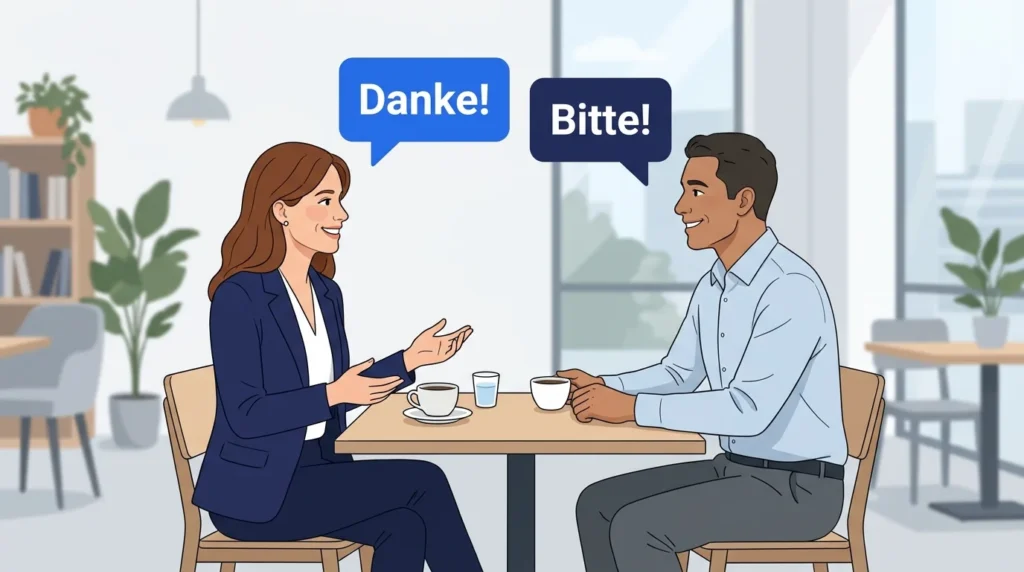

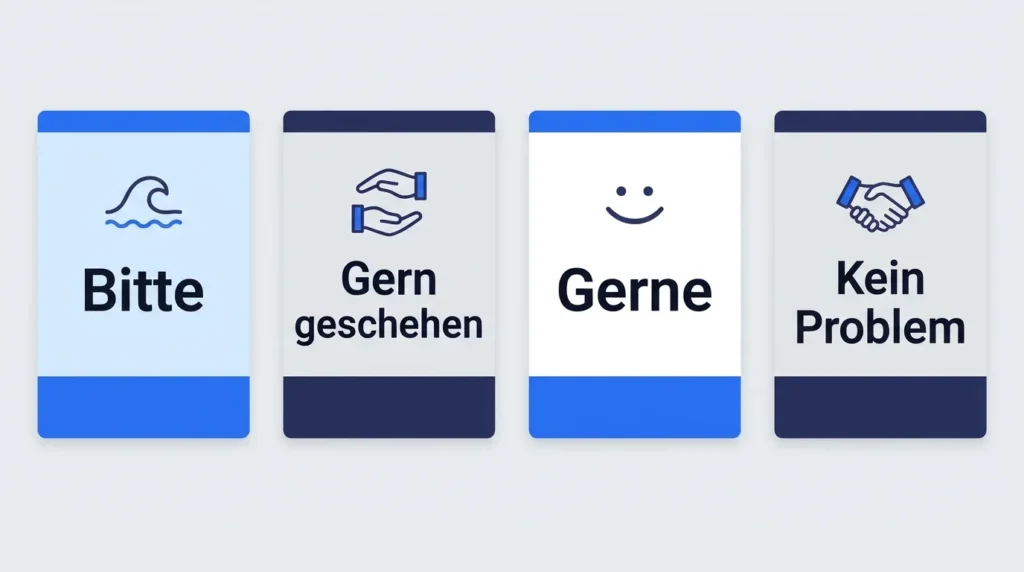
If someone says Danke to you, they are saying thank you in German. You can reply with Bitte, Gern geschehen, or Kein Problem, depending on the situation. These phrases help you sound polite and friendly when speaking with German speakers, whether you are traveling, meeting new people, or chatting with friends.
Learning how to respond to Danke is easy once you know which phrases fit different situations. Some replies work in almost any setting, while others sound more casual or warm. This guide explains the meanings of common German responses and gives you simple examples you can use in real conversations. Learning common German greetings and replies can also help you feel more comfortable during everyday conversations, especially when meeting new people or traveling in German-speaking countries.
Key Takeaways
- Bitte: The standard way to say you’re welcome.
- Bitte schön: A polite and friendly response.
- Gern geschehen: A warm way to say my pleasure.
- Gerne: A short, natural reply in everyday conversations.
- Kein Problem: A casual way to say no problem.
- Nichts zu danken: A modest way to say don’t mention it.
- Match the situation: Choose a reply that suits your relationship and setting.
1. What Does Danke Mean in German?
Danke means thank you or thanks in German. People use it when someone helps them, gives them something, or does something kind.
Here are a few common examples:
- Danke! = Thank you!
- Danke schön! = Thank you very much!
- Vielen Dank! = Many thanks!
- Danke für deine Hilfe! = Thank you for your help!
You may hear these phrases in Germany, Austria, Switzerland, and other German-speaking communities.
When someone thanks you, a short and polite reply is usually enough. You do not need a long sentence to sound friendly.
2. 10 Best Ways to Respond to Danke
Here are ten useful German replies, their English meanings, and the situations where they fit best.
| German Reply | English Meaning | Best Situation |
|---|---|---|
| Bitte | You’re welcome | Everyday conversations |
| Bitte schön | You’re very welcome | Polite exchanges |
| Bitte sehr | You’re very welcome | Polite service situations |
| Gern geschehen | My pleasure | After helping someone |
| Gerne | Gladly / My pleasure | Casual daily conversations |
| Kein Problem | No problem | Friends and coworkers |
| Keine Ursache | Don’t mention it | Small favors |
| Nichts zu danken | Nothing to thank me for | Modest, polite replies |
| Nicht der Rede wert | It was nothing | When downplaying a small favor |
| Sehr gerne | My pleasure / Gladly | Warm, polite conversations |
Let’s look at each reply in more detail.
1. Bitte
Meaning: You’re welcome.
Bitte is the simplest and most common response to Danke. It works in many everyday situations, including shops, restaurants, school, and conversations with friends.
Example:
Person A: Danke für den Kaffee! Person B: Bitte!
English translation:
Person A: Thanks for the coffee! Person B: You’re welcome!
Use Bitte when you want a short, polite answer without adding extra words.
2. Bitte schön
Meaning: You’re very welcome.
Bitte schön sounds polite and friendly. It is useful when you hand someone an item, help a customer, or respond to a kind thank-you.
Example:
Person A: Danke schön! Person B: Bitte schön!
English translation:
Person A: Thank you very much! Person B: You’re very welcome!
This phrase is a good choice when you want to sound warm without being overly formal.
3. Bitte sehr
Meaning: You’re very welcome.
Bitte sehr is another polite way to respond to thanks. You may hear it in shops, hotels, restaurants, and other service settings.
Example:
Customer: Vielen Dank! Staff member: Bitte sehr!
English translation:
Customer: Many thanks! Staff member: You’re very welcome!
You can use Bitte sehr in many polite exchanges. It is also useful when giving someone something they asked for.
4. Gern geschehen
Meaning: My pleasure.
Gern geschehen is a warm response when you have helped someone or done them a favor. It tells the other person that you were happy to help.
Example:
Person A: Danke, dass du mir geholfen hast. Person B: Gern geschehen!
English translation:
Person A: Thanks for helping me. Person B: My pleasure!
Use this phrase after helping a friend, explaining something, or doing a thoughtful favor.
5. Gerne
Meaning: Gladly, or my pleasure.
Gerne is a short and natural reply in everyday German. It can show that you were happy to help.
Example:
Person A: Danke für deine Hilfe! Person B: Gerne!
English translation:
Person A: Thanks for your help! Person B: Happy to help!
It also appears in other situations. For example, if someone offers you a drink, Ja, gerne! means yes, gladly or yes, please.
6. Kein Problem
Meaning: No problem.
Kein Problem is a relaxed reply that works well with friends, family members, and coworkers. It suggests that helping was easy or caused no trouble.
Example:
Person A: Danke, dass du meine Tasche getragen hast. Person B: Kein Problem!
English translation:
Person A: Thanks for carrying my bag. Person B: No problem!
This phrase is friendly and casual. In a formal business exchange, Bitte or Gern geschehen may sound more suitable.
7. Keine Ursache
Meaning: Don’t mention it, or there’s no need to thank me.
Keine Ursache is a polite way to respond when someone thanks you for a small favor. It shows that you do not think the favor was a big deal.
Example:
Person A: Danke, dass du mir die Tür aufgehalten hast. Person B: Keine Ursache!
English translation:
Person A: Thanks for holding the door open for me. Person B: Don’t mention it!
You can use this expression in everyday conversations, though how often people use it varies by region and personal preference.
8. Nichts zu danken
Meaning: Nothing to thank me for.
Nichts zu danken is a modest reply. It suggests that the help you gave was nothing special and that the other person does not need to thank you.
Example:
Person A: Vielen Dank für deine Unterstützung. Person B: Nichts zu danken!
English translation:
Person A: Many thanks for your support. Person B: No need to thank me!
This phrase works when someone thanks you for advice, support, or a small act of kindness.
9. Nicht der Rede wert
Meaning: It was nothing, or it was hardly worth mentioning.
This expression is useful when someone thanks you for a small favor and you want to show that it was no trouble.
Example:
Person A: Danke, dass du mir den Weg gezeigt hast. Person B: Nicht der Rede wert!
English translation:
Person A: Thanks for showing me the way. Person B: It was nothing!
It is a little longer than Bitte or Gerne, so use it when the situation calls for a fuller response.
10. Sehr gerne
Meaning: My pleasure, or very gladly.
Sehr gerne adds warmth to a simple reply. It is useful at work, in polite conversations, and whenever you want to show that you were happy to help.
Example:
Person A: Vielen Dank für Ihre Hilfe. Person B: Sehr gerne!
English translation:
Person A: Thank you very much for your help. Person B: My pleasure!
The word Ihre is the formal form of your. This makes the example suitable for a polite exchange with someone you address formally.
3. How to Respond to Danke in Different Situations
The best reply depends on who is thanking you and what you did for them. Here are some easy ways to choose the right phrase.

When a Friend Says Danke
Use a relaxed, friendly response.
- Gerne! (Happy to help!)
- Kein Problem! (No problem!)
- Gern geschehen! (My pleasure!)
Example:
Friend: Danke für das Geschenk!
You: Gerne!
Translation:
Friend: Thanks for the gift!
You: My pleasure!
When a Coworker Says Danke
Choose a friendly but professional reply.
- Bitte! (You’re welcome!)
- Gern geschehen! (My pleasure!)
- Sehr gerne! (Happy to help!)
Example:
Coworker: Danke für deine Hilfe bei der Präsentation.
You: Sehr gerne!
Translation:
Coworker: Thanks for your help with the presentation.
You: Happy to help!
When a Customer Says Danke
Keep your response polite and clear.
- Bitte schön! (You’re very welcome!)
- Bitte sehr! (You’re very welcome!)
- Gerne! (Gladly!)
Example:
Customer: Vielen Dank für Ihre Hilfe.
You: Bitte schön!
Translation:
Customer: Thank you very much for your help.
You: You’re very welcome!
When Someone Thanks You in a Text Message
Short replies work well in casual chats.
- Gerne 😊 (Happy to help.)
- Kein Problem! (No problem!)
- Nichts zu danken! (Don’t mention it.)
Example:
Friend: Danke fürs Nachschauen!
You: Kein Problem 😊
Translation:
Friend: Thanks for checking!
You: No problem!
You can use an emoji with friends if it fits your usual texting style. In formal work messages, a plain reply is often better.
4. How to Respond to Danke Schön
Danke schön means thank you very much. You can answer it with the same common phrases you use after Danke.
Here are three good choices:
| German Reply | English Meaning | Tone |
|---|---|---|
| Bitte schön! | You’re very welcome! | Polite and friendly |
| Gern geschehen! | My pleasure! | Warm and sincere |
| Gerne! | Gladly! | Short and natural |
Example conversation:
Person A: Danke schön für deine Hilfe!
Person B: Gern geschehen!
Translation:
Person A: Thank you very much for your help!
Person B: My pleasure!
You do not need a special reply just because someone adds schön. A simple Bitte is also fine.
5. How to Respond to Danke in Formal Situations
When speaking to a customer, teacher, manager, or someone you do not know well, choose a polite response.
Good options include:
- Bitte schön.
- Bitte sehr.
- Gern geschehen.
- Sehr gerne.
Example at work:
Manager: Vielen Dank für Ihre Unterstützung.
You: Sehr gerne.
Translation:
Manager: Thank you very much for your support.
You: My pleasure.
German uses Sie and related forms, such as Ihre, to address people formally. With friends and family, du and deine are common.
You can use Gern geschehen in both formal and casual settings. The key is to speak in a way that feels natural for the situation.
6. Common Mistakes to Avoid
If you are learning German, a few small mistakes can make your reply sound less natural.
- Saying Willkommen: Use Bitte for you’re welcome.
- Overthinking your reply: A simple Bitte is enough.
- Using casual phrases everywhere: Match your words to the setting.
- Confusing Bitte with Danke: Bitte can mean please or you’re welcome.
- Translating every English phrase word for word: Learn common German expressions as complete phrases.
Is Willkommen a Correct Reply to Danke?
Usually, no. Willkommen means welcome, as in welcoming someone to a place or group. It is not the normal German response to someone saying thank you.
For example:
Person A: Danke für deine Hilfe!
Person B: Bitte!
This is a natural exchange. Saying Willkommen instead may sound like a direct translation from English.
7. Quick Checklist: Which Reply Should You Use?
Use this simple guide when you need a fast answer.
- Everyday conversation: Bitte.
- Warm, polite reply: Bitte schön.
- After helping someone: Gern geschehen.
- Casual conversation: Gerne.
- Small favor between friends: Kein Problem.
- Formal customer exchange: Bitte sehr.
- Modest reply to thanks: Nichts zu danken.
You do not need to memorize all ten expressions at once. Start with Bitte, Gerne, and Gern geschehen. These three phrases will help you respond in many common situations.
Frequently Asked Questions
1. What is the most common response to Danke?
Bitte is the standard response. It means you’re welcome and works in many everyday situations.
2. Can I say Gerne after Danke?
Yes. Gerne is a natural, friendly response. It means gladly or that you were happy to help.
3. How do you respond to Danke schön?
You can say Bitte schön, Gern geschehen, or Gerne. All three are suitable, depending on the situation.
4. What does Gern geschehen mean?
Gern geschehen means my pleasure or happy to have helped. Use it after doing someone a favor or providing assistance.
5. Is Kein Problem polite in German?
Yes, in casual situations. It works well with friends and coworkers, but Bitte may be a better choice in more formal settings.
6. Can I respond to Danke in English?
Yes. You can say you’re welcome or happy to help if English is easier for you. A German reply may help keep the conversation going in German.
7. Is Willkommen the same as Bitte?
No. Willkommen means welcome when greeting someone or inviting them into a place or group. Bitte is a common reply to thanks.
8. How do I reply to Danke in a German text message?
Use Gerne!, Kein Problem!, or Nichts zu danken! for a casual message. Add an emoji if it suits your relationship with the other person.
Conclusion
Learning how to respond to Danke is a simple way to make your German conversations feel more natural. Use Bitte for a quick, polite answer, Gern geschehen when you want to say my pleasure, and Kein Problem with friends or coworkers.
Start by practicing these three replies in short conversations. Once they feel familiar, add other phrases such as Bitte schön, Gerne, and Nichts zu danken. Choosing a reply that fits the situation will help you sound polite and friendly.