
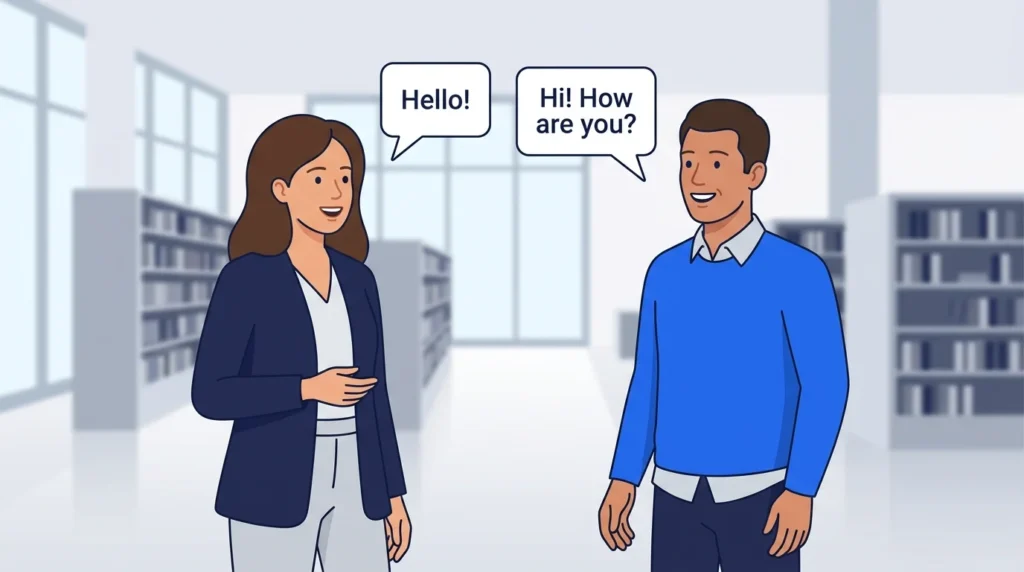
Greetings are a simple way to start a conversation, show good manners, and make other people feel welcome. However, knowing what to say next can sometimes be difficult. You might know how to say hello, but you may not know how to reply when someone asks how you are, greets you at work, or sends you a friendly text message.
This guide covers common greetings and their responses in everyday American English, along with cultural expressions, foreign-language phrases, and replies for special occasions. You will find simple examples for friends, coworkers, new acquaintances, and formal situations, so you can choose a natural response that fits the moment.
Key Takeaways
- Match your reply to the greeting and situation.
- Use casual language with friends and familiar people.
- Choose polite phrases for professional conversations.
- Learn common replies to greetings in other languages.
- Respond to compliments and apologies with care.
- Keep text messages short, clear, and friendly.
- Ask a follow-up question when you want to continue talking.
1. What Are Common Greetings and Their Responses?
A greeting is a word or phrase people use when they meet or begin a conversation. A response is what you say or write back.
For example:
Person A: Hi! How are you?
Person B: I’m good, thanks. How about you?
Greetings can be formal, casual, friendly, or professional. The best response depends on the person you are speaking with, the setting, and the type of conversation.
In most everyday situations, a short and friendly answer is enough. You do not need to give a long explanation unless you want to share more.
2. Common Greetings and Their Responses
The following table includes common greetings you may hear at work, school, home, social events, and online.
| Greeting | Common Response | Best Situation |
|---|---|---|
| Hello! | Hello! How are you? | General use |
| Hi! | Hi! How’s it going? | Casual conversations |
| Hey! | Hey! What’s up? | Friends and familiar people |
| Good morning! | Good morning! | Morning conversations |
| Good afternoon! | Good afternoon! | Polite daytime greetings |
| Good evening! | Good evening! | Evening meetings |
| How are you? | I’m good, thanks. And you? | Everyday conversations |
| How are you doing? | I’m doing well, thanks. | Casual or polite settings |
| What’s up? | Not much. How about you? | Informal conversations |
| How’s it going? | Pretty good, thanks. | Friends and coworkers |
| What’s new? | Not much. What’s new with you? | Friendly small talk |
| Long time no see! | It’s great to see you again! | Reconnecting with someone |
| Nice to meet you. | Nice to meet you too. | First introductions |
| Good to see you! | Good to see you too! | Meeting someone you know |
| How have you been? | I’ve been good, thanks. You? | Catching up |
| How’s your day going? | Pretty well, thanks. How’s yours? | Daily conversations |
| Welcome! | Thank you! It’s nice to be here. | Arriving somewhere |
| How do you do? | How do you do? | Formal introductions |
| Hey there! | Hey there! | Friendly greetings |
| What’s happening? | Not much. How about you? | Casual conversations |
| How’s everything? | Everything’s going well, thanks. | General small talk |
| Happy Friday! | Happy Friday to you too! | End-of-week greetings |
| It’s nice to see you again. | It’s nice to see you too. | Repeat meetings |
| How’s life? | Pretty good, thanks. How about yours? | Friendly small talk |
| How have things been? | Things have been good, thanks. | Catching up |
These are common options, not fixed rules. You can change the wording to suit your personality and the situation.
3. How to Respond to Hello, Hi, and Hey
Hello, hi, and hey are among the most common English greetings. Each can start a conversation, but they differ slightly in tone.
How to Respond to Hello
Hello works in almost any setting, including conversations with coworkers, neighbors, new people, and customers.
Examples:
- Hello! How are you today?
- Hi! Nice to see you.
- Hello there!
- Hello! How can I help you?
Example conversation:
Person A: Hello!
Person B: Hello! How are you today?
How to Respond to Hi
Hi is friendly and works well in everyday conversations.
Examples:
- Hi! How’s your day going?
- Hi there!
- Hey! Good to see you.
- Hi! What have you been up to?
How to Respond to Hey
Hey is informal and common among friends, family members, and familiar coworkers.
Examples:
- Hey! What’s up?
- Hey! How’s everything?
- Hey there!
- Hey! Long time no see.
Quick tip: You can return the same greeting without adding anything else. Ask a question if you want to keep the conversation going.
4. Formal Greetings and Their Responses
Formal greetings are useful when meeting someone for the first time, speaking with a manager, attending a business meeting, or talking to a customer.
| Formal Greeting | Suitable Response |
|---|---|
| Good morning. | Good morning. How are you? |
| Good afternoon. | Good afternoon. It’s nice to meet you. |
| Good evening. | Good evening. How are you today? |
| How do you do? | How do you do? |
| It’s a pleasure to meet you. | It’s a pleasure to meet you too. |
| How are you today? | I’m doing well, thank you. And you? |
| Welcome to our office. | Thank you for having me. |
| I’m pleased to meet you. | I’m pleased to meet you too. |
Professional Greeting Examples
At a job interview:
Interviewer: Good morning. It’s nice to meet you.
You: Good morning. It’s nice to meet you too. Thank you for having me.
At a business meeting:
Coworker: Good afternoon. How are you today?
You: Good afternoon. I’m doing well, thank you. How are you?
When meeting a client:
Client: It’s a pleasure to meet you.
You: The pleasure is mine. Thank you for meeting with me.
Use complete sentences and a respectful tone in formal settings. Simple, warm language usually works better than complicated phrases.
5. Informal Greetings and Their Responses
Informal greetings are common among friends, relatives, classmates, and coworkers who know each other well.
| Informal Greeting | Natural Response |
|---|---|
| What’s up? | Not much. You? |
| What’s going on? | Nothing much. How about you? |
| How’s it going? | Pretty good. How about you? |
| What’s new? | Nothing special. What’s new with you? |
| How’s life? | Life’s good. How about yours? |
| How’s your day? | Pretty good so far. |
| Yo! | Hey! What’s up? |
| Howdy! | Howdy! How are you? |
| Hey, stranger! | Hey! It’s been a while! |
| Look who’s here! | Great to see you! |
How to Respond to What’s Up?
What’s up? often works as a casual hello, although it can also ask what is happening.
You can reply with:
- Not much. What’s up with you?
- Nothing special, just relaxing.
- Just getting some work done.
- Same old, same old.
- Doing good! How about you?
Example conversation:
Friend: Hey, what’s up?
You: Not much. Just watching a movie. What about you?
A short answer is enough unless the other person asks for more details.
6. How to Respond to How Are You?
How are you? is one of the most common greetings in English. In everyday American conversations, it often serves as a polite greeting rather than a request for a detailed personal update.
Choose a reply that matches how you feel and the setting.
Positive Responses
- I’m great, thanks!
- I’m doing really well.
- Pretty good, thanks for asking.
- I’m having a good day.
- Couldn’t be better!
Neutral Responses
- I’m good, thanks.
- I’m fine, thank you.
- Not bad. How about you?
- Doing okay, thanks.
- I’m doing all right.
Honest but Polite Responses
- I’m a little tired, but I’m okay.
- It’s been a busy day, but I’m doing fine.
- I’ve had better days, but thanks for asking.
- I’m hanging in there.
- It’s been a long week, but I’m managing.
Example Conversations
Casual conversation:
Person A: How are you?
Person B: I’m good, thanks. How about you?
Professional conversation:
Manager: How are you today?
Employee: I’m doing well, thank you. How are you?
When you are tired:
Friend: How are you doing?
You: A little tired, but I’m okay. How about you?
For more examples and reply options, read different ways to answer How Are You?
Quick tip: Asking And you? or How about you? shows interest and helps the conversation continue.
7. Morning, Afternoon, and Evening Greetings
Time-based greetings are polite and easy to use at home, work, school, and social events.
| Greeting | Typical Use | Response |
|---|---|---|
| Good morning! | Morning | Good morning! How are you? |
| Morning! | Casual morning greeting | Morning! |
| Good afternoon! | Afternoon | Good afternoon! |
| Good evening! | Evening | Good evening! Nice to see you. |
| Happy Friday! | Friday | Happy Friday to you too! |
| Have a good day! | Ending a conversation | Thanks! You too. |
| Have a great evening! | Leaving in the evening | Thank you. You too! |
Sample Morning Conversation
Coworker: Good morning! How was your weekend?
You: Good morning! It was nice, thanks. How was yours?
Sample Evening Conversation
Neighbor: Good evening! How are you?
You: Good evening! I’m doing well, thank you.
Good morning, good afternoon, and good evening are greetings. Have a good day and have a great evening are usually said when ending a conversation.
8. Religious and Cultural Greetings and Their Responses
Greetings can reflect a person’s faith, language, and cultural background. Some expressions also have traditional replies that are useful to learn when speaking with people from different communities.
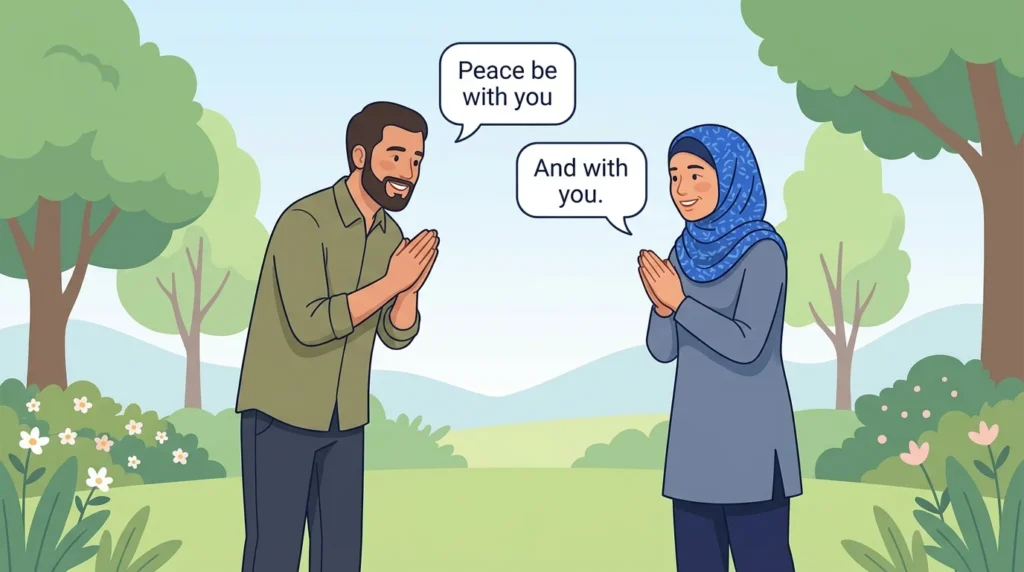
Islamic Greetings and Responses
Muslims commonly use greetings and expressions such as Assalamu Alaikum, Mashallah, Alhamdulillah, and Ramadan Mubarak. Each phrase has a different meaning and purpose, so the right response depends on the expression and situation.
For a wider collection of examples, see common Islamic greetings and their meanings.
Here are four expressions you may hear:
| Expression | Meaning or Use |
|---|---|
| Assalamu Alaikum | A greeting wishing peace upon the listener |
| Mashallah | An expression of admiration or appreciation |
| Alhamdulillah | An expression of praise and thanks to Allah |
| Ramadan Mubarak | A wish for a blessed Ramadan |
How to Respond to Mashallah
Mashallah is commonly used when admiring something good, such as an achievement, a beautiful view, or a happy family moment.
Your response can be warm and simple.
- Thank you!
- Thank you. That’s very kind of you.
- JazakAllahu khairan, meaning May Allah reward you with goodness.
- Alhamdulillah, when expressing gratitude to Allah.
The best reply depends on the speaker’s intent and the situation. For more examples, read polite replies to Mashallah.
How to Respond to Alhamdulillah
Alhamdulillah means praise be to Allah. People may use it when expressing gratitude, describing their well-being, or sharing good news.
For example:
Person A: How are you feeling today?
Person B: Alhamdulillah, I’m doing well.
You can respond with a kind phrase such as I’m glad to hear that or Alhamdulillah, depending on the context and your own way of speaking.
Explore ways to respond to Alhamdulillah for more examples.
How to Respond to Ramadan Mubarak
Ramadan Mubarak is a greeting used during Ramadan to wish someone a blessed month.
Possible responses include:
- Ramadan Mubarak to you too!
- Thank you! May you have a blessed Ramadan.
- Khair Mubarak.
- Thank you. Wishing you and your family a peaceful Ramadan.
Customs and preferred replies may differ between communities. For more options, read what to say when someone wishes you Ramadan Mubarak.
Christos Anesti: Meaning and Response
Christos Anesti is a Greek Easter greeting meaning Christ is risen. It is used in Orthodox Christian Easter traditions.
The traditional response is Alithos Anesti, meaning Truly He is risen.
Example:
Person A: Christos Anesti!
Person B: Alithos Anesti!
This exchange is linked to the celebration of Easter in Greek Orthodox communities. Learn more in the meaning of Christos Anesti and its traditional reply.
9. Greetings and Responses in Other Languages
Learning greetings in other languages can help you communicate with people from different backgrounds. Some expressions are greetings, while others are questions or replies used during everyday conversations.
How to Respond to Grazie in Italian
Grazie means thank you in Italian. It is an expression of gratitude rather than a greeting.
A common response is Prego, which can mean you’re welcome.
Other possible replies include:
- Di niente. Meaning: It’s nothing.
- Non c’è di che. Meaning: Don’t mention it.
- Figurati. An informal way to say don’t mention it.
Example:
Person A: Grazie!
Person B: Prego!
For more examples, read how to reply to Grazie in Italian.
How to Respond to Danke in German
Danke means thank you in German. A common response is Bitte, which can mean you’re welcome or please, depending on the context.
Other options include:
- Gern geschehen. Meaning: You’re welcome.
- Kein Problem. Meaning: No problem.
- Nichts zu danken. Meaning: No need to thank me.
Example:
Person A: Danke!
Person B: Bitte!
Learn more in natural responses to Danke in German.
How to Respond to Merci in French
Merci means thank you in French. One common reply is De rien, which means you’re welcome.
Other options include:
- Avec plaisir. Meaning: With pleasure.
- Je vous en prie. A polite or formal way to say you’re welcome.
- Pas de problème. Meaning: No problem.
Example:
Person A: Merci beaucoup!
Person B: Avec plaisir!
For more replies and examples, see polite ways to respond to Merci in French.
How to Respond to ¿Cómo Te Llamas? in Spanish
¿Cómo te llamas? means What’s your name? in Spanish. People often use it when meeting someone for the first time.
You can answer with Me llamo followed by your name.
Example:
Person A: ¿Cómo te llamas?
Person B: Me llamo Ana. ¿Y tú?
English meaning:
Person A: What’s your name?
Person B: My name is Ana. And you?
A more direct answer is Soy Ana, meaning I’m Ana.
For more examples, read how to answer ¿Cómo te llamas? in Spanish.
How to Respond to ¿Cómo Estás? in Spanish
¿Cómo estás? means How are you? in Spanish. It is commonly used in informal conversations.
You can respond based on how you feel.
| Spanish Response | English Meaning |
|---|---|
| Estoy bien. | I’m fine. |
| Muy bien, gracias. | Very well, thank you. |
| Más o menos. | So-so. |
| Estoy cansado/cansada. | I’m tired. |
| Estoy excelente. | I’m excellent. |
Use cansado if the speaker uses the masculine form and cansada if the speaker uses the feminine form.
Example:
Person A: ¡Hola! ¿Cómo estás?
Person B: Estoy bien, gracias. ¿Y tú?
English meaning:
Person A: Hi! How are you?
Person B: I’m fine, thanks. And you?
Explore common replies to ¿Cómo estás? for more examples.
How to Respond to Muy Bien
Muy bien means very well. Someone may use it to answer a question about their well-being or describe how something is going.
For example:
Person A: ¿Cómo estás?
Person B: Muy bien, gracias.
Person A: ¡Me alegro!
English meaning:
Person A: How are you?
Person B: Very well, thank you.
Person A: I’m glad!
You can also say Qué bueno, meaning That’s good, in a suitable context.
For more reply ideas, read how to respond when someone says Muy bien.
10. Friendly Greetings for Friends and Family
When talking to people you know well, your greeting can sound warmer and more personal.
| Greeting | Friendly Response |
|---|---|
| Hey, how have you been? | I’ve been good! How about you? |
| Long time no see! | I know! I’ve missed catching up with you. |
| Good to see you! | It’s great to see you too! |
| How’s everything going? | Pretty well! What’s new with you? |
| What have you been up to? | Just working and spending time with family. |
| How’s your family? | They’re doing well, thanks for asking. |
| Look who’s here! | Surprise! It’s great to see you. |
| Hey, stranger! | Hey! We need to catch up soon. |
How to Respond to Long Time No See
People use this greeting when they meet someone after a long break.
You can reply with:
- It’s great to see you again!
- I know! It’s been too long.
- How have you been?
- We have so much to catch up on.
- I’m glad we ran into each other.
Example:
Friend: Long time no see!
You: I know! It’s been ages. How have you been?
If you want to reconnect, ask about their work, family, hobbies, or recent activities. Keep your questions friendly and respect their privacy.
11. Greetings and Responses for Text Messages
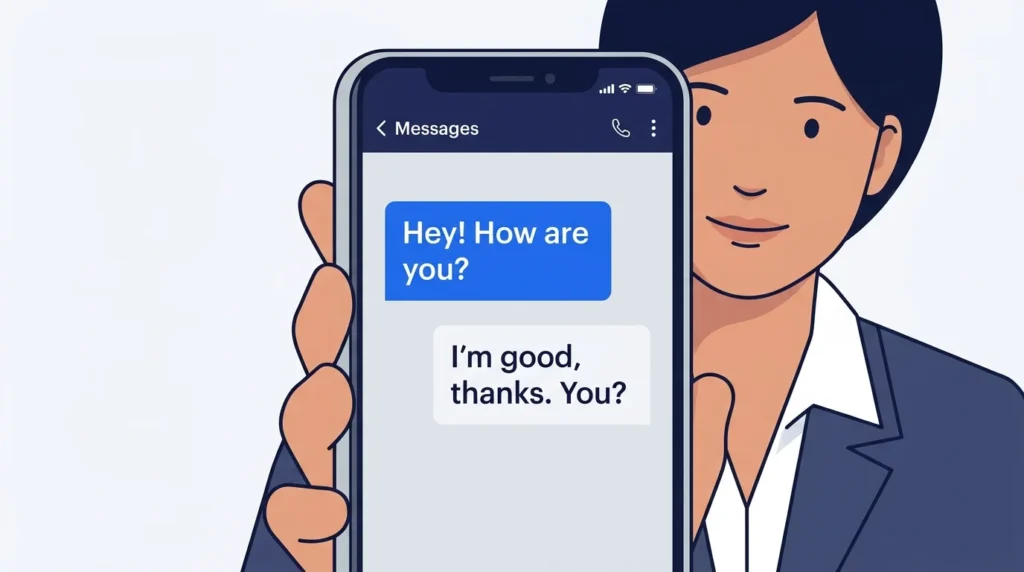
Text greetings are often shorter than spoken greetings. A good reply should match the sender’s tone and your relationship with them.
| Text Greeting | Suggested Reply |
|---|---|
| Hi | Hi! How are you? |
| Hey | Hey! What’s up? |
| Good morning | Good morning! Have a great day. |
| Hey, how are you? | I’m good, thanks! You? |
| What’s up? | Not much. What about you? |
| Hey, stranger! | Hey! It’s been a while. |
| How’s your day going? | Pretty well so far. How’s yours? |
| Hello there | Hey! Nice to hear from you. |
| Hope you’re doing well | Thank you! I hope you’re doing well too. |
| Hey, are you free? | Hey! What’s up? |
Short Replies for Everyday Chats
- Hey!
- Hi, how are you?
- Good morning!
- I’m good, thanks.
- Not much. You?
- Doing well. How about you?
Warm Replies to Someone You Know
- Hey! It’s good to hear from you.
- Hi! How have you been?
- Hey! What’s new in your life?
- Good morning! Hope your day goes well.
- Hey! We should catch up soon.
Example Text Conversation
Alex: Hey! How are you?
Sam: Hey! I’m doing well, thanks. How about you?
Alex: Pretty good. What are you up to?
Sam: Just finishing some work. What’s going on?
You do not need to reply with a long message to every greeting. A short, natural response is often enough.
12. How to Greet Someone for the First Time
Meeting someone new can feel awkward, but a simple greeting can help start the conversation.
Useful Greetings for First Introductions
- Hello, it’s nice to meet you.
- Hi, I’m [your name].
- Good morning. My name is [your name].
- It’s a pleasure to meet you.
- I’ve heard great things about you.
- Nice to finally meet you in person.
Example at a Social Event
Person A: Hi, I’m Jordan.
Person B: Hi, Jordan. I’m Taylor. Nice to meet you.
Person A: Nice to meet you too. How do you know the host?
Example at Work
Colleague: Hi, I’m Morgan from the sales team.
You: Nice to meet you, Morgan. I’m Casey from customer support.
When meeting someone for the first time, say your name clearly and listen to theirs. You can keep talking by asking a simple question about the event or situation.
13. Funny and Playful Responses to Greetings
Funny replies can make conversations more enjoyable, especially with close friends. Use them when the other person is likely to appreciate your humor.
| Greeting | Playful Response |
|---|---|
| What’s up? | The ceiling! |
| Hey, stranger! | I was just being mysterious. |
| How’s life? | Still writing the story! |
| What’s new? | Same person, new problems! |
| How are you? | Better now that you’re here! |
| Look who’s here! | The one and only! |
| How’s it going? | One step at a time! |
| Hey, sleepyhead! | I was enjoying my beauty sleep! |
Example conversation:
Friend: What’s up?
You: The ceiling! How about you?
Or:
Friend: How are you?
You: Better now that you’ve arrived!
Funny replies should feel natural, not forced. Avoid jokes that may sound rude or disrespectful, especially with people you do not know well.
14. Greetings and Responses for Special Occasions
Some conversations need more than a simple hello. Weddings, celebrations, compliments, and apologies each call for a suitable response.
How to Respond to Congratulations
When someone congratulates you on a new job, achievement, wedding, or other happy event, thank them for their kind words.
Examples:
- Thank you so much!
- Thanks! I really appreciate it.
- That’s very kind of you.
- Thank you for your support.
- Thanks for celebrating with me!
Example conversation:
Friend: Congratulations on your new job!
You: Thank you so much! I’m really excited about it.
Your response can be short. A sincere thank-you is often all you need.
For more options, read gracious ways to reply to congratulations.
How to Respond to a Compliment
A compliment is a kind comment about your appearance, work, skills, or achievements. A simple thank-you is often the most natural response.
Examples:
- Thank you! That’s so kind of you.
- I really appreciate that.
- Thanks! I’m glad you like it.
- That’s very nice of you to say.
- Thank you! I worked hard on it.
Example conversation:
Coworker: You did a great job on that presentation.
You: Thank you! I’m glad it was helpful.
You do not need to reject a compliment or explain why you do not deserve it. A simple, sincere response is enough.
For more reply ideas, explore natural responses to compliments.
How to Respond to an Apology
When someone apologizes, your response depends on what happened and how you feel. You can accept the apology, acknowledge it, or ask for time to think.
Examples:
- It’s okay. Thank you for apologizing.
- I appreciate you saying that.
- Thank you for explaining.
- I understand. Let’s move forward.
- I need some time to think about it.
Example conversation:
Friend: I’m sorry I forgot to call you.
You: Thanks for apologizing. I was worried, but I’m glad we’re talking now.
You do not have to say everything is fine if you are not ready to forgive someone. Be polite while being honest about your feelings.
For more examples, read polite ways to respond to an apology.
Different Ways to Say You’re Welcome
When someone thanks you, you can reply with more than just you’re welcome. Your choice depends on the setting and your relationship with the person.
| Alternative | Best Situation |
|---|---|
| No problem. | Casual conversations |
| My pleasure. | Polite or professional settings |
| Anytime! | Friends and familiar people |
| Happy to help. | Work and everyday favors |
| Don’t mention it. | Casual conversations |
| Glad I could help. | Work or personal situations |
| Of course! | Friendly conversations |
| You’re very welcome. | Polite conversations |
Example conversation:
Person A: Thank you for helping me.
Person B: You’re welcome! Happy to help.
For more choices, explore different ways to say you’re welcome.
Wedding RSVP Response Examples
A wedding RSVP is a reply to an invitation that tells the couple whether you will attend. Your response should be clear, polite, and sent by the requested deadline.
If you can attend:
Thank you for inviting me! I’d be delighted to attend your wedding. Congratulations to you both!
If you cannot attend:
Thank you so much for the invitation. I’m sorry I won’t be able to attend, but I wish you both a wonderful wedding day.
If you need to confirm details:
Thank you for inviting me. I’d love to attend. Could you please let me know if there are any details I should confirm?
Follow the invitation’s RSVP instructions and include any requested details, such as your guest count or meal choice.
For more ready-to-use templates, read examples of wedding RSVP responses.
15. Common Mistakes When Responding to Greetings
A good greeting reply does not need perfect grammar or fancy words. A few common mistakes can still make a conversation feel awkward.
- Ignoring the greeting: Give a brief reply when possible.
- Using slang in formal settings: Choose polite, clear words.
- Sharing too much personal information: Keep your answer brief when needed.
- Sounding uninterested: Add a friendly question when appropriate.
- Repeating the same reply: Vary your wording naturally.
- Forcing a conversation: Respect the other person’s time.
- Giving a false answer: Be polite without pretending to feel great.
- Using the wrong language: Check the meaning before replying.
How to Improve Your Replies
Follow these simple steps:
- Listen carefully to the greeting.
- Decide whether the situation is formal or casual.
- Return the greeting with a suitable reply.
- Answer any question briefly and honestly.
- Ask a question back if you want to continue talking.
For example, if a coworker says Good morning, you can reply, Good morning! How’s your day going?
If a friend says What’s up?, you can say, Not much. What about you?
Both replies work because they fit the situation.
16. Quick Checklist for Choosing the Right Greeting Response
Use this checklist before responding to someone.
- Identify the greeting or expression.
- Consider your relationship with the person.
- Match the level of formality.
- Keep your reply clear and friendly.
- Answer questions naturally.
- Ask a follow-up question when appropriate.
- Respect personal boundaries.
- Check the meaning of unfamiliar phrases.
These steps can help you respond in face-to-face conversations, phone calls, emails, and text messages.
Frequently Asked Questions
1. What are the most common greetings in English?
Common greetings include hello, hi, hey, good morning, good afternoon, and how are you? People use them to start conversations in personal and professional settings.
2. How do you respond to hello politely?
You can say Hello! How are you?, Hi! Nice to meet you, or Hello! It’s good to see you. Choose a reply that fits the situation.
3. What is the best response to how are you?
A common response is I’m good, thanks. How about you? In more formal situations, you can say I’m doing well, thank you.
4. How do you respond to what’s up?
You can say Not much, how about you?, Nothing special, or Just getting some work done. These replies work well in casual conversations.
5. How do you respond to good morning?
The simplest reply is Good morning! You can also say Good morning! How are you? when you want to continue the conversation.
6. How do you respond to Islamic greetings?
The response depends on the expression. A common reply to Assalamu Alaikum is Wa Alaikum Assalam. For Mashallah, a polite thank-you may fit. Ramadan Mubarak can be returned with Ramadan Mubarak to you too.
7. How do you respond to greetings in other languages?
Learn the meaning and common reply for each phrase. For example, Prego can answer Grazie in Italian, Bitte can answer Danke in German, and De rien can answer Merci in French.
8. How do you respond to a compliment or congratulations?
Thank the person sincerely. You can say Thank you so much!, I really appreciate that, or That’s very kind of you.
9. How should you respond to an apology?
Your reply depends on your feelings and the situation. You can accept the apology, thank the person for apologizing, or ask for more time before moving forward.
10. Do you always need to ask a question back?
No. You can return the greeting and end the exchange politely. Ask a question back when you want to show interest or continue the conversation.
Conclusion
Learning common greetings and their responses can help you communicate more naturally in everyday situations. Simple replies such as Hello!, I’m good, thanks, and Nice to meet you too work in many conversations. You can also learn specific responses for cultural expressions, foreign-language phrases, compliments, apologies, and special occasions.
The best response depends on the person, the situation, and what they are trying to say. Start with a few useful phrases, practice them in daily conversations, and use more specific replies as needed. A clear, polite, and natural response is usually the best choice.

Emily Carter (Content Writer & Communication Specialist) is a content writer and communication specialist at AllTypeInfo.com. She writes clear, practical, and easy-to-follow guides on email responses, message replies, writing templates, and everyday communication tips. Her goal is to help readers communicate with confidence in both personal and professional settings.


Pingback: Islamic Greetings and Responses: Common Examples
Pingback: How to Respond to ¿Cómo Estás? 25 Easy Replies
Pingback: How to Respond to Muy Bien: 15 Natural Replies
Pingback: How to Respond to How Are You? 35+ Best Replies
Pingback: How to Respond to Merci: 25+ Polite French Replies
Pingback: Wedding RSVP Response Examples: 35 Replies to Copy
Pingback: How to Respond to Mashallah: 15 Polite Replies