
Have you ever heard someone say Mashallah after seeing your new outfit, meeting your baby, or hearing about your success? You may know that it is a kind expression, but you might not know what to say next. The good news is that you can reply with a simple thank-you or use a meaningful Islamic phrase.
The best way to respond to Mashallah depends on the situation and your personal beliefs. Many Muslims reply with Alhamdulillah or JazakAllahu Khairan, while a simple Thank you works well in everyday conversations. This guide explains the meaning of Mashallah and gives you natural replies for family, friends, social media, and work.
Key Takeaways
- Mashallah means What Allah has willed.
- A simple Thank you is a polite response.
- Alhamdulillah expresses gratitude to Allah.
- JazakAllahu Khairan thanks someone with a prayer.
- BarakAllahu Feek means May Allah bless you.
- Choose a reply that feels natural and respectful.
- No single response is required in every situation.
What Does Mashallah Mean?
Mashallah (ما شاء الله) is an Arabic expression that means What Allah has willed. Muslims often use it when they see something good, hear happy news, or admire a blessing.
For example, someone might say Mashallah when they see a beautiful home, meet a newborn baby, or hear about a friend’s success. The phrase expresses admiration while recognizing Allah’s will.
Mashallah is also used in many Arabic-speaking and Muslim communities as a way to express goodwill and acknowledge blessings.
Mashallah is one of many expressions used to show appreciation, kindness, and respect in everyday conversations. If you want to learn how to reply to different greetings and expressions, explore our guide to common greetings and appropriate replies.
Why Do People Say Mashallah?
People use Mashallah for several reasons:
- To admire someone’s achievement.
- To praise a child or family member.
- To appreciate something beautiful.
- To express happiness about good news.
- To acknowledge a blessing from Allah.
The phrase is linked to Islamic teachings about recognizing Allah’s will when seeing something good. It is also commonly associated with the wish to protect blessings from the evil eye.
Is Mashallah a Compliment?
Yes, it is often used as a compliment, although its meaning is broader than ordinary praise.
For example:
Person A: Mashallah, your daughter is so talented!
Person B: Thank you! Alhamdulillah.
In this exchange, the speaker expresses admiration, and the other person responds with gratitude.
The exact meaning depends on the situation, tone, and relationship between the speakers.
How to Respond to Mashallah: 15 Best Replies
If someone says Mashallah to you, there is no need to search for a perfect answer. Choose a reply that fits the moment.
Here are 15 useful responses, from simple English phrases to common Islamic expressions.
| Response | Meaning or purpose | Best situation |
|---|---|---|
| Thank you! | Shows appreciation | Everyday conversations |
| Thank you, that’s so kind. | Acknowledges a compliment | Friends and family |
| Alhamdulillah. | All praise is due to Allah | Expressing gratitude |
| JazakAllahu Khairan. | May Allah reward you with goodness | Thanking someone |
| BarakAllahu Feek. | May Allah bless you | Returning a blessing |
| Shukran! | Thank you in Arabic | Casual conversations |
| I really appreciate it. | Shows sincere gratitude | Work or personal chats |
| That’s very thoughtful of you. | Acknowledges kindness | Polite conversations |
| Alhamdulillah for everything. | Expresses gratitude for blessings | Personal milestones |
| Thank you, I’m very grateful. | Shows humility | Achievements |
| May Allah bless you too. | Returns a kind wish | Religious conversations |
| Thank you for your kind words. | Accepts praise politely | Formal situations |
| I’m grateful to Allah. | Recognizes a blessing | Faith-based conversations |
| Ameen, thank you. | Accepts a prayer or good wish | When a prayer is included |
| Thanks so much! | Gives a friendly response | Texts and social media |
Quick tip: If you are unsure what to say, choose Thank you or Alhamdulillah. Both can fit many everyday situations, depending on your beliefs and the context.
Islamic Responses to Mashallah and Their Meanings
If you want to reply in a traditional Islamic way, several Arabic phrases may fit. Each has a different meaning, so it helps to know when to use them.
1. Alhamdulillah
Arabic: الحمد لله
Meaning: All praise is due to Allah.
Alhamdulillah is a common expression of gratitude. You can use it when someone praises your family, celebrates your success, or admires something good in your life.
Example:
Friend: Mashallah, you got the job!
You: Alhamdulillah. Thank you!
2. JazakAllahu Khairan
Arabic: جزاك الله خيرًا
Meaning: May Allah reward you with goodness.
This phrase expresses thanks through a prayer for the other person. It is a thoughtful choice when someone offers kind words or congratulates you.
Example:
Friend: Mashallah, your new home looks beautiful.
You: JazakAllahu Khairan. That’s very kind of you.
You may also see this phrase written as JazakAllah Khair or Jazak Allahu Khayran.
3. BarakAllahu Feek
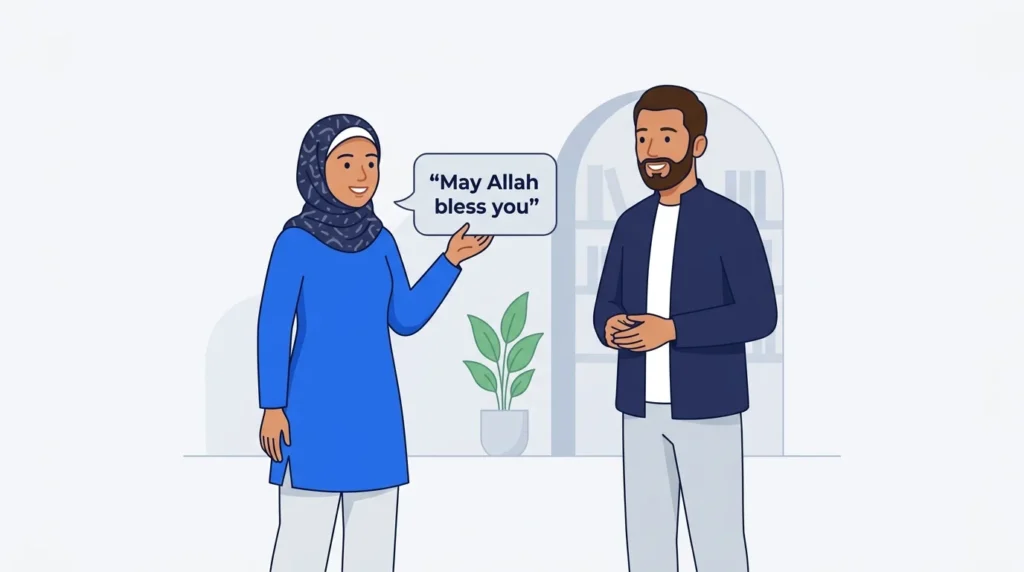
Arabic: بارك الله فيك
Meaning: May Allah bless you.
This phrase returns a kind wish to the person speaking to you.
Example:
Relative: Mashallah, your children are lovely.
You: BarakAllahu Feek. May Allah bless your family too.
In Arabic, the ending can change depending on whom you address. BarakAllahu Feek is commonly used for a man, BarakAllahu Feeki for a woman, and BarakAllahu Feekum for a group.
4. Shukran
Arabic: شكرًا
Meaning: Thank you.
Shukran is a simple Arabic word for expressing thanks. It works well when you want a short reply without using a longer religious phrase.
Example:
Friend: Mashallah, I love your outfit.
You: Shukran! That’s so sweet of you.
5. Ameen
Arabic: آمين
Meaning: Amen, or an expression of agreement with a prayer.
Ameen fits best when the other person includes a prayer or blessing in their words. It is not the most natural reply to every compliment.
Example:
Friend: Mashallah, may Allah bless your new home.
You: Ameen. Thank you!
Which Islamic Reply Should You Choose?
- Alhamdulillah: When expressing gratitude to Allah.
- JazakAllahu Khairan: When thanking someone.
- BarakAllahu Feek: When wishing blessings for someone.
- Shukran: When giving a simple thank-you.
- Ameen: When agreeing with a prayer.
These phrases are common conversational options, not a single required formula for replying to Mashallah.
How to Respond to Mashallah in Different Situations
The same phrase can be used in many settings. Your reply can change based on what the person is praising.
When Someone Says Mashallah About Your Looks
A person might say Mashallah after seeing your outfit, hairstyle, or appearance.
You can accept the compliment without sounding proud or uncomfortable.
Examples:
- Thank you! That’s very kind.
- Alhamdulillah, thank you.
- Shukran! I appreciate it.
- Thank you so much for the compliment.
Example conversation:
Friend: Mashallah, you look lovely today!
You: Thank you! That’s so sweet of you.
A short, friendly response is enough. You do not need to give a long explanation.
When Someone Says Mashallah About Your Baby
People often use Mashallah when admiring a newborn or young child.
A warm reply can show gratitude and appreciation for their kind words.
Examples:
- Alhamdulillah, thank you.
- JazakAllahu Khairan for your kind words.
- Thank you! We are very grateful.
- May Allah bless your family too.
Example conversation:
Relative: Mashallah, your baby is adorable!
You: Alhamdulillah. Thank you for your kind words.
You can also return a blessing if that feels natural to you.
When Someone Says Mashallah About Your Achievement
You might hear Mashallah after passing an exam, getting a new job, earning a promotion, or reaching a personal goal.
A good reply accepts the praise while showing gratitude.
Examples:
- Alhamdulillah, thank you!
- JazakAllahu Khairan for your support.
- Thank you. I worked hard for this.
- I’m grateful for this opportunity.
Example conversation:
Colleague: Mashallah, congratulations on your promotion!
You: Alhamdulillah, thank you. I really appreciate your support.
You can recognize your own effort without ignoring the kindness of the person congratulating you.
When Someone Says Mashallah About Your Home or Car
People may use Mashallah when they see your new house, car, furniture, or another valuable item.
Examples:
- Thank you! We’re very happy with it.
- Alhamdulillah, we’re grateful.
- JazakAllahu Khairan.
- Thank you. May Allah bless you too.
Example conversation:
Neighbor: Mashallah, your new car looks great!
You: Thank you! Alhamdulillah, we’re very grateful.
Keep your reply friendly and modest. You do not need to discuss the item’s price or explain how you bought it.
When Someone Says Mashallah at Work
If a coworker, manager, or client says Mashallah after a successful project, you can reply in a professional way.
Examples:
- Thank you. I appreciate your support.
- Thank you very much. The team worked hard.
- JazakAllahu Khairan for your kind words.
- I appreciate you taking the time to say that.
Example conversation:
Manager: Mashallah, you did a great job on the presentation.
You: Thank you. I appreciate your feedback and support.
If you share the achievement with others, you can also mention their contributions.
When Someone Says Mashallah in a Text Message
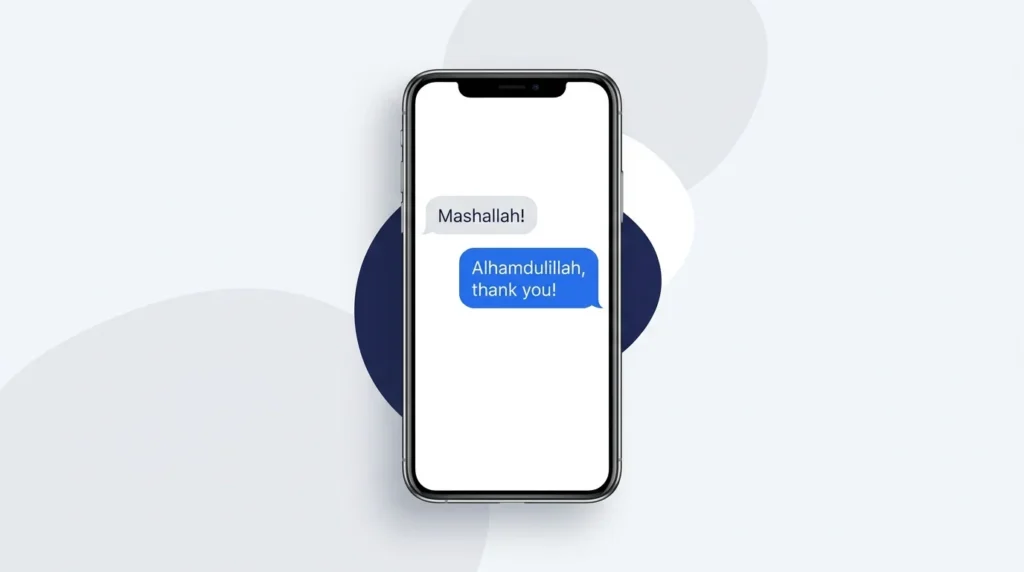
A text reply can be short and natural. You do not need to write a full sentence unless the conversation calls for one.
Copy-ready replies:
- Thank you so much!
- Alhamdulillah ❤️
- JazakAllahu Khairan!
- Aww, thank you!
- Shukran, that’s so kind.
- Thank you! May Allah bless you too.
Choose an emoji only if it suits your relationship with the other person.
When Someone Comments Mashallah on Instagram or Facebook
If someone comments Mashallah on your photo, achievement, or family post, you can reply with a short message.
Examples:
- Thank you ❤️
- Alhamdulillah, thank you!
- JazakAllahu Khairan.
- Thank you for your kind words.
- May Allah bless you too.
A simple heart reaction may also be enough in a casual exchange.
How to Respond to Mashallah in English
You do not need to speak Arabic to reply politely. English responses are fine if they express genuine thanks and suit the conversation.
Here are some natural options:
Short replies
- Thank you!
- That’s so kind.
- I appreciate it.
- Thanks a lot.
Warm replies
- Thank you so much. That means a lot.
- You’re very kind to say that.
- Thank you for your lovely words.
- I really appreciate your kindness.
Faith-based English replies
- Thank Allah for His blessings.
- I’m grateful to Allah.
- May Allah bless you too.
- Thank you, and may God bless you.
Formal replies
- Thank you for your kind words.
- I sincerely appreciate your good wishes.
- Thank you for your thoughtful comment.
The main goal is to acknowledge the person’s kindness. Use a religious expression when it fits your beliefs and the situation.
How to Respond to Mashallah From a Non-Muslim
If a non-Muslim friend, coworker, or neighbor says Mashallah, you can respond warmly just as you would in another friendly conversation.
They may have learned the expression from Muslim friends, family members, or Arabic-speaking communities.
Examples:
- Thank you! That’s very kind.
- I appreciate it.
- Thank you so much for your kind words.
- JazakAllahu Khairan, thank you.
You do not need to explain the phrase unless the person asks about it. A simple reply keeps the conversation natural and respectful.
Is There a Correct Islamic Reply to Mashallah?
There is no single required reply that everyone must use whenever someone says Mashallah.
The phrase itself expresses recognition of Allah’s will. Your response may show gratitude, return a blessing, or simply acknowledge the speaker’s kindness.
For example:
- Alhamdulillah expresses praise and gratitude to Allah.
- JazakAllahu Khairan thanks the person through a prayer.
- BarakAllahu Feek returns a blessing.
- Thank you acknowledges the compliment in plain English.
These phrases have different meanings, so choose the one that best fits the moment. If you want guidance on a specific religious ruling, ask a qualified Islamic scholar rather than treating a common social reply as a fixed religious rule.
Common Mistakes to Avoid When Replying to Mashallah
A reply does not need to be perfect. Still, a few simple tips can help you respond with respect.
- Do not overthink your answer. A sincere thank-you is enough.
- Do not confuse Mashallah with Inshallah. They have different uses.
- Do not use Ameen for every compliment. It fits best with a prayer or good wish.
- Do not assume bad intentions. Mashallah is often a friendly expression of admiration.
- Do not force Arabic phrases. Use words you know and feel comfortable saying.
- Do not treat one reply as mandatory. The situation and your beliefs matter.
Mashallah vs. Inshallah vs. Alhamdulillah
These three expressions are common in Muslim conversations, but they do not mean the same thing.
| Expression | Meaning | Common use |
|---|---|---|
| Mashallah | What Allah has willed | Admiring something good |
| Inshallah | If Allah wills | Talking about future plans |
| Alhamdulillah | All praise is due to Allah | Expressing gratitude |
For example, you might say Mashallah when admiring a friend’s new home, Inshallah when talking about a plan to visit them, and Alhamdulillah when expressing gratitude for a blessing.
Quick Checklist: Choosing the Right Reply
Use this simple guide if you are unsure what to say.
- Someone compliments you: Say Thank you.
- Someone praises your achievement: Say Alhamdulillah.
- Someone offers kind words: Say JazakAllahu Khairan.
- Someone wishes you blessings: Say Thank you, may Allah bless you too.
- Someone sends a text: Use a short, friendly reply.
- Someone praises you at work: Thank them professionally.
- Someone includes a prayer: Ameen may fit.
Frequently Asked Questions
1. What is the best response to Mashallah?
Alhamdulillah, JazakAllahu Khairan, and Thank you are common choices. Pick one that fits the situation and your beliefs.
2. Can I reply to Mashallah with Alhamdulillah?
Yes. Alhamdulillah expresses gratitude and praise to Allah, making it a natural response when someone admires a blessing in your life.
3. Does Mashallah mean thank you?
No. Mashallah means What Allah has willed. People often use it to express admiration or acknowledge something good, rather than to thank someone.
4. What does JazakAllahu Khairan mean?
JazakAllahu Khairan means May Allah reward you with goodness. It is a common way to thank someone while offering a prayer for them.
5. How do you respond to Mashallah in Arabic?
Common options include Alhamdulillah, JazakAllahu Khairan, BarakAllahu Feek, and Shukran. Each has a different meaning and use.
6. Can I simply say thank you after Mashallah?
Yes. A sincere thank-you is a polite way to acknowledge the person’s kind words. You do not have to reply in Arabic.
7. How do I reply to Mashallah on social media?
You can write Thank you, Alhamdulillah, JazakAllahu Khairan, or That’s so kind of you. A simple heart reaction may also work for an informal comment.
8. Is Mashallah used only for babies?
No. People use Mashallah for many good things, including children, achievements, homes, beautiful views, and other blessings.
Conclusion
Knowing how to respond to Mashallah is simple once you know what the phrase means. You can say Alhamdulillah to express gratitude, JazakAllahu Khairan to thank someone with a prayer, BarakAllahu Feek to return a blessing, or simply Thank you to acknowledge a compliment.
The best response is one that feels sincere and fits the moment. You do not need to memorize a long list of Arabic expressions. A short, respectful reply is often all you need.

Emily Carter (Content Writer & Communication Specialist) is a content writer and communication specialist at AllTypeInfo.com. She writes clear, practical, and easy-to-follow guides on email responses, message replies, writing templates, and everyday communication tips. Her goal is to help readers communicate with confidence in both personal and professional settings.