Getting an audio message can leave you wondering what to say next. Maybe a friend shared a funny story, someone you like sent a voice note, or a coworker explained something important. You want to respond naturally, but finding the right words is not always easy.
The good news is that you do not need to send another audio message to reply properly. A short text, a friendly voice note, or a thoughtful question can all work well. The best response depends on what the person said, how well you know them, and whether you want to continue the conversation.
Key Takeaways
- Acknowledge the audio message before sharing your thoughts.
- Use a text or voice reply that feels natural.
- Match your tone to the person and situation.
- Mention a detail to show you listened.
- Be honest if you cannot listen right away.
- Keep your reply short unless the topic needs more detail.
- Ask a question when you want to continue the conversation.
1. Simple and Natural Replies to an Audio Message
Sometimes, you do not need a long response. A short, friendly message is enough to acknowledge the audio and keep the conversation going.
Use these replies when someone sends a casual voice note, a quick update, or a simple explanation.
Short and Casual Replies
- Thanks for the voice note!
- Got it, thanks for letting me know.
- Okay, I hear you!
- Thanks for explaining that.
- Got your message!
- That makes sense.
- I just listened. Thanks!
- Appreciate you telling me.
- Got it. I’ll keep that in mind.
- Thanks for sharing that with me.
When to Use These Replies
These responses work well when:
- A friend shares a quick update.
- Someone explains a simple matter.
- You need to confirm that you received the message.
- The audio does not require a detailed answer.
Example:
Your friend sends an audio message explaining why they will arrive late.
You can reply:
No worries! Thanks for letting me know. See you soon!
This response confirms that you heard the message without making the conversation longer than necessary.
2. Friendly Replies to a Voice Message
When someone shares a personal story, an exciting update, or something that made them happy, a warm response can make the conversation feel more personal.
Instead of replying with only “Okay,” react to what they actually said.
Warm and Friendly Responses
- I loved hearing that from you!
- Thanks for telling me about it.
- That sounds like so much fun!
- I’m glad you shared this with me.
- You made my day with that story.
- I can hear how excited you are!
- That sounds really nice.
- I’m happy things worked out for you.
- Tell me more about what happened!
- I’m glad you reached out.
Example:
Your friend sends a voice note about getting a new job.
You could say:
That’s amazing news! I’m so happy for you. You worked hard for this!
This reply shows that you paid attention and care about the good news.
How to Make Your Reply Feel More Personal
- Mention one detail from the audio.
- Share your honest reaction.
- Ask a related question.
- Use the person’s name when it feels natural.
You do not need to make every response special. A sincere sentence is often enough.
3. Funny Replies to an Audio Message
If the sender is a close friend or someone who enjoys jokes, a funny reply can keep the conversation light.
Choose a response that fits your usual sense of humor. Avoid jokes that could sound rude or make the other person feel bad about their voice.
Funny and Playful Responses
- You could have started a podcast with that story!
- I was waiting for the plot twist!
- That voice note deserves an award.
- I need the full story now!
- You had a lot to say today!
- That was a whole movie in audio form.
- I was not ready for that ending!
- Your storytelling skills are getting better.
- I need a part two!
- That audio had me laughing!
Funny Replies for Close Friends
- Please tell me there’s a sequel.
- You really had to tell me all that!
- I need a minute to process this story.
- The way you explained that made it even funnier.
- I could hear the drama in your voice!
Example:
Your friend sends a long voice note about an awkward moment at work.
You can reply:
I’m crying! 😂 You have to tell me what happened after that.
This response shows that you enjoyed the story and gives your friend a reason to continue.
Quick tip: Use humor to react to the story, not to embarrass the sender.
4. Polite Replies to an Audio Message
A polite response is useful when someone is being thoughtful, sharing important information, or speaking to you in a respectful way.
These replies work for acquaintances, older relatives, teachers, and people you do not know very well.
Polite and Respectful Responses
- Thank you for taking the time to explain.
- I appreciate you sharing that with me.
- Thanks for letting me know.
- Thank you for the helpful information.
- I understand what you’re saying.
- Thanks for your thoughtful message.
- I appreciate the update.
- Thank you for explaining everything clearly.
When You Need More Time to Respond
You may receive an audio message while working, studying, or handling something else. You can acknowledge it without giving an immediate full reply.
- Thanks for the message. I’ll listen carefully when I’m free.
- I received your voice note. I’ll get back to you soon.
- Thanks for sending this. I need a little time to think about it.
- I can’t listen right now, but I’ll check it later.
- Thanks for explaining. I’ll reply properly when I have a moment.
Example:
Someone sends you an audio message about a personal matter, but you are busy.
You can reply:
Thanks for sharing this with me. I’m busy at the moment, but I’ll listen properly and get back to you.
This sets a clear expectation without ignoring the sender.
5. Professional Replies to an Audio Message
Audio messages can also be used at work. A coworker, manager, client, or business partner may send a voice note to explain a task or share an update.
In these situations, your response should be clear, respectful, and focused on the next step.
Professional Response Examples
- Thank you for the update. I’ll take care of it.
- Thanks for explaining the next steps.
- I’ve received your message and will review the details.
- Thank you for clarifying the request.
- I appreciate the update. I’ll follow up shortly.
- Understood. I’ll complete the task as discussed.
- Thanks for the information. I’ll confirm once it’s done.
- I’ve listened to your message and will review the points you raised.
When the Audio Contains Instructions
If the sender gives you a task, briefly confirm what you need to do.
Example:
Your manager sends an audio message explaining changes to a report.
You can reply:
Thanks for the instructions. I’ll update the report and send the revised version by tomorrow afternoon.
This response confirms the task and gives a clear deadline.
When You Need Clarification
If part of the message is unclear, ask a direct question instead of guessing.
- Could you clarify the last point?
- Did you mean the report is due today or tomorrow?
- Could you send the key details in writing?
- I want to make sure I understood the request correctly.
For important work decisions, a written confirmation can help both people keep track of what was agreed.
6. How to Reply to an Audio Message From Someone You Like
If someone you like sends you a voice note, you might want to sound interested without making your reply feel forced.
The easiest approach is to react to something they said, share a little about yourself, or ask a question that keeps the conversation moving.
Sweet and Natural Replies
- I liked hearing your voice.
- That was really nice to listen to.
- You made me smile with that message.
- I could listen to your stories all day.
- Your voice note made my day better.
- I like how you explained that.
- That was cute. Tell me more!
- I wasn’t expecting that, but I loved it.
- Hearing from you was a nice surprise.
- Now I want to hear the rest of the story.
Flirty Replies
Use these when you already have a playful connection.
- So, are you going to send me more voice notes now?
- You sound even sweeter than I expected.
- I might need another voice note from you.
- That smile in your voice is hard to miss.
- You just gave me a reason to check my phone again.
Example:
Someone you like sends an audio message about their day.
You could reply:
I liked hearing about your day. You made the boring parts sound interesting! What happened after that?
This sounds warm and interested without putting too much pressure on the conversation.
What If You Feel Nervous?
You do not need a perfect response.
- Start with a genuine reaction.
- Mention something you enjoyed.
- Ask one simple question.
- Keep your message in your normal style.
A short, honest reply is better than a message that sounds unlike you.
7. How to Reply When You Cannot Listen to an Audio Message
You may be at work, in class, on public transportation, or somewhere you cannot play sound. You can still respond politely.
The key is to be honest about your situation and avoid pretending you have listened.
Replies When You’re Busy
- I can’t listen right now, but I’ll listen later.
- I’m busy at the moment. I’ll get back to you soon.
- Got your voice note! I’ll check it when I’m free.
- I’m somewhere noisy right now. I’ll listen later.
- I can’t play audio at the moment. Can I reply in a bit?
- I’ll listen when I get somewhere quiet.
When You Need the Main Point in Text
If the matter is urgent or you need a quick answer, ask the sender to type the important details.
- Could you text me the main point? I can’t listen right now.
- Can you send the key details in writing?
- I’m unable to play audio at the moment. Is it urgent?
- Could you type the question so I can answer sooner?
Example:
A coworker sends you an audio message while you are in a meeting.
You can reply:
I can’t listen right now because I’m in a meeting. Could you text me the main point if it’s urgent?
This response is polite and gives the other person a useful option.
8. How to Reply to a Long Audio Message
A long voice note may cover several topics, so a simple “Thanks” might not answer the sender’s main question.
You do not have to respond to every detail. Focus on the most important points and ask for clarification if needed.
Useful Replies to Long Voice Notes
- I listened to your message. Thanks for explaining everything.
- There was a lot to cover, but I understand your main point.
- Thanks for sharing all those details. Let me think about it.
- I agree with what you said about the first point.
- Could you clarify one part of your message?
- I listened to the full note. Let me answer each point.
- Thanks for explaining. I’ll respond to the main question first.
If You Need to Answer Several Questions
Use a short numbered reply when the audio contains different requests.
Example:
Someone sends a voice note asking about a meeting, a document, and a deadline.
You could reply:
Thanks for the update! The meeting time works for me. I’ll send the document today, and the deadline is fine.
This covers the main points without sending another long message.
If You Cannot Listen to the Whole Message Yet
Be clear about what you have and have not heard.
I haven’t had time to listen to the full message yet. I’ll go through it later and reply to your questions.
Do not claim you have listened if you have not.
9. Should You Reply to an Audio Message With Text or Voice?
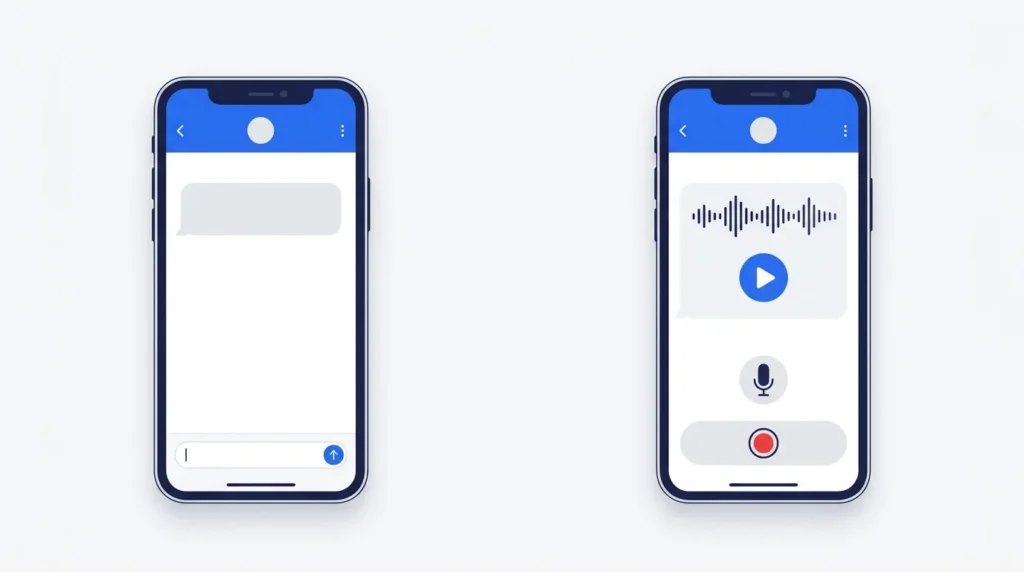
Both options are acceptable. You do not have to copy the sender’s format every time.
Choose the format that suits the topic, your surroundings, and the amount of detail you need to share.
| Situation | Best Reply Format | Example |
|---|---|---|
| Quick confirmation | Text | Got it, thanks! |
| Friendly personal story | Text or voice | That sounds amazing! |
| Emotional conversation | Text or voice | I’m here if you want to talk. |
| Work instructions | Text | I’ll complete this by Friday. |
| Long explanation | Text or voice | Let me go through the main points. |
| Busy or noisy setting | Text | I’ll listen later. |
| Important date or number | Text | The meeting is at 2 PM. |
| Playful conversation | Either | That story needs a sequel! |
When a Text Reply Works Best
- You need to answer quickly.
- The answer contains dates or numbers.
- You are somewhere you cannot speak.
- You want to keep a clear written record.
When a Voice Reply Works Best
- Your tone may help explain your feelings.
- You want to share a personal story.
- The conversation feels more natural by voice.
- You have several points that are easier to explain aloud.
The main rule: Reply in the format that helps you communicate clearly. A thoughtful text can be just as meaningful as a voice note.
10. How to Reply to an Audio Message Without Sounding Dry
A dry reply can make a conversation feel as if it has ended, even when you want to keep talking.
Replies such as “Okay,” “Fine,” or “Cool” are not always rude. However, they may feel distant when someone has shared a personal story or asked an important question.
Better Alternatives to Short, Dry Replies
| Instead of | Try This |
|---|---|
| Okay | Okay, that makes sense! |
| Cool | That sounds really cool! |
| Nice | That’s really nice. How did it go? |
| Haha | That part made me laugh! |
| Fine | That works for me. Thanks! |
| Thanks | Thanks for telling me about it. |
| Sure | Sure, that sounds good to me. |
Three Ways to Make Your Reply Warmer
- React to something specific in the audio.
- Add a short personal comment.
- Ask a relevant follow-up question.
Example:
Someone tells you about a concert they attended.
Instead of replying with “Nice,” try:
That sounds like an amazing concert! Who was your favorite performer?
The second reply gives the other person something to respond to.
11. How to Reply When You Disagree With an Audio Message
Sometimes, the sender shares an opinion or suggestion you do not agree with. You can express your view without turning the conversation into an argument.
Listen to the full message before replying, then focus on the point where your views differ.
Respectful Replies When You Disagree
- I see your point, but I have a different view.
- I understand what you’re saying. I see it a little differently.
- That’s a fair point, although I don’t fully agree.
- I appreciate your explanation. Can I share another view?
- I agree with part of that, but I have a question.
- I see why you feel that way, even though I disagree.
Example:
A friend sends an audio message explaining why they think you should cancel your plans.
You could reply:
I understand your concerns, but I still think we should go. Can we talk about another option?
This makes your position clear while leaving room for a calm discussion.
12. How to Reply to an Emotional or Serious Audio Message
An emotional voice note may contain personal worries, disappointment, sadness, or difficult news. A quick joke or casual response may not fit the situation.
Start by acknowledging what the person shared. You can offer support without trying to solve every problem.
Supportive Replies
- Thank you for trusting me with this.
- I’m sorry you’re going through this.
- I’m glad you told me how you feel.
- I’m here if you want to talk more.
- That sounds really difficult.
- I appreciate you being honest with me.
- Take your time. You don’t have to explain everything now.
- I hear what you’re saying, and I’m listening.
If You Do Not Know What to Say
You do not need to have the perfect words.
Try a simple response:
Thank you for telling me. I may not have the right words, but I’m here to listen.
This shows care without making promises you may not be able to keep.
If the Person Is Upset With You
Avoid responding defensively before you have considered what they said.
- I hear your concerns, and I want to talk about them.
- I’m sorry my actions hurt you.
- Thank you for telling me how you feel.
- Can we talk about this calmly when we’re both ready?
Choose an answer that reflects the actual situation. Do not apologize for something you did not do just to end the conversation.
13. Common Mistakes to Avoid When Replying to Audio Messages
A good response does not need to be long or clever. It needs to fit the message and the relationship.
Avoid these common mistakes:
- Pretending to listen: Never claim you heard the message if you did not.
- Giving a cold reply: Add context when a short answer could sound dismissive.
- Making unwanted jokes: Keep humor away from sensitive topics.
- Ignoring direct questions: Answer the main question before changing the subject.
- Sending an overly long reply: Focus on the points that matter.
- Guessing unclear details: Ask the sender to explain.
- Sharing private audio: Get permission before forwarding personal recordings.
- Feeling forced to send audio: A text reply is fine when it suits you better.
A helpful response shows that you have paid attention, even if it takes only one sentence.
14. A Simple Method for Writing the Right Reply
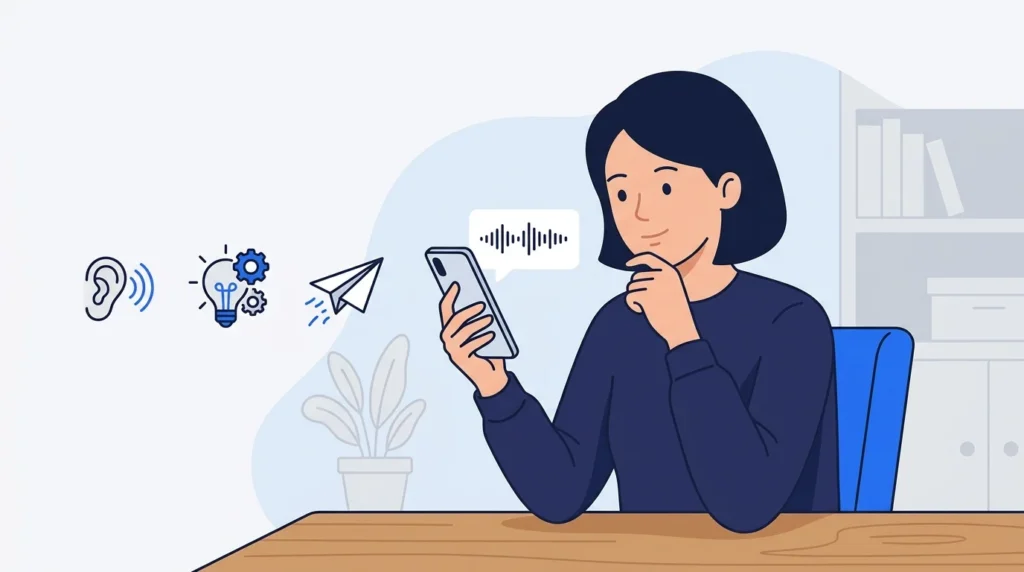
If you are unsure what to say, follow these five steps.
- Listen to the message. Find the main point.
- Identify the tone. Is it casual, serious, funny, or professional?
- Acknowledge the message. Thank the sender or react naturally.
- Answer the main point. Share your response or ask a question.
- Check your wording. Make sure it sounds clear and respectful.
Example Using All Five Steps
Suppose your friend sends a voice note about a difficult day at work.
You listen, notice that they sound upset, and decide to offer support.
Your reply could be:
That sounds like a really rough day. I’m sorry you had to deal with that. Do you want to talk about what happened?
This answer acknowledges their feelings, responds to the main point, and invites them to continue if they wish.
15. Quick Checklist Before Sending Your Reply
Use this short checklist whenever you are unsure about your response.
- Did I listen to the message?
- Did I answer the main question?
- Does my tone fit the situation?
- Did I include any needed details?
- Is my reply clear and respectful?
- Did I avoid sharing private information?
- Did I ask for clarification if needed?
You do not need to check every point for a simple message. Use the list when the conversation needs more care.
Frequently Asked Questions
1. What is the best way to reply to an audio message?
A good reply acknowledges the message and responds to its main point. For example, “Thanks for explaining that. I understand what you mean.” Add a question if you want to continue the conversation.
2. Is it rude to reply to a voice message with text?
No. A text reply is acceptable, even if the other person sent an audio message. Choose the format that works best for your situation and answer thoughtfully.
3. How do I reply when I cannot listen to a voice note?
Be honest and tell the sender when you can listen. You could say, “I can’t listen right now, but I’ll check your message when I’m free.”
4. What should I say after listening to someone’s voice note?
React to the content rather than the format alone. You can say, “Thanks for explaining,” “That sounds great,” or “I see what you mean,” depending on the message.
5. How do I reply to a voice message from someone I like?
Keep your reply natural and show genuine interest. For example, “I liked hearing from you! What happened after that?” A playful response can also work if you already share that kind of connection.
6. How do I reply to a long audio message?
Acknowledge the message, respond to its main points, and ask questions about anything unclear. You can also explain that you need more time before giving a full answer.
7. Do I have to send a voice note back?
No. You can reply with text, audio, or a phone call. Pick the format that makes the most sense for the conversation.
8. How do I reply to an audio message professionally?
Thank the sender, confirm the key information, and state your next step. For example, “Thanks for the update. I’ll review the details and send my response by tomorrow.”
Conclusion
Knowing how to reply to an audio message comes down to choosing words that fit the situation. A short acknowledgment works for a quick update, a warm response suits a personal story, and a clear answer helps with work-related messages.
You do not have to match every voice note with another recording. Listen carefully, respond to the main point, and keep your tone natural. Whether you are replying to a friend, someone you like, or a coworker, a thoughtful message is usually all you need.

Emily Carter (Content Writer & Communication Specialist) is a content writer and communication specialist at AllTypeInfo.com. She writes clear, practical, and easy-to-follow guides on email responses, message replies, writing templates, and everyday communication tips. Her goal is to help readers communicate with confidence in both personal and professional settings.