
Waiting for someone to respond to your email or text can be frustrating, especially when you need an answer to make a decision. You may want to send another message, but you do not want to sound rude, impatient, or demanding. The good news is that a few thoughtful words can help you ask for a reply while keeping the conversation friendly.
The best way to follow up depends on who you are contacting and why you need an answer. A message to your manager may need a professional tone, while a text to a friend can sound more relaxed. In this guide, you will find 25 polite ways to ask someone for a reply, along with copy-ready examples for different situations.
Key Takeaways
- Keep your follow-up short and respectful.
- Mention your earlier message or the topic.
- Ask a clear question that is easy to answer.
- Include a deadline when the matter requires one.
- Choose a tone that fits your relationship.
- Avoid blaming someone for a delayed reply.
- Send a reasonable reminder instead of repeated messages.
1. What Are the Best Polite Ways to Ask Someone for a Reply?
The best phrases remind someone about your message without making them feel pressured. Choose wording that fits your relationship, the subject, and how soon you need an answer.
Here are some useful options:
- I just wanted to follow up on my previous message.
- Could you please let me know your thoughts when you have a moment?
- I would appreciate your response when you get a chance.
- Just checking in to see if you had a chance to review my message.
- When you have time, could you please get back to me?
- I wanted to check whether you received my earlier email.
- Could you share an update when it is convenient?
- I would love to hear your thoughts on this.
- Please let me know if you have any updates.
- Could you let me know what you think?
Best all-purpose phrase:
Hi [Name], I just wanted to follow up on my previous message about [topic]. When you have a moment, could you please let me know your thoughts? Thank you!
This message works in many situations because it explains why you are reaching out and gives the other person room to respond.
2. Polite Ways to Ask for a Reply in a Professional Email
Professional emails should be clear, respectful, and easy to answer. You do not need to use complicated language to sound professional.
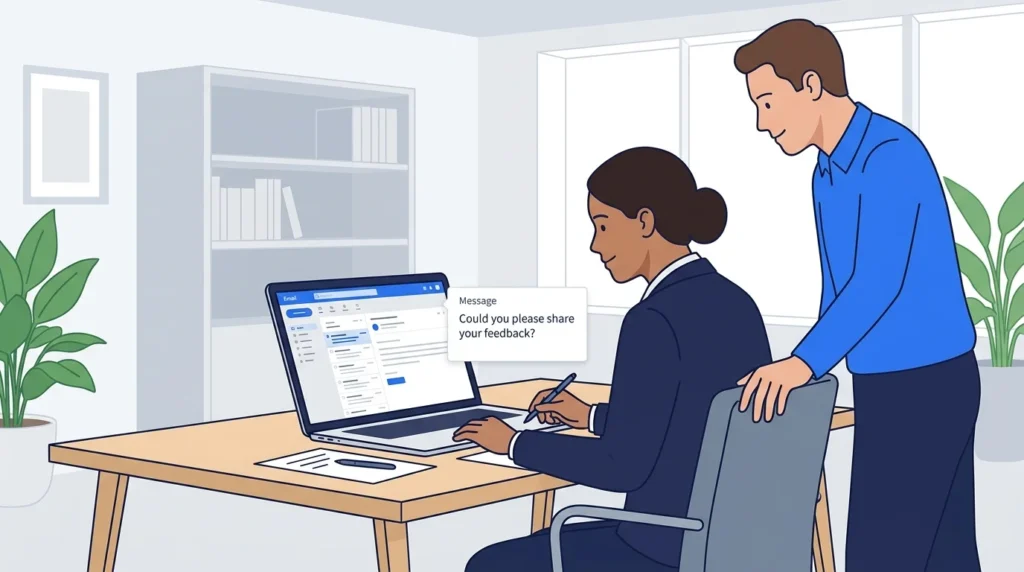
Here are five phrases you can use at work.
1. I would appreciate your feedback on this.
Use this when you need someone to review a document, proposal, or idea.
Example:
Hi Sarah,
I wanted to follow up on the project proposal I sent earlier. I would appreciate your feedback when you have a chance.
Thank you!
2. Could you please provide an update?
This phrase works when you need to know the status of a task or request.
Example:
Hi James,
Could you please provide an update on the report? I would like to plan the next steps based on its status.
Thanks for your help.
3. I wanted to check whether you had a chance to review this.
Use this when someone needs to read or assess something before replying.
Example:
Hi Emily,
I wanted to check whether you had a chance to review the attached document. Please let me know if you have any questions.
Best regards,
[Your Name]
4. Please let me know your thoughts when convenient.
This phrase is suitable when the request is important but does not require an immediate answer.
Example:
Hi David,
I have shared the revised plan for your review. Please let me know your thoughts when convenient.
Best,
[Your Name]
5. Could you let me know by [date]?
Use this when you need an answer by a real deadline.
Example:
Hi Alex,
Could you please share your feedback by Thursday? I need to finalize the presentation before Friday’s meeting.
Thank you for your time.
A clear deadline helps the recipient plan their response. Only include a date when you have a genuine reason to need one.
3. Polite Ways to Ask Someone to Reply to a Text Message
Text messages are usually shorter and more casual than emails. You can sound friendly without writing a long explanation.
Try these options:
6. Just checking in on my last message.
A simple choice when someone has not replied.
Hey! Just checking in on my last message. Let me know when you get a chance.
7. Did you get a chance to see my message?
Use this when you are unsure whether the person saw your text.
Hi! Did you get a chance to see my message about Saturday? Let me know what works for you.
8. Let me know what you think when you can.
This sounds relaxed and works well for everyday questions.
I sent you the details earlier. Let me know what you think when you can!
9. Could you get back to me when you have a moment?
Use this when you need an answer but do not want to sound demanding.
Hey, could you get back to me when you have a moment? I just need to confirm a few details.
10. No rush, but I’d appreciate an update.
This is useful when you want to show that the request is not urgent.
No rush, but I’d appreciate an update when you have time. Thanks!
Use this phrase only when you can genuinely wait. If you have a deadline, state it clearly instead.
4. Polite Ways to Ask for a Reply From Your Boss or Manager
When messaging your manager, keep the request professional and focus on the task. Explain why you need the response if it affects your work.
11. Could you please share your feedback when you have time?
This works when you need approval or advice.
Hi [Name], I wanted to follow up on the draft I shared yesterday. Could you please share your feedback when you have time? Thank you.
12. I would appreciate your guidance on the next steps.
Use this when you need direction before moving forward.
Hi [Name], I’m checking in on the project plan. I would appreciate your guidance on the next steps so I can continue with the work.
13. Could you confirm how you would like me to proceed?
This phrase is useful when a decision is holding up your work.
Hi [Name], could you confirm how you would like me to proceed with the updated schedule? I want to make sure I follow the right approach.
Quick tip: Explain what is waiting on the reply. This helps your manager see why the answer matters.
5. Polite Ways to Ask a Client or Customer for a Reply
When contacting a client, keep your message helpful and focused on their needs. Avoid language that suggests they have done something wrong by not replying.
14. I wanted to follow up to see if you had any questions.
Use this after sending a proposal, quote, or project details.
Hi [Name],
I wanted to follow up on the proposal I shared last week. Please let me know if you have any questions or need further details.
Best regards,
[Your Name]
15. Please let me know if you would like to move forward.
This phrase helps when you need a client’s decision.
Hi [Name], I’m checking in about the service proposal. Please let me know if you would like to move forward or if you need any changes.
16. Could you confirm your decision by [date]?
Use this when a decision affects a schedule or agreed business deadline.
Hi [Name],
Could you please confirm your decision by October 20? This will help us plan the next stage of the project.
Thank you for your time.
Make sure the date is realistic and that the recipient knows why it matters.
6. Polite Ways to Ask for a Reply When You Need an Urgent Answer
Sometimes, you need a response quickly to complete a task, confirm an appointment, or make an important decision. In these cases, politeness does not mean hiding the urgency.
Be direct about what you need and when you need it.
17. Could you please get back to me by [time]?
Hi [Name], could you please confirm the meeting time by 2 PM today? I need to finalize the schedule. Thank you.
18. I would appreciate a quick response so I can proceed.
Hi [Name], I need your approval before I can submit the final document. I would appreciate a quick response so I can proceed on time.
19. When possible, could you confirm this today?
Hi [Name], when possible, could you confirm whether the revised date works for you today? I need to update the team.
How to make an urgent request polite
- Explain why you need the answer.
- Give a clear and realistic deadline.
- Ask one direct question.
- Thank the person for their help.
- Use a calm, respectful tone.
Avoid marking every message as urgent. Save urgent wording for matters that truly need quick action.
7. Polite Ways to Ask a Friend or Family Member to Reply
Personal messages can sound warmer and more relaxed. You do not need formal business language when contacting someone close to you.
20. Hey, just wanted to check if you saw my message.
Hey! Just wanted to check if you saw my message about the weekend. Let me know when you can.
21. Let me know when you get a chance.
Hi! Let me know when you get a chance. I wanted to ask you something about our plans.
22. Could you let me know what works for you?
Hey, could you let me know what works for you on Sunday? I need to plan my day.
23. Just checking whether we’re still on for today.
Hey! Just checking whether we’re still on for today. Please let me know when you can.
These phrases keep the conversation friendly while making it clear that you are waiting for an answer.
If the topic is personal or sensitive, avoid sending repeated reminders in a short period. Give the other person some space to respond.
8. Polite Ways to Ask for a Reply Without Sounding Pushy
The difference between a polite reminder and a pushy message often comes down to tone. A good follow-up refers to the original request and asks for a clear next step.
24. I wanted to bring this back to your attention.
This works well for a work email that may have been missed.
Hi [Name], I wanted to bring my earlier message about the budget review back to your attention. Could you share your feedback when you have a moment?
25. When you have a chance, could you let me know either way?
Use this when you need a decision, even if the answer is no.
Hi [Name], I wanted to check in about the invitation I sent earlier. When you have a chance, could you let me know either way? Thanks!
This wording makes it easier for the person to give an honest answer instead of leaving the question open.
Phrases to avoid
| Avoid saying | Try saying instead |
|---|---|
| Why haven’t you replied? | I wanted to follow up on my earlier message. |
| Reply ASAP! | Could you please respond by [date]? |
| I’m still waiting for you. | I would appreciate an update when possible. |
| You ignored my email. | I wanted to check whether you saw my email. |
| Answer me today. | Could you please let me know by the end of today? |
The goal is to ask for the response you need without blaming or embarrassing the other person.
9. How Long Should You Wait Before Asking for a Reply?
The right time to follow up depends on the request, your relationship with the recipient, and any deadline you agreed on.
Use these general guidelines as a starting point, not fixed rules.
| Situation | Suggested timing |
|---|---|
| Routine work email | After 2–5 business days |
| Client proposal | After 3–5 business days |
| Job application | Follow the employer’s stated timeline |
| Urgent work request | Before the deadline becomes a problem |
| Personal text | Give the person reasonable time |
| Meeting confirmation | Follow up before the meeting |
If someone gave you a specific date for their response, use that date as your guide.
Before sending another message, check whether the person has replied in another email thread or communication app.
Signs that it may be time to follow up
- The expected reply date has passed.
- You need an answer to continue your work.
- The original message may have been missed.
- A decision or meeting depends on the answer.
- You have waited a reasonable amount of time.
10. How to Write a Polite Follow-Up Message
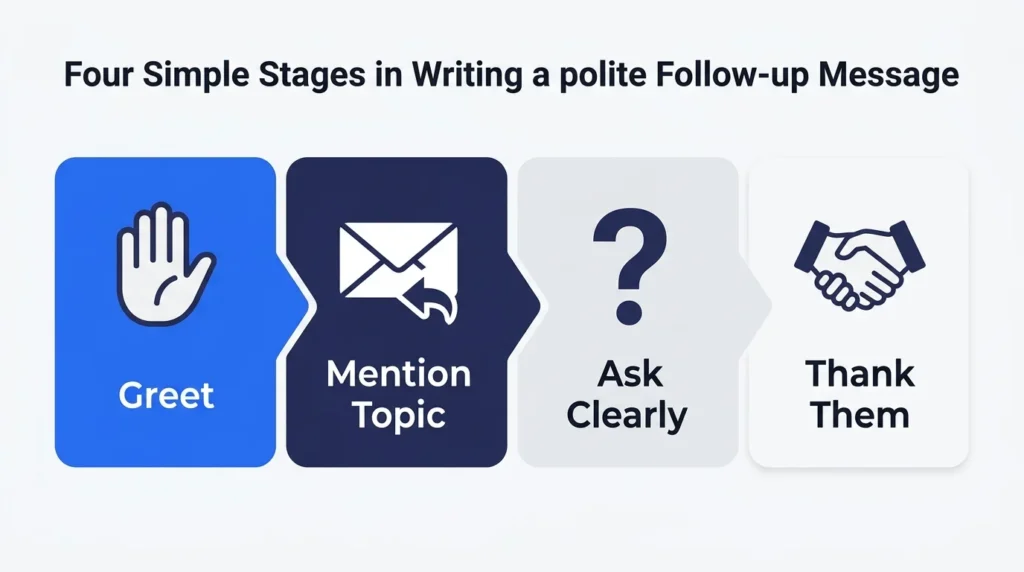
You can write an effective follow-up in four simple steps.
Step 1: Start with a friendly greeting
Use the person’s name when appropriate.
Example: Hi Sarah, I hope you’re doing well.
Step 2: Mention your earlier message
Briefly state what you contacted them about.
Example: I’m following up on the proposal I sent last Tuesday.
Step 3: Ask for a clear response
Make it easy for the person to know what you need.
Example: Could you please let me know whether the proposed date works for you?
Step 4: Close politely
Thank the person for their time.
Example: Thank you for your help. I look forward to hearing from you.
Copy-ready follow-up email
Subject: Follow-Up on [Topic]
Hi [Name],
I hope you’re doing well. I’m following up on my previous email about [topic].
When you have a moment, could you please share an update? If possible, I’d appreciate a response by [date] so I can plan the next steps.
Thank you for your time.
Best regards, [Your Name]
Remove the deadline sentence if you do not need an answer by a certain date.
11. Common Mistakes to Avoid When Asking for a Reply
Even a reasonable request can sound rude if the wording is unclear or too forceful.
Avoid these common mistakes:
- Following up too soon: Allow time for the person to respond.
- Sounding accusatory: Do not assume the person ignored you.
- Writing long messages: Keep the reminder focused.
- Being vague: State the topic and the answer you need.
- Adding false urgency: Use only real deadlines.
- Sending repeated messages: Give the person time between reminders.
- Over-apologizing: You can ask for an update without saying sorry repeatedly.
A polite message can still be direct. You do not need to hide your request behind several sentences of explanation.
12. Quick Checklist Before Sending Your Follow-Up
Use this checklist to review your message before sending it.
- Have I mentioned the original topic?
- Is my request clear?
- Does the tone fit the recipient?
- Have I allowed enough time for a reply?
- Is any deadline realistic?
- Have I removed blame or pressure?
- Can the recipient answer easily?
If your message meets these points, it is likely to sound clear and respectful.
Frequently Asked Questions
1. How do you politely ask someone to reply to your message?
Say, “I just wanted to follow up on my previous message. Could you please let me know your thoughts when you have a moment?” This is polite, clear, and suitable for many situations.
2. How do I ask for a reply without sounding rude?
Mention your earlier message, ask one clear question, and use a respectful tone. Avoid blaming the person for taking time to respond.
3. What is a professional way to say I am waiting for your response?
You can say, “I would appreciate an update when you have a chance.” If you need an answer by a certain date, include that date in your message.
4. How do you remind someone to reply to an email?
Reply in the original email thread when the topic is unchanged. Briefly mention the earlier request and ask whether the person has had a chance to review it.
5. How do I politely ask for an urgent response?
Explain why you need the answer and state a realistic deadline. For example, “Could you please confirm by 3 PM today? I need to finalize the schedule.”
6. Is it rude to ask someone why they have not replied?
It can sound accusatory, especially if you do not know why the person has not responded. A gentle follow-up is usually a better first step.
7. How many times should I follow up if someone does not respond?
For a routine request, one or two follow-ups are often enough. If the matter remains unresolved, consider another suitable contact method or follow the relevant work process.
8. What is a polite way to ask someone to reply by a deadline?
Try, “Could you please send me your response by [date]? This will help me complete the next step on time.” Give the person enough time to respond.
Conclusion
The best polite ways to ask someone for a reply are short, clear, and respectful. Whether you are contacting a manager, client, coworker, friend, or family member, choose words that fit the situation and make your request easy to answer.
A simple phrase such as “I wanted to follow up on my previous message” works in many cases. If you need an answer by a certain date, explain why and state the deadline clearly. Give the person reasonable time to respond, avoid repeated reminders, and keep your tone friendly. This approach helps you ask for the reply you need without creating unnecessary tension.

Emily Carter (Content Writer & Communication Specialist) is a content writer and communication specialist at AllTypeInfo.com. She writes clear, practical, and easy-to-follow guides on email responses, message replies, writing templates, and everyday communication tips. Her goal is to help readers communicate with confidence in both personal and professional settings.