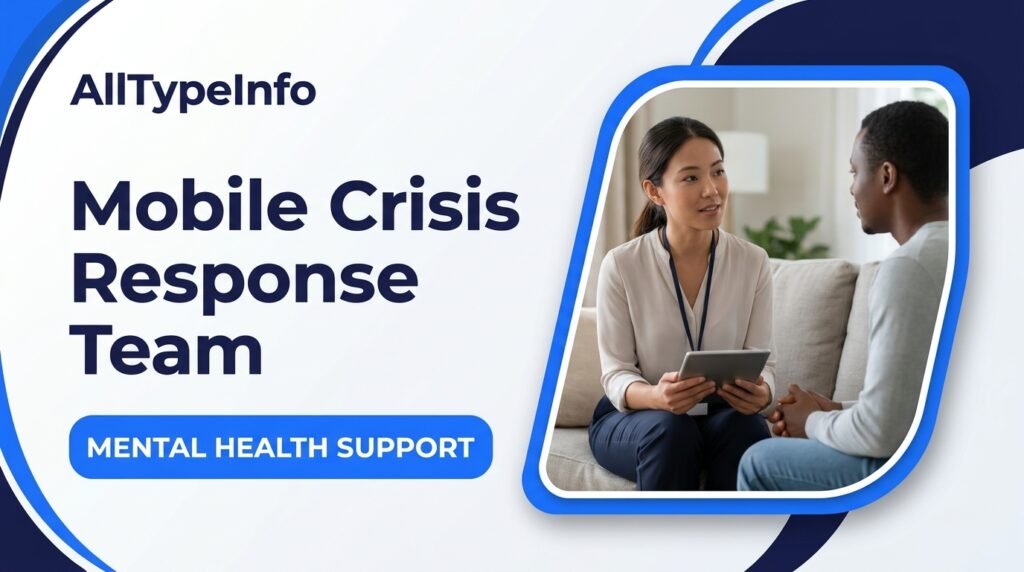
A mental health crisis can happen at home, school, work, or in a public place. A person may feel overwhelmed, experience severe emotional distress, have thoughts of suicide, or struggle with a substance use problem. During these moments, getting the right help quickly can make a big difference.
A mobile crisis response team provides in-person support to people experiencing a mental health or behavioral health crisis. Instead of requiring someone to visit a hospital or clinic first, trained crisis workers can come to the person’s location.
These teams help assess the situation, reduce immediate distress, create a safety plan, and connect people with further care. They can also help families who are worried about someone they love.
In this guide, you will learn what a mobile crisis response team does, how to contact one, who can use its services, and what happens when the team arrives.
What Is a Mobile Crisis Response Team?
A mobile crisis response team is a group of trained professionals who travel to a person’s location to provide help during a mental health crisis, behavioral health emergency, or substance use crisis.
These teams usually include mental health professionals, crisis counselors, social workers, and trained peer support workers. Some teams also include nurses or other healthcare professionals.
Their main goal is to help a person feel safer, reduce immediate distress, and find the right next step for care.
Unlike a traditional hospital visit, a mobile crisis response can take place in a familiar setting, such as someone’s home, school, or another community location.
Mobile crisis services are part of the U.S. behavioral health crisis care system. They aim to provide a health-focused response and reduce unnecessary emergency room visits and law enforcement involvement when possible.
Example 1:
A college student becomes extremely anxious after a difficult personal experience. The student feels unable to calm down, and a family member contacts a local mobile crisis response team for help.
The team may visit the student, assess the situation, provide emotional support, and help arrange further mental health care.
Example 2:
A parent notices that their teenage child has become withdrawn and is showing signs of serious emotional distress. The parent contacts a local crisis service to request an assessment.
A youth-focused crisis team may meet the family, assess the child’s immediate needs, and help create a safety plan.
What Does a Mobile Crisis Response Team Do?
A mobile crisis response team provides several services based on the person’s needs and safety.
The exact services vary by state, county, and local program. However, most teams focus on the following areas.

1. Mental Health Assessment
The team talks with the person to learn what is happening and identify their immediate needs.
An assessment may include questions about:
- Current emotional distress.
- Thoughts of suicide or self-harm.
- Possible risks to other people.
- Mental health symptoms.
- Substance use.
- Medical concerns.
- Available family and community support.
The team uses this information to decide what type of help may be needed.
Example 3:
A person has been experiencing severe anxiety and has stopped attending work. A crisis worker asks about their symptoms, recent events, and current safety.
This assessment helps the team decide whether the person can receive support at home or needs a higher level of care.
2. Crisis Intervention and De-Escalation
Crisis intervention means providing immediate support to help someone through a difficult situation.
De-escalation means using calm communication and other safe methods to reduce emotional distress and tension.
Crisis workers may:
- Speak in a calm and respectful way.
- Listen without judging.
- Give the person time to explain their feelings.
- Help identify immediate concerns.
- Reduce stressful situations where possible.
- Discuss practical ways to stay safe.
The goal is to help the person regain a sense of safety and control.
Example 4:
A person becomes extremely upset after an argument with a family member. A crisis worker listens, gives the person time to speak, and helps them identify steps to reduce the stress.
This approach can help lower tension and make it easier to decide what support is needed next.
3. Safety Planning
A safety plan is a simple plan that explains what a person can do if their mental health symptoms become worse.

It may include:
- Personal warning signs.
- Activities that help reduce stress.
- Trusted people to contact.
- Family members or friends who can offer support.
- Mental health professionals to contact.
- Emergency services to use when needed.
A safety plan should fit the person’s needs and situation.
Example 5:
A person who has experienced a mental health crisis agrees to create a safety plan with a crisis worker. The plan includes contacting a trusted family member, attending a scheduled therapy appointment, and calling 988 if another crisis develops.
The plan gives the person clear steps to follow when they need help again.
4. Substance Use Crisis Support
Some mobile crisis teams also help people experiencing problems related to alcohol or drug use.
They may assess immediate risks, provide emotional support, and connect people with suitable treatment programs.
Depending on the person’s condition, they may also help arrange medical care.
Example 6:
A person experiences severe emotional distress during a substance use problem. A mobile crisis team assesses the situation and helps connect them with suitable behavioral health and substance use services.
Medical emergencies, including suspected overdose or dangerous withdrawal symptoms, require immediate medical attention through emergency services.
5. Referrals and Follow-Up Care
A crisis response should address what happens after the immediate problem.
Mobile crisis workers may connect people with:
- Mental health counselors.
- Psychiatrists.
- Primary care providers.
- Substance use treatment programs.
- Community mental health centers.
- Support groups.
- Housing and social support services.
Some programs also provide follow-up calls or visits.
Example 7:
A person receives crisis support at home after experiencing severe depression. The team helps arrange an appointment with a local mental health provider and explains how to access additional support.
This helps the person continue receiving care after the initial response.
Who Can Use Mobile Crisis Response Services?
Mobile crisis services are generally available to people experiencing a mental health or behavioral health crisis. However, eligibility depends on the local program.

People who may benefit include:
Adults
Adults experiencing severe anxiety, depression, emotional distress, suicidal thoughts, or other behavioral health concerns may be able to request assistance.
Children and Teenagers
Some programs have specialized teams for children and young people.
These teams may work with parents, caregivers, schools, and other professionals to support the child.
Families and Caregivers
Family members can often contact a crisis service when they are worried about someone.
They can explain what is happening and ask whether an in-person assessment is available.
People Experiencing Substance Use Problems
Some mobile crisis programs support people experiencing substance-related emotional or behavioral health crises.
People Without Insurance
Some community-based crisis services are available regardless of insurance status. However, eligibility and fees vary by location.
People should ask their local program about access and payment requirements.
How Do You Contact a Mobile Crisis Response Team?
There are several ways to reach mobile crisis services in the United States.
1. Call or Text 988
The 988 Suicide & Crisis Lifeline is one of the main ways to access mental health crisis support in the United States.
You can:
- Call 988.
- Text 988.
- Use the online chat service through the 988 Lifeline website.
A trained crisis counselor will listen, provide support, and help identify the next steps.
If an in-person response is needed and available, the counselor may help connect you with a local mobile crisis team.
However, calling 988 does not automatically mean a mobile team will be sent. The response depends on the situation, local services, and the person’s needs.
2. Contact Your Local Mental Health Crisis Program
Many states and counties operate their own mobile crisis programs.
You can search for:
- Mobile crisis services near me.
- Local mental health crisis team.
- County behavioral health crisis services.
- Community mobile crisis response.
Ask whether the program provides in-person visits and whether it operates 24 hours a day.
3. Contact a Community Mental Health Center
A community mental health center may provide crisis services or help connect you with a local response team.
These centers can also explain available counseling, treatment, and follow-up services.
4. Ask a Healthcare Provider
A doctor, therapist, or other healthcare professional may help connect someone with local crisis services.
They may also know which programs serve adults, children, or people with specific needs.
Important: If someone has an immediate medical emergency, is in immediate danger, or needs urgent physical protection, call 911 or go to the nearest emergency department. Do not wait for a mobile crisis team.
What Happens When a Mobile Crisis Team Arrives?
The process can vary, but most responses follow several basic steps.
Step 1: The Team Receives the Request
The team receives information about the person, the location, and the reason for the request.
A crisis counselor or dispatcher may ask questions about immediate safety concerns.
Step 2: The Team Meets the Person
If an in-person response is appropriate and available, the team travels to the agreed location.
This may be a home, school, workplace, or another safe community setting.
Step 3: Crisis Workers Assess the Situation
The workers speak with the person and assess their emotional health, immediate safety, and support needs.
They may also speak with family members or caregivers when appropriate.
Step 4: The Team Provides Support
The team may use listening, crisis intervention, and de-escalation techniques.
They may also help the person identify what is causing distress and what can help them feel safer.
Step 5: The Team Creates a Care Plan
The team discusses the next steps with the person.
These may include a safety plan, referrals, counseling, medical care, or another level of support.
Step 6: Follow-Up Support
Depending on the program, the team may arrange a follow-up call, visit, or referral.
The goal is to help the person stay connected with care after the crisis response.
Example 8:
A family contacts a local mobile crisis program because an adult family member is experiencing severe emotional distress. The team visits the home, speaks with the person, assesses safety, and helps the family plan the next steps.
The team may recommend outpatient treatment, follow-up support, or a higher level of care based on the assessment.
Are Mobile Crisis Response Teams the Same as Police?
No. A mobile crisis response team and a police department have different roles.
Mobile crisis teams focus on behavioral health support. Police officers focus on public safety and law enforcement.
A typical mobile crisis team may include:
- Licensed mental health professionals.
- Social workers.
- Crisis counselors.
- Behavioral health specialists.
- Trained peer support workers.
Some teams use a joint response model that includes mental health professionals and law enforcement or emergency medical staff.
The main goal of a behavioral health mobile crisis team is to provide a health-focused response when possible.
When Might Police Be Involved?
Police or other emergency responders may be involved when there is an immediate safety threat.
For example, law enforcement or emergency medical services may be needed if someone:
- Has a weapon and presents an immediate threat.
- Is causing serious physical harm.
- Has a medical emergency.
- Creates an immediate danger that the crisis team cannot safely manage.
The exact response depends on local procedures and the circumstances.
Example 9:
A person experiences a mental health crisis but is calm enough to speak with trained crisis workers. A mobile team may respond without police involvement.
This shows how a health-focused response can sometimes help without involving law enforcement.
How Much Does a Mobile Crisis Response Team Cost?
The cost of mobile crisis services depends on the state, local program, funding, and insurance coverage.
Some programs offer free services, while others may have billing rules or eligibility requirements.
Here are some common payment options.
Medicaid
Some states cover qualifying community-based mobile crisis intervention services through Medicaid.
Coverage rules and available services vary by state.
Private Health Insurance
Some private insurance plans may cover certain behavioral health crisis services.
Contact your insurance provider to ask about coverage, copayments, and possible charges.
State and Local Programs
State and county behavioral health programs may use public funding to provide mobile crisis services.
Some programs are available without requiring the person to have insurance.
What Should You Ask About Costs?
Before using a non-emergency service, ask:
- Is the mobile crisis response free?
- Do you accept Medicaid?
- Do you accept private insurance?
- Are there any out-of-pocket costs?
- Are services available without insurance?
- Is there a separate charge for follow-up care?
If someone needs immediate emergency help, do not delay care because of cost concerns.
How Long Does It Take for a Mobile Crisis Team to Arrive?
There is no single response time for all mobile crisis teams in the United States.
The arrival time depends on several factors:
- The person’s location.
- The urgency of the situation.
- The number of available crisis workers.
- Travel distance.
- Weather and road conditions.
- Local program staffing.
Some urban programs may have teams nearby, while rural areas may have longer travel times.
Many programs aim to provide a rapid response, but an exact arrival time cannot be guaranteed.
If the person’s condition becomes more dangerous while waiting, contact emergency services.
Example 10:
A person in a rural area contacts a mobile crisis program. The nearest team is traveling from another part of the county, so the response may take longer.
The caller should explain any changes in the person’s condition and contact 911 if an immediate emergency develops.
What Is the Difference Between a Mobile Crisis Team and a Crisis Hotline?
Both services help people experiencing mental health distress, but they provide support in different ways.
| Feature | Mobile Crisis Team | Crisis Hotline |
|---|---|---|
| Type of support | In-person support | Phone, text, or online support |
| Location | Travels to the person | Remote communication |
| Assessment | Can assess the person in person | Conducts an assessment through conversation |
| De-escalation | Provides direct support | Provides verbal support |
| Safety planning | Can create a plan together | Can help create a plan remotely |
| Follow-up | May arrange visits or referrals | May provide referrals or follow-up |
| Availability | Depends on the local program | 988 is available 24/7 |
A crisis hotline can be a good first step for someone who needs immediate emotional support.
A mobile crisis team may be helpful when an in-person assessment or response is needed.
The two services can work together as part of a larger behavioral health crisis care system.
What Should You Do Before a Mobile Crisis Team Arrives?
If you have requested a mobile crisis response, a few simple steps may help.
1. Keep the Person in a Safe Environment
Try to reduce noise, crowds, and other sources of stress.
Avoid arguing or making threats.
2. Speak Calmly
Use short and clear sentences.
Listen carefully and give the person time to respond.
3. Share Important Information
If possible, prepare details about:
- Current symptoms.
- Known mental health conditions.
- Current medications.
- Recent events.
- Known safety concerns.
- Contact details for healthcare providers.
Share only information that is safe and appropriate to provide.
4. Explain Any Immediate Safety Risks
Tell the crisis service if there are weapons, injuries, threats, or other urgent dangers.
This helps the team plan a suitable response.
5. Follow Emergency Instructions
If the person becomes medically unstable or poses an immediate danger, call 911.
Do not try to manage a dangerous situation alone.
Example 11:
A parent contacts a mobile crisis team for their teenager. While waiting, the parent moves other family members to a safe area, speaks calmly, and prepares information about the teenager’s recent symptoms.
These steps can help the responders assess the situation more effectively.
Are Mobile Crisis Teams Available 24 Hours a Day?
Many mobile crisis programs operate 24 hours a day, seven days a week.
However, availability depends on the state, county, and local provider.
Some areas have full-time mobile teams, while others have limited operating hours or different response arrangements.
The 988 Lifeline is available 24/7 across the United States, even if a local mobile team is not available at that time.
If you need help, contact 988 and ask about local in-person support.
For an immediate medical emergency or an immediate threat to safety, call 911.
Can You Request a Mobile Crisis Team for Someone Else?
Yes. In many areas, family members, friends, caregivers, and other concerned people can contact a mobile crisis service on behalf of someone else.
You do not always need to be the person experiencing the crisis to ask for guidance.
When contacting the service, explain:
- Where the person is.
- What has happened.
- What symptoms or behaviors you have noticed.
- Whether anyone is in immediate danger.
- Whether the person has any known medical or behavioral health needs.
The crisis service can explain whether an in-person response is available and what steps to take.
However, contacting a team does not guarantee that responders will be dispatched. The team must assess the situation and follow local procedures.
Example 12:
A friend notices that someone has become extremely distressed and is struggling to manage daily activities. The friend contacts a local crisis service and explains the situation.
The crisis counselor can discuss available options and whether a mobile response may be suitable.
What Are the Limitations of Mobile Crisis Response Teams?
Mobile crisis teams provide useful support, but they cannot solve every emergency.
Their services have some limitations.
Limited Local Availability
Not every community has the same level of mobile crisis support.
Some areas have limited staff or long travel distances.
Not a Replacement for Emergency Medical Care
Mobile crisis workers are not a substitute for emergency medical services.
A person with a serious injury, overdose, or other life-threatening condition may need immediate medical attention.
Different Services in Different States
Each state and local program may have its own eligibility rules, staffing, and service hours.
Follow-Up Care May Be Limited
Some teams offer follow-up visits, while others mainly provide an initial assessment and referrals.
The person may need to arrange ongoing treatment through another provider.
Safety Concerns May Require Other Responders
A mobile crisis team may need assistance from emergency medical services or law enforcement when a situation presents an immediate safety threat.
Knowing these limits can help families choose the right type of support.
Frequently Asked Questions About Mobile Crisis Response Teams
What is the main purpose of a mobile crisis response team?
The main purpose is to provide in-person behavioral health support to someone experiencing a mental health or substance use crisis. The team assesses the situation, helps reduce distress, creates a safety plan, and connects the person with further care.
How do I request a mobile crisis response team?
You can call or text 988 to speak with a trained crisis counselor. You can also contact your local county or state mental health crisis program directly. Ask whether an in-person response is available in your area.
Are mobile crisis response teams free?
Some programs offer free services, while others may have payment or insurance requirements. Costs depend on the local provider and state rules. Ask the program about fees before using non-emergency services.
Do mobile crisis teams work with children?
Yes. Some programs have specialized youth mobile crisis teams that support children, teenagers, and their families. These teams may work with parents, caregivers, and schools.
Can a mobile crisis team take someone to a hospital?
A mobile crisis team may help arrange transportation or a referral to a hospital when a higher level of care is needed. The exact process depends on the person’s condition, safety needs, and local rules.
Will police come with a mobile crisis team?
Not always. Many teams aim to respond without law enforcement when it is safe to do so. However, police or emergency medical services may be involved if there is an immediate safety or medical concern.
How long does a mobile crisis response take?
Response times vary by location, staffing, travel distance, and urgency. Some teams can respond quickly, while others may take longer. Contact the local program for an estimated arrival time.
Can someone refuse help from a mobile crisis team?
In many situations, adults can choose whether to accept voluntary services. However, certain emergency situations may involve legal procedures or urgent safety interventions. The rules depend on state law and the person’s circumstances.
Is 988 the same as a mobile crisis team?
No. 988 is a crisis support service that connects people with trained counselors by phone, text, or online chat. A mobile crisis team provides in-person assistance when available and appropriate. 988 may help connect someone with a local mobile team.
Are mobile crisis teams available in every U.S. state?
Mobile crisis services operate in many U.S. states, but the level of service and local availability differ. Contact 988 or your state or county behavioral health department to find out what is available in your area.
What is the difference between a mobile crisis team and a co-responder team?
A mobile crisis team generally consists of behavioral health professionals and may include peer support workers. A co-responder team combines a mental health professional with another first responder, such as a police officer or emergency medical professional.
Can I call 988 for someone who is not suicidal?
Yes. You do not need to have suicidal thoughts to contact 988. The service also supports people experiencing emotional distress, mental health problems, substance use concerns, and other personal crises.
Conclusion
A mobile crisis response team provides in-person help to people experiencing mental health and behavioral health crises. These teams can assess immediate needs, reduce emotional distress, develop safety plans, and connect people with ongoing care.
They can also support families who are worried about someone and help them find suitable local services.
If you or someone you know needs mental health crisis support, calling or texting 988 is a good starting point. You can also contact your local behavioral health department to ask about mobile crisis services.
If someone is in immediate danger or has a life-threatening medical emergency, call 911.
Getting help early can make it easier to protect someone’s safety and connect them with the care they need.

Emily Carter (Content Writer & Communication Specialist) is a content writer and communication specialist at AllTypeInfo.com. She writes clear, practical, and easy-to-follow guides on email responses, message replies, writing templates, and everyday communication tips. Her goal is to help readers communicate with confidence in both personal and professional settings.