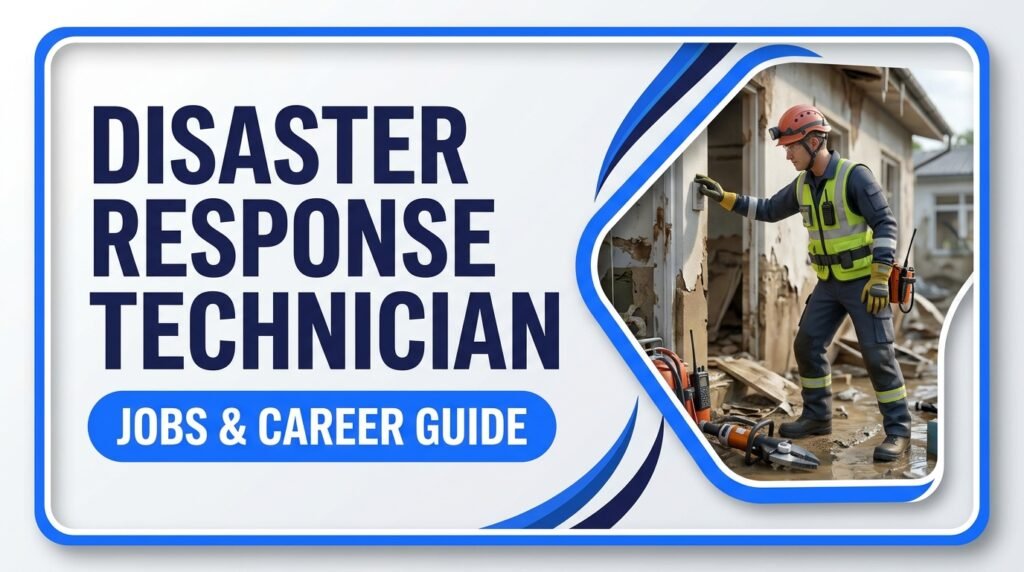
A disaster can turn an ordinary day into an emergency. Floods, wildfires, hurricanes, chemical spills, and other events can damage homes, businesses, and public facilities. After these events, trained workers help communities respond, clean up damage, and begin recovery.
A disaster response technician helps with these activities. Depending on the employer and job assignment, the work may involve removing debris, handling emergency equipment, supporting cleanup teams, checking safety conditions, or helping with emergency operations.
This career can suit people who enjoy practical work, teamwork, and helping others during difficult situations. However, it also requires physical fitness, safety training, and the ability to stay calm under pressure.
In this guide, you will learn what a disaster response technician does, what skills and training are needed, where these workers find jobs, and how to start this career in the United States.
What Is a Disaster Response Technician?
A disaster response technician is a trained worker who helps with emergency response and disaster recovery activities. These workers may assist government agencies, hospitals, environmental companies, restoration businesses, and emergency response teams.
Their exact duties depend on the type of disaster and the organization they work for.
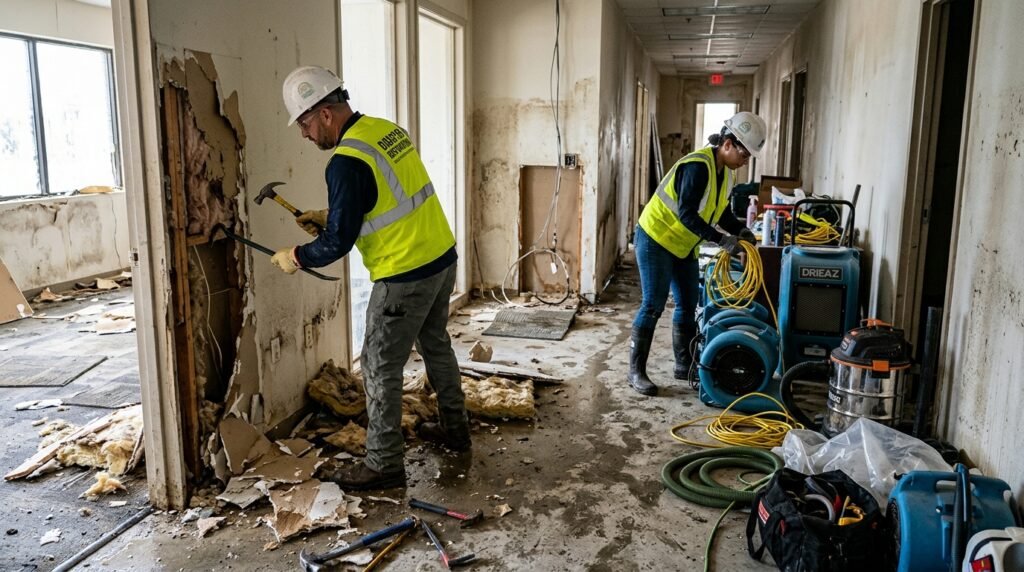
For example, a technician working after a flood may help remove damaged materials, set up drying equipment, and support water damage cleanup. Someone working after a chemical spill may assist with equipment setup, safety procedures, and cleanup under the direction of trained hazardous materials professionals.
The job can involve work before, during, and after an emergency.
Example 1:
A disaster response technician joins a cleanup team after a major flood. The technician helps remove damaged materials, moves equipment, and records the work completed at the property.
This example shows how technicians may support property recovery after a natural disaster.
What Does a Disaster Response Technician Do?
The daily duties of a disaster response technician depend on the employer, location, and emergency.
Some work in the field, while others support emergency operations from hospitals, offices, or response centers.
Here are some common responsibilities.
1. Assess Disaster-Affected Areas
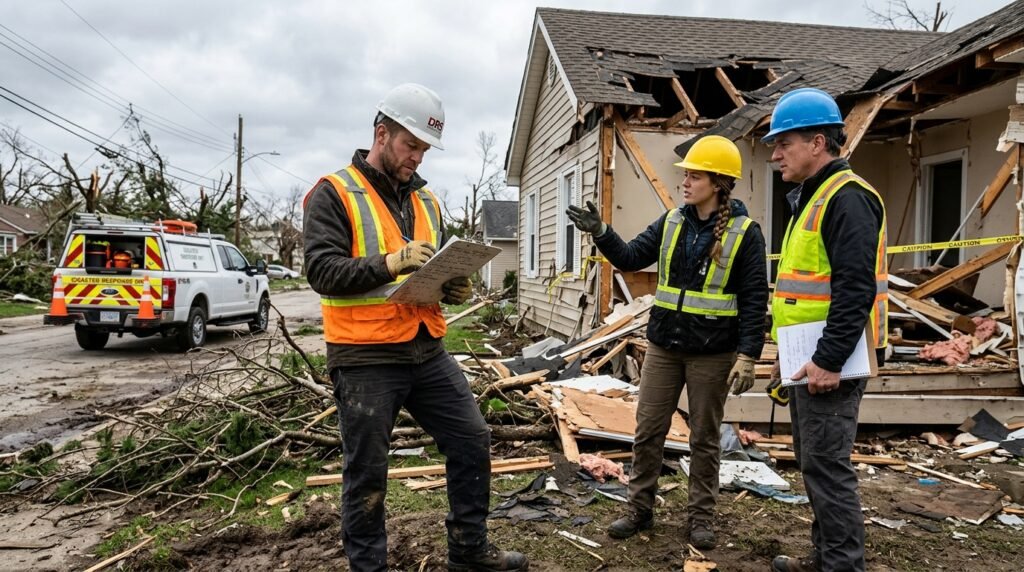
Technicians may help inspect areas affected by floods, storms, fires, or other emergencies.
They look for visible damage and possible safety risks. They may also take photographs, record observations, and report problems to supervisors.
They must follow their assigned duties and avoid entering unsafe areas without permission.
Example 2:
After a hurricane, a technician helps inspect a damaged community building. The technician photographs broken windows, fallen materials, and visible water damage before reporting the findings.
This shows how basic inspections and accurate records can support recovery work.
2. Remove Debris and Damaged Materials
Some disaster response technicians help remove debris from affected properties.
Their work may include moving damaged furniture, clearing building materials, loading waste, and preparing areas for repair.
Heavy equipment and protective clothing may be needed, depending on the job.
3. Set Up Emergency Equipment
Technicians may prepare and move equipment used during emergency response and cleanup.
Examples include:
- Water pumps
- Industrial fans
- Dehumidifiers
- Generators
- Lighting equipment
- Protective clothing
- Safety barriers
- Communication equipment
Workers must receive proper training before operating specialized equipment.
Example 3:
A restoration technician arrives at a flooded office building and helps set up water extraction equipment and industrial drying fans under a supervisor’s direction.
This example shows how technicians support the early stages of building recovery.
4. Support Cleanup and Recovery Teams
Technicians often work with other professionals, including emergency managers, construction workers, environmental specialists, and restoration teams.
They may help organize supplies, prepare work areas, move equipment, and complete assigned cleanup tasks.
5. Follow Safety Procedures
Safety is a major part of disaster response work.
Technicians may face risks such as:
- Unstable buildings
- Contaminated water
- Electrical hazards
- Sharp objects
- Chemical exposure
- Smoke and dust
- Extreme temperatures
- Heavy equipment
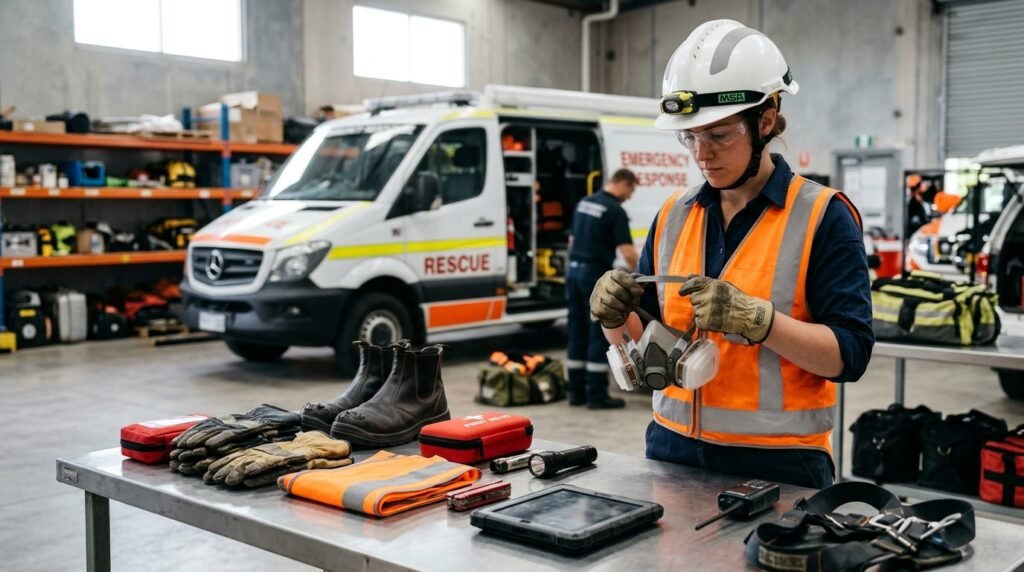
Workers must follow safety instructions and use the correct personal protective equipment (PPE).
PPE may include gloves, helmets, safety boots, protective clothing, eye protection, and respirators when required.
6. Maintain Reports and Records
Accurate records help supervisors track response activities.
A technician may record:
- Work completed
- Equipment used
- Materials removed
- Safety concerns
- Supplies needed
- Site conditions
- Hours worked
These records help teams plan the next steps.
Where Do Disaster Response Technicians Work?
Disaster response technicians can work in different industries. Their work settings depend on their training and employer.
1. Disaster Restoration Companies
Private restoration companies help repair buildings affected by floods, fires, storms, and other events.
Technicians may assist with water removal, drying, debris removal, emergency board-up work, and property cleanup.
2. Government Agencies
Local, state, and federal agencies employ people in emergency management and disaster recovery roles.
Some positions involve field support, emergency planning, supply management, and recovery operations.
The Federal Emergency Management Agency (FEMA) also works with government agencies and other organizations during major disasters.
3. Hospitals and Healthcare Facilities
Hospitals need trained teams to prepare for emergencies.
A hospital disaster response technician may help maintain emergency equipment, participate in drills, support decontamination readiness, and assist with evacuation or surge response activities.
4. Environmental Response Companies
Environmental companies may hire technicians to assist with chemical spills, waste handling, environmental cleanup, and site recovery.
These positions can require additional training because hazardous materials may be present.
5. Nonprofit and Relief Organizations
Some nonprofit organizations support communities after major disasters.
Their workers may help with supply distribution, shelter operations, cleanup coordination, and other recovery activities.
The duties and qualifications vary by organization.
What Skills Does a Disaster Response Technician Need?
A disaster response technician needs practical skills, good communication, and a strong focus on safety.
Here are some useful skills for this career.
1. Physical Fitness
Some positions require lifting equipment, carrying supplies, standing for long periods, and working outdoors.
Workers should be physically able to complete their assigned duties safely.
2. Communication Skills
Technicians must communicate clearly with supervisors, coworkers, emergency personnel, and sometimes disaster survivors.
They need to share safety concerns and provide accurate updates.
3. Problem-Solving Skills
Disaster sites can change quickly. Workers may need to respond to equipment problems, supply shortages, or unexpected site conditions.
They should follow instructions and report problems instead of taking unsafe actions.
4. Teamwork
Disaster response usually involves several people working together.
Technicians need to follow team instructions, respect assigned responsibilities, and help coworkers complete tasks safely.
5. Equipment Handling
Knowledge of basic hand tools, pumps, generators, and cleanup equipment can be useful.
Specialized equipment should only be operated by trained and authorized workers.
6. Attention to Safety
Workers must recognize hazards and follow safety procedures.
They should know when to stop work, report a problem, and wait for instructions.
What Qualifications Do You Need?
There is no single education or certification requirement for every disaster response technician job in the United States.
Requirements depend on the employer and the type of response work.
However, the following qualifications can help candidates prepare.
1. High School Diploma or GED
Many entry-level positions ask for a high school diploma or GED.
Some employers may accept relevant work experience, while others require additional education.
2. Relevant Work Experience
Experience in any of these areas can be useful:
- Construction
- Building maintenance
- Water damage restoration
- Fire damage cleanup
- Environmental services
- Warehouse operations
- Emergency services
- Equipment handling
Candidates without experience may find entry-level roles that provide job training.
3. Physical Ability
Some positions require lifting, climbing, outdoor work, and long shifts.
Employers may also require a valid driver’s license because technicians sometimes travel between work locations.
4. Safety Training
Safety training helps workers identify hazards and use equipment correctly.
Depending on the job, employers may require training related to:
- Workplace safety
- Hazardous materials
- Respiratory protection
- Personal protective equipment
- Emergency response procedures
- Disaster site safety
Workers should check the exact requirements in each job advertisement.
What Certifications and Training Are Useful?
Certifications can help candidates prepare for disaster response work. However, no single certificate qualifies someone for every type of disaster response job.
Here are some training options worth exploring.
1. OSHA Safety Training
The Occupational Safety and Health Administration (OSHA) provides workplace safety training resources.
Relevant courses may cover construction safety, general industry safety, and disaster site worker safety.
Some disaster response roles require specific training before workers enter a disaster site.
2. HAZWOPER Training
HAZWOPER stands for Hazardous Waste Operations and Emergency Response.
OSHA’s HAZWOPER standards cover certain hazardous waste operations and emergency response activities.
The training required depends on the worker’s assigned duties and level of involvement.
It is not a general certificate that automatically qualifies someone to handle every hazardous material.
3. FEMA Emergency Management Courses
FEMA offers free online training through its Emergency Management Institute.
Some useful introductory courses include:
- IS-100: Introduction to the Incident Command System
- IS-200: Basic Incident Command System for Initial Response
- IS-700: An Introduction to the National Incident Management System
- IS-800: National Response Framework, An Introduction
These courses introduce emergency management systems and team coordination.
Important: FEMA course completion certificates are different from a professional license or a universal disaster response technician certification.
4. CPR and First Aid Training
CPR means cardiopulmonary resuscitation. First aid training teaches basic ways to help someone who is injured or suddenly becomes ill.
These skills can be useful in emergency-related jobs.
However, workers should only provide care within their training and assigned role.
5. Specialized Rescue or Environmental Training
Some positions require additional training in areas such as:
- Search and rescue
- Hazardous materials response
- Environmental health
- Confined space safety
- Respiratory protection
- Water damage restoration
The right training depends on the job.
Example 4:
A person applying for an environmental response technician position completes required safety training before joining a team that handles spill cleanup.
This example shows why job-specific training matters before working at an emergency site.
How to Become a Disaster Response Technician
You can prepare for this career through education, safety training, and relevant work experience.
Follow these steps.
Step 1: Complete Your Basic Education
Start by earning a high school diploma or GED if you do not already have one.
Some advanced positions may require a college degree in emergency management, environmental science, public health, or a related subject.
However, many field technician positions do not require a bachelor’s degree.
Step 2: Choose Your Career Area
Disaster response covers several types of work.
Think about which area interests you:
- Property restoration
- Environmental cleanup
- Hospital emergency response
- Government disaster recovery
- Emergency equipment support
- Search and rescue
Each area has different training and job requirements.
Step 3: Complete Relevant Safety Training
Look for training that matches your chosen career area.
You can explore FEMA courses, OSHA training, first aid, and other employer-approved programs.
Do not pay for an expensive certificate before checking whether employers in your area actually require it.
Step 4: Gain Practical Experience
Entry-level jobs in construction, restoration, maintenance, and environmental services can help you gain useful experience.
You can also look for approved volunteer opportunities with community emergency response programs.
Step 5: Prepare Your Resume
Your resume should highlight relevant skills and experience.
Include:
- Education
- Safety training
- Equipment experience
- Construction or cleanup work
- Communication skills
- Relevant certifications
- Valid driver’s license, if applicable
Be honest about your training and experience.
Step 6: Apply for Suitable Jobs
Search for entry-level positions with restoration companies, environmental service providers, hospitals, and government agencies.
Use different job titles because employers do not always use the exact phrase disaster response technician.
Disaster Response Technician Salary in the USA
The salary of a disaster response technician depends on the employer, job duties, experience, location, and type of emergency work.
There is no single national salary figure that accurately represents every job with this title.
A technician working in property restoration may receive a different salary from someone working in environmental cleanup or hospital emergency management.
Factors That Affect Salary
1. Work Experience
Experienced technicians may qualify for senior field roles, team leadership, or specialized assignments.
2. Location
Pay can differ between states and cities. Local demand, living costs, and employer budgets can affect wages.
3. Certifications
Relevant safety and technical training may help candidates qualify for positions with more responsibility.
However, a certificate does not guarantee a higher salary.
4. Type of Employer
Government agencies, hospitals, restoration companies, and environmental service providers may offer different pay and benefits.
5. Overtime and Travel
Some disaster response jobs involve nights, weekends, emergency callouts, or travel.
Overtime pay depends on the employer and applicable wage laws.
How to Check Current Salary Information
Use these resources when comparing job offers:
- U.S. Bureau of Labor Statistics for related occupational wage data.
- Government job announcements.
- Local restoration company job listings.
- Environmental service company vacancies.
- Hospital career pages.
Compare the actual duties and job requirements rather than relying on the job title alone.
Is Disaster Response Technician a Good Career?
A disaster response technician career can be a good choice for people who enjoy practical work and want to help communities recover after emergencies.
However, the job also has challenges.
Benefits of This Career
- Opportunities to help people after disasters.
- Work in different industries.
- Practical, hands-on experience.
- Opportunities to learn new technical skills.
- Possible career growth into supervisory or emergency management roles.
- Entry-level opportunities with some employers.
Challenges of This Career
- Physically demanding work.
- Exposure to unsafe conditions if proper controls are not followed.
- Irregular schedules during emergencies.
- Possible travel and overnight assignments.
- Emotional stress after serious disasters.
- Changing workloads based on emergency activity.
Before choosing this career, review the job duties, training requirements, safety policies, and work schedule.
Career Growth Opportunities
A disaster response technician can develop skills and move into related positions.
Career growth depends on experience, education, training, and employer requirements.
Possible career paths include:
1. Senior Disaster Response Technician
Senior technicians may handle more complex tasks, train new workers, and help supervisors organize field activities.
2. Emergency Response Supervisor
Supervisors coordinate teams, assign duties, check safety procedures, and report progress.
3. Disaster Recovery Specialist
Recovery specialists may help organize rebuilding projects, track recovery activities, and coordinate services for affected communities.
4. Emergency Management Coordinator
Emergency management coordinators help organizations prepare for emergencies and plan response activities.
5. Environmental Response Specialist
Workers with suitable technical training may move into environmental cleanup, spill response, and site assessment roles.
Example 5:
A technician who gains experience in environmental cleanup completes additional training and applies for a senior environmental response position.
This shows how practical experience and further training can support career growth.
How to Find Disaster Response Technician Jobs
Finding the right job requires searching across different industries.
Here are some useful places to start.
1. Online Job Boards
Search for these job titles:
- Disaster Response Technician
- Emergency Response Technician
- Disaster Restoration Technician
- Environmental Response Technician
- Disaster Recovery Worker
- Water Damage Restoration Technician
- Emergency Services Technician
Read the full job description before applying.
2. Government Career Websites
Check federal, state, and local government job websites for emergency management and disaster recovery positions.
Some FEMA positions involve specialized response and recovery duties.
3. Restoration Companies
Search for companies that provide:
- Water damage restoration
- Fire damage cleanup
- Storm damage repair
- Mold remediation
- Emergency property services
These businesses often need field technicians.
4. Hospitals and Healthcare Organizations
Some hospitals hire staff to support emergency preparedness, decontamination equipment, disaster drills, and emergency response teams.
5. Environmental Service Companies
Environmental service providers may hire technicians for spill response, waste handling, and environmental cleanup.
Check training requirements carefully because some jobs involve hazardous materials.
Safety Tips for Disaster Response Technicians
Disaster sites can contain hazards that are not easy to see.
Workers should follow their employer’s safety plan and never perform tasks beyond their training.
Here are some basic safety practices.
- Wear the required PPE: Use protective clothing and equipment approved for the assigned work.
- Check the work area: Report unstable structures, electrical hazards, and other safety concerns.
- Follow supervisor instructions: Do not enter restricted or unsafe areas without authorization.
- Use equipment correctly: Operate machinery only after receiving proper training.
- Report injuries and hazards: Inform supervisors about unsafe conditions as soon as possible.
- Follow decontamination procedures: Clean or remove contaminated equipment as instructed.
- Take rest breaks: Follow work and rest schedules, especially during physically demanding assignments.
OSHA and CDC guidance both stress the need to protect emergency response and recovery workers from job-related hazards.
Example 6:
A technician notices a damaged electrical cable near a flooded building. Instead of touching it or moving the cable, the technician warns the team and reports the hazard to the supervisor.
This example shows why reporting hazards is safer than trying to fix problems without proper training.
FAQs About Disaster Response Technicians
What is the main job of a disaster response technician?
A disaster response technician helps with emergency response and recovery activities. Duties may include equipment setup, debris removal, property cleanup, safety checks, and field support.
Do you need a degree to become a disaster response technician?
A college degree is not required for every position. Many entry-level jobs ask for a high school diploma or GED, while specialized or management roles may require further education.
How long does it take to become a disaster response technician?
The time depends on the employer and job requirements. Some entry-level positions provide training after hiring, while specialized jobs may require several courses and practical experience.
Does FEMA offer disaster response technician certification?
FEMA provides emergency management courses and training certificates. However, it does not issue one universal certification for every disaster response technician position. Employers and local authorities set job-specific qualification requirements.
Is OSHA training required for disaster response technicians?
It depends on the job. Some positions require OSHA-related safety training, including disaster site worker or HAZWOPER training. The employer should explain which courses are required for the assigned duties.
Can you work as a disaster response technician without experience?
Yes, some employers offer entry-level positions. Construction, maintenance, restoration, and warehouse experience can help, but the exact requirements vary.
Do disaster response technicians travel?
Some jobs require travel to disaster-affected areas or different work sites. Other positions are based in hospitals, offices, or local restoration facilities.
What is the difference between a disaster response technician and an emergency responder?
A disaster response technician usually provides technical, cleanup, equipment, or recovery support. Emergency responders, such as firefighters and paramedics, have specific duties involving fire suppression, rescue, and emergency medical care. Some roles may overlap, but their training and responsibilities are different.
Is disaster response technician a dangerous job?
It can involve risks such as unstable buildings, contaminated materials, electrical hazards, and extreme weather. Proper training, protective equipment, and safety procedures help reduce these risks.
What skills are most useful for disaster response technicians?
Useful skills include physical fitness, teamwork, communication, equipment handling, problem-solving, accurate reporting, and workplace safety knowledge.
Conclusion
A disaster response technician helps communities and organizations respond to emergencies and recover from damage. The work may include equipment setup, debris removal, environmental cleanup, property restoration, and emergency team support.
You do not always need a college degree to enter this career. A high school diploma or GED, relevant safety training, and practical work experience can help you qualify for entry-level positions.
Start by choosing the type of disaster response work that interests you. Then check local job requirements, complete suitable training, and apply for positions that match your skills. With experience and further training, you may be able to move into senior technician, supervisory, or emergency management roles.

Emily Carter (Content Writer & Communication Specialist) is a content writer and communication specialist at AllTypeInfo.com. She writes clear, practical, and easy-to-follow guides on email responses, message replies, writing templates, and everyday communication tips. Her goal is to help readers communicate with confidence in both personal and professional settings.