Have you ever heard a teacher say, “1, 2, 3, eyes on me!” while students reply, “1, 2, eyes on you!”? Or heard a singer ask a question while the audience shouts an answer?
These are simple examples of call and response. One person says or does something, and another person or group replies with an expected answer.
People use this communication method in classrooms, churches, music, sports, workplaces, and everyday conversations. It can help get attention, encourage group participation, teach ideas, and make activities more enjoyable.
In this guide, you will find more than 35 call and response examples, along with their meanings, uses, and tips for creating your own phrases.
What Are Call and Response Examples?
Call and response is a communication pattern in which one person makes a statement, asks a question, sings a line, or performs a sound, and another person or group gives a reply.
The first part is called the call. The second part is called the response.
The response can repeat the original words, answer a question, complete a sentence, or use a different sound or action.
For example:
Example 1:
Leader: Are you ready?
Group: Yes, we are!
This example shows a basic call-and-response pattern. The leader asks a question, and the group answers together.
The pattern does not always need spoken words. A teacher may clap twice, and students may repeat the same rhythm. A singer may perform a short musical phrase, and the choir may answer with another phrase.
The main idea is simple: one person starts, and another person responds.
35+ Call and Response Examples for Different Situations
Here are practical phrases you can use in different settings. Each example includes a call and a matching response.
1. Call and Response Examples for the Classroom
Teachers use call and response phrases to get students’ attention, manage classroom activities, and encourage participation.
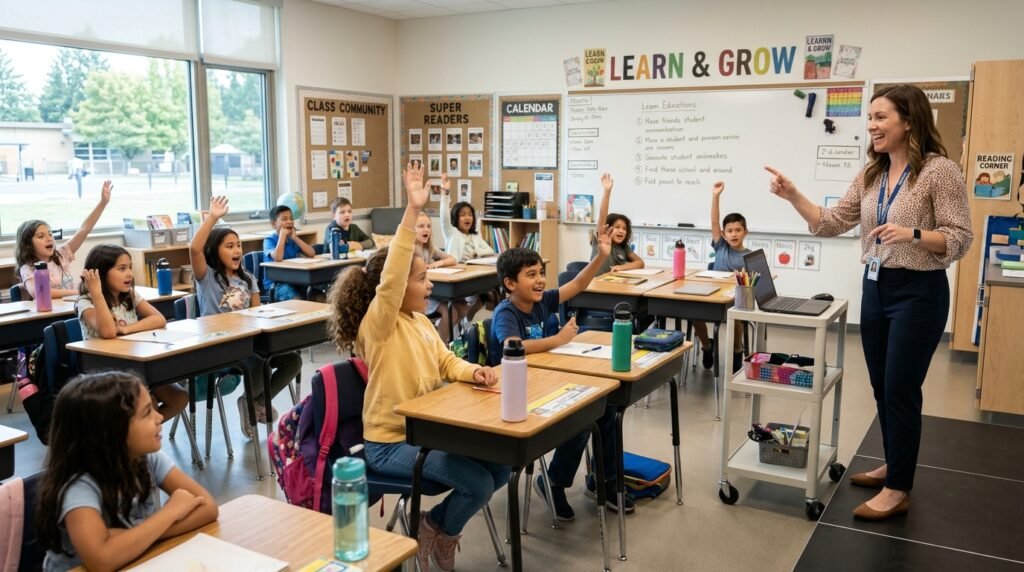
These phrases work best when students know the expected reply and have practiced it.
Example 2: Eyes on the Teacher
Teacher: 1, 2, 3, eyes on me!
Students: 1, 2, eyes on you!
This phrase helps a teacher bring students’ attention back to the lesson.
Example 3: Quiet Classroom
Teacher: Macaroni and cheese!
Students: Everybody freeze!
This playful phrase can help students stop talking and listen.
Example 4: Ready to Learn
Teacher: Ready to learn?
Students: Ready to grow!
This response creates a positive start to a lesson.
Example 5: Focus Time
Teacher: Hocus pocus!
Students: Everybody focus!
This is a short and memorable way to ask students to pay attention.
Example 6: Listening Skills
Teacher: If you can hear me, clap once!
Students: Clap!
This activity combines a spoken call with a physical response.
Example 7: Beginning a Lesson
Teacher: What time is it?
Students: Learning time!
This phrase can help create a regular classroom routine.
2. Call and Response Examples for Teachers
Teachers can also use call and response to review lessons, check basic facts, and help students take part in group activities.
Example 8: Math Practice
Teacher: Five times five!
Students: Twenty-five!
This gives students a quick chance to practice multiplication.
Example 9: English Grammar
Teacher: A naming word is called?
Students: A noun!
This helps students recall a basic grammar term.
Example 10: Science Lesson
Teacher: What do plants need to grow?
Students: Water, light, and air!
This turns a science question into a short group activity.
Example 11: Classroom Rules
Teacher: We respect each other!
Students: We listen and care!
This helps students repeat positive classroom behavior.
3. Call and Response Examples in Music
Call and response in music happens when one singer, musician, or group performs a musical phrase and another singer or group answers it.
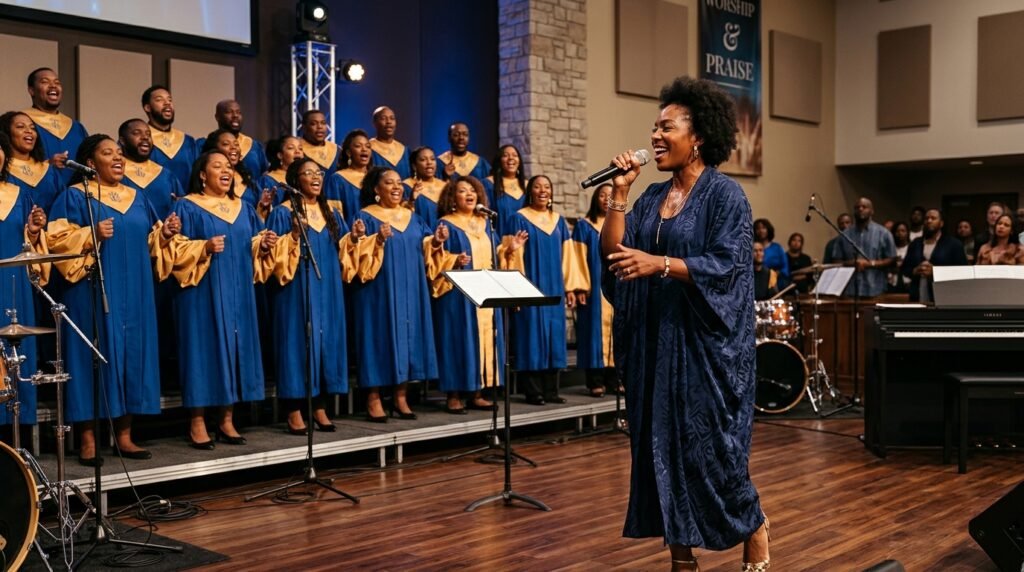
It is common in gospel, blues, jazz, folk, and other musical styles. The response may use words, singing, clapping, or instruments.
Example 12: Lead Singer and Choir
Lead Singer: Are you feeling good tonight?
Choir: Yes, we’re feeling good tonight!
The choir answers the lead singer, creating an exchange between the two groups.
Example 13: Singer and Audience
Singer: Can you hear me?
Audience: Yes, we can!
This invites the audience to take part in a live performance.
Example 14: Musical Rhythm
Musician: Clap, clap, pause!
Group: Clap, clap, pause!
This example uses a repeated rhythm instead of a spoken sentence.
Example 15: Gospel Choir
Choir Leader: We have a reason to sing!
Congregation: We have a reason to praise!
This shows how a musical leader and a group can exchange meaningful phrases.
Example 16: Instrumental Response
Guitarist: Plays a short musical phrase.
Drummer: Answers with a matching drum pattern.
This example shows that call and response does not need words. Instruments can also take turns.
4. Call and Response Examples for Church
Churches often use call and response during sermons, worship services, prayers, and group singing.
A pastor or worship leader makes a statement, and the congregation replies with a familiar phrase.

Example 17: Church Service
Pastor: God is good!
Congregation: All the time!
This is a familiar style of church response that encourages group participation.
Example 18: Worship Gathering
Worship Leader: Are you thankful today?
Congregation: Yes, we are!
This invites people to respond together during a service.
Example 19: Encouragement
Pastor: We walk by faith!
Congregation: And not by sight!
This uses a short religious statement followed by a shared response.
Example 20: Prayer Meeting
Prayer Leader: Let us pray together.
Group: We are ready.
This creates a clear start to a group prayer.
5. Call and Response Examples for Sports
Sports teams and fans use chants and call-and-response phrases to show support, build team spirit, and encourage players.
The leader may be a coach, team captain, cheerleader, or fan.
Example 21: Team Motivation
Coach: Who are we?
Team: We are champions!
This can help a team feel united before a match.
Example 22: Football Crowd
Fan Leader: Let’s go!
Crowd: Team, let’s go!
This is a simple chant that fans can repeat during a game.
Example 23: Basketball Team
Captain: Defense!
Team: Stand strong!
This short response reminds players to focus on their defensive roles.
Example 24: Running Team
Coach: Keep moving!
Runners: Keep improving!
This phrase can encourage runners during a group training session.
Example 25: School Sports Day
Leader: Who gives their best?
Students: We give our best!
This creates a positive message for a school sports event.
6. Call and Response Examples for Workplaces
In workplaces, call and response communication can help teams start meetings, confirm instructions, and take part in group activities.
The phrases should fit the workplace and sound natural.
Example 26: Team Meeting
Team Leader: Is everyone ready?
Team: Yes, we’re ready!
This is a simple way to begin a team meeting.
Example 27: Safety Training
Trainer: Safety comes first!
Employees: Every task, every time!
This reinforces a workplace safety message.
Example 28: Team Motivation
Manager: What is our goal?
Team: Quality work!
This gives the team a shared message before starting a task.
Example 29: Customer Service Training
Trainer: What do customers deserve?
Employees: Respect and helpful service!
This can help staff recall the main goal of customer service.
7. Call and Response Examples for Everyday Conversations
You do not need to be a teacher, singer, or team leader to use call and response. It can happen during normal conversations with friends, family, and other people.
Example 30: Greeting Friends
Person A: What’s up?
Person B: Not much. How about you?
This is a common everyday exchange.
Example 31: Making Plans
Person A: Ready for the weekend?
Person B: Absolutely!
This is a friendly way to start a conversation about upcoming plans.
Example 32: Family Conversation
Parent: Who wants pizza tonight?
Children: We do!
This gives family members a fun way to respond together.
Example 33: Group Activity
Leader: Are we having fun?
Group: Yes, we are!
This works well during parties, group games, and social events.
Example 34: Friendly Encouragement
Person A: We can do this!
Person B: Yes, we can!
This is a simple exchange that shows support.
8. Call and Response Examples for Kids
Children often enjoy short, playful phrases with rhymes, familiar words, and easy replies.
Parents, teachers, and activity leaders can use these examples during games and group activities.
Example 35: Fun Attention Getter
Adult: Peanut butter!
Kids: Jelly time!
This is a playful phrase that can get children’s attention.
Example 36: Animal Sounds
Adult: What does a cow say?
Kids: Moo!
This helps younger children connect questions with familiar sounds.
Example 37: Positive Thinking
Adult: I am smart!
Kids: I am strong!
This gives children a chance to repeat positive statements.
Example 38: Clean-Up Time
Adult: Time to clean!
Kids: Let’s make it shine!
This can make a simple classroom or home task more enjoyable.
Example 39: End of an Activity
Adult: Did we have fun?
Kids: Yes, everyone!
This is a cheerful way to finish a group activity.
Different Types of Call and Response
There are several ways to create a call-and-response pattern. The type depends on the setting and the kind of answer you want.
1. Question and Answer
One person asks a question, and another person answers it.
Example 40:
Leader: What is our goal?
Group: To do our best!
This type works well in classrooms, meetings, and group activities.
2. Repeat After Me
The leader says a phrase, and the group repeats the same words.
Example 41:
Leader: We are ready!
Group: We are ready!
This is useful for chants, practice sessions, and group announcements.
3. Complete the Sentence
The leader starts a sentence, and the group finishes it.
Example 42:
Teacher: The opposite of hot is…
Students: Cold!
This approach is useful for vocabulary lessons and quick classroom reviews.
4. Rhythm and Sound Response
One person makes a sound or claps a rhythm, and another person repeats it.
Example 43:
Leader: Clap, clap, snap!
Group: Clap, clap, snap!
This type works well in music lessons, games, and children’s activities.
5. Action and Response
The leader performs an action, and the group copies it.
Example 44:
Leader: Raises both hands.
Group: Raises both hands.
This can be useful when working with young children or large groups.
How to Create Your Own Call and Response Phrases
You can make your own call and response phrases for almost any group or activity. The best phrases are short, clear, and easy to remember.
Follow these steps:
Step 1: Choose Your Purpose
Decide what you want the phrase to do.
For example, you may want to:
- Get students’ attention.
- Encourage a sports team.
- Start a meeting.
- Teach a new lesson.
- Bring people together during an event.
A clear purpose helps you choose the right words.
Step 2: Write a Short Call
Create a simple question, statement, or sound.
For example:
Call: Are we ready?
Avoid long sentences. People should be able to hear and understand the call quickly.
Step 3: Create a Matching Response
Write a reply that fits the first phrase.
Response: Yes, we’re ready!
The response should be easy for everyone to say together.
Step 4: Add Rhythm or Rhyming Words
A little rhythm can make a phrase easier to remember.
For example:
Call: Hocus pocus!
Response: Everybody focus!
Rhyming words can make classroom chants and children’s activities more fun.
Step 5: Practice With the Group
Say the call clearly and give the group enough time to reply.
Practice the phrase more than once so everyone knows when to respond.
Step 6: Keep It Fresh
You can use different phrases for different activities. Change them when people become less interested or when the purpose changes.
Benefits of Using Call and Response
Call and response can be useful in many group settings. Here are some common reasons people use it.
1. Gets People’s Attention
A familiar phrase can help a teacher, coach, or group leader bring attention back to the main activity.
2. Encourages Participation
People get a chance to speak, sing, clap, or take part instead of only listening.
3. Supports Learning
Teachers can use short questions and answers to review facts, vocabulary, and lesson topics.
4. Builds Group Connection
Responding together can help people feel included in a shared activity.
5. Makes Activities More Enjoyable
Rhymes, rhythms, and short chants can make lessons, meetings, and events more interesting.
6. Helps Create Group Routines
Using the same call at the start of an activity can help people know what to do next.
Tips for Using Call and Response Effectively
A good call-and-response routine should feel natural. These tips can help:
- Keep phrases short: Long calls are harder to remember.
- Use clear words: Choose language that everyone can understand.
- Match the setting: A classroom chant may not fit a business meeting.
- Practice before using it: Give people time to learn the expected response.
- Allow enough time: Do not rush the group.
- Use a clear voice: People need to hear the call.
- Avoid overusing the same phrase: Change it when it stops getting attention.
- Include everyone: Make sure people have a fair chance to take part.
- Check individual learning: In a classroom, group replies do not always show whether every student knows the answer. Follow up with individual questions or written work when needed.
Frequently Asked Questions About Call and Response Examples
What is a simple example of call and response?
A simple example is:
Call: How are you?
Response: I’m doing well!
One person asks a question, and the other person gives an answer. This is a basic form of call and response.
What are some good call and response phrases for teachers?
Teachers can use phrases such as:
- Teacher: 1, 2, 3, eyes on me!
Students: 1, 2, eyes on you! - Teacher: Hocus pocus!
Students: Everybody focus! - Teacher: Macaroni and cheese!
Students: Everybody freeze!
These phrases can help get students’ attention and prepare them for the next activity.
What is call and response in music?
Call and response in music is a pattern in which one singer or musician performs a phrase, and another singer, group, or instrument answers it. It is common in gospel, blues, jazz, and other musical styles.
What is the difference between a call and a response?
A call is the first statement, question, sound, or action. A response is the reply that follows it.
For example, if a teacher says, “Are you ready?” and students answer, “Yes, we are!”, the teacher’s question is the call and the students’ reply is the response.
Where is call and response commonly used?
It is used in classrooms, music, churches, sports events, workplaces, community gatherings, and everyday conversations. The exact phrases change based on the setting.
Can call and response be nonverbal?
Yes. It does not always require spoken words. One person can clap a rhythm, raise a hand, or make a gesture, and another person or group can copy the action.
Why do teachers use call and response?
Teachers use it to get attention, review lesson content, encourage group participation, and create classroom routines. It can also make learning activities more interactive.
How do you make call and response more fun?
Use short phrases, simple rhymes, familiar words, clapping patterns, and actions. Let group members suggest new phrases so they can take part in creating the routine.
Conclusion
Call and response is a simple way to help people communicate and take part in group activities. One person makes a call, and another person or group gives a reply.
You can use it in classrooms, music, churches, sports, workplaces, and everyday conversations. From a simple teacher attention phrase to a choir answering a lead singer, the pattern works in many different situations.
Start with short and clear phrases that fit your group. Practice them together, keep the responses easy to remember, and change them when needed. With the right words, call and response examples can make group activities more engaging and enjoyable.

Emily Carter (Content Writer & Communication Specialist) is a content writer and communication specialist at AllTypeInfo.com. She writes clear, practical, and easy-to-follow guides on email responses, message replies, writing templates, and everyday communication tips. Her goal is to help readers communicate with confidence in both personal and professional settings.