Have you ever written an email, reached the last sentence, and wondered how to ask someone to reply without sounding demanding? Finding the right words can be difficult, especially when writing to a manager, client, coworker, or someone you have never contacted before.
Knowing how to end an email that requires a response helps you make your request clear while keeping a polite and professional tone. A good email ending tells the reader what you need, when you need it, and what they should do next.
In this guide, you will find professional email closing lines, polite phrases, complete examples, and useful tips for different situations. You can copy and adjust these examples for your own emails.
What Does It Mean to End an Email That Requires a Response?
To end an email that requires a response means writing a final sentence that clearly encourages the recipient to reply, answer a question, share feedback, or take a specific action.
A good email ending has two main parts:
- Closing sentence: Explains what response or action you expect.
- Email sign-off: Politely ends your message with phrases such as Best regards, Sincerely, or Thank you.
For example, writing “I look forward to hearing from you” tells the reader that you expect a reply. Adding “Best regards” provides a professional closing.
Example 1:
Could you please confirm your availability for Friday? I look forward to hearing from you.
This example makes the request clear and gives the recipient a specific question to answer.
Example 2:
Please review the attached proposal and share your feedback by Wednesday. Thank you for your time.
This ending works well when you need someone to review a document and reply by a certain date.
35 Best Ways to End an Email That Requires a Response
The best closing phrase depends on your relationship with the recipient and the type of reply you need. Here are 35 useful phrases you can use in professional and personal emails.
1. Professional Email Closing Lines
Use these phrases when writing to managers, clients, business partners, or people you do not know well.
- I look forward to hearing from you.
- I look forward to your response.
- I would appreciate your feedback on this matter.
- Please let me know your thoughts.
- I look forward to your input.
- I would be grateful for your response.
- Please share your feedback at your earliest convenience.
- Thank you for your time. I look forward to your reply.
- I appreciate your attention to this matter.
- I look forward to discussing the next steps with you.
Example 3:
Please review the attached report and let me know if you approve the proposed changes. I look forward to your response.
This is suitable for a workplace email that requires approval before moving forward.
2. Polite Email Endings That Request a Reply
Sometimes you need an answer but do not want to sound impatient. These phrases make your request feel friendly and respectful.
- When you have a moment, please let me know what you think.
- I would appreciate it if you could get back to me.
- Please let me know if this works for you.
- I would love to hear your thoughts.
- Your feedback would be greatly appreciated.
- Please feel free to share your thoughts.
- I hope to hear from you soon.
- I would appreciate an update whenever you have a chance.
Example 4:
I would love to hear your thoughts on the new project plan. Please let me know if you have any suggestions.
This ending is useful when asking a coworker or business partner for an opinion.
3. Email Endings That Request a Response by a Deadline
When you need an answer by a certain date, mention the deadline clearly. This helps the reader know when you expect a reply.
- Could you please respond by Friday?
- Please confirm your decision by the end of the day.
- I would appreciate your response by Monday.
- Please let me know your availability before Thursday.
- Could you share your feedback by November 15?
- Your confirmation by tomorrow would be greatly appreciated.
Example 5:
Could you please confirm whether you can attend the meeting by Thursday afternoon? Thank you for your help.
This phrase works well when you need to finalize a meeting schedule.
4. Friendly Email Endings
Use these phrases when writing to coworkers, regular clients, classmates, or people you already know.
- Let me know what you think!
- Looking forward to your thoughts.
- Hope to hear from you soon.
- Let me know what works best for you.
- Thanks for getting back to me.
- Talk soon, and let me know your thoughts.
Example 6:
I’ve shared a few ideas for the upcoming campaign. Let me know which one you like best!
This ending sounds natural in a friendly workplace conversation.
5. Formal Email Endings
Formal closing sentences are useful when writing to senior managers, company officials, recruiters, or people in official roles.
- I would appreciate your consideration and look forward to your response.
- Thank you for reviewing my request. I look forward to hearing from you.
- I would be grateful if you could provide an update at your earliest convenience.
- Your response regarding this matter would be greatly appreciated.
- I look forward to receiving your confirmation.
Example 7:
Thank you for considering my application. I would appreciate an update regarding the next steps in the hiring process.
This ending is suitable for a job application follow-up.
How to End a Professional Email That Needs a Reply
A professional email should make it easy for the recipient to know what you need. Instead of ending with a vague sentence, ask a clear question or request a specific action.
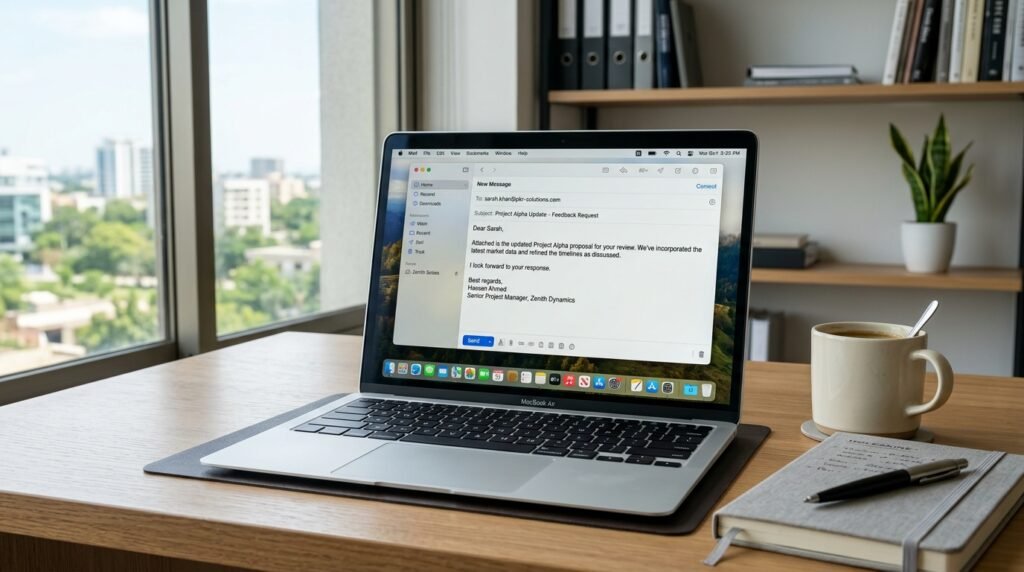
Follow these steps:
1. Repeat the Main Request Briefly
Remind the recipient what you need without repeating the entire email.
For example:
“Please review the attached document and share your comments.”
This tells the reader exactly what action is expected.
2. Ask a Clear Question
If you need an answer, ask a direct question rather than using a general closing.
For example:
“Could you confirm whether the proposed meeting time works for you?”
A clear question gives the recipient an easy way to respond.
3. Add a Deadline When Necessary
If your request is time-sensitive, include a reasonable deadline.
For example:
“Please send your approval by Friday so we can finalize the schedule.”
Avoid adding an urgent deadline if the request does not require one.
4. Show Appreciation
A short thank-you can make your request sound more respectful.
For example:
“Thank you for taking the time to review this. I look forward to your feedback.”
5. Add a Suitable Sign-Off
Finish with a sign-off that matches your relationship with the reader.
Good professional choices include:
- Best regards,
- Kind regards,
- Sincerely,
- Thank you,
- Best,
Example 8:
Could you please review the attached budget and confirm whether the figures are correct by Tuesday?
Thank you for your assistance.
Best regards,
Michael
This complete ending includes a clear request, a deadline, appreciation, and a professional sign-off.
How to End an Email That Requires a Response From Your Boss
When emailing your boss, keep your closing respectful, clear, and brief. Your manager may receive many emails, so make your question or request easy to answer.
Here are some useful phrases:
- I would appreciate your guidance on this matter.
- Please let me know how you would like me to proceed.
- Could you confirm which option you prefer?
- I look forward to your feedback.
- Please let me know if you approve this plan.
- Your direction on the next steps would be appreciated.
Example 9:
I’ve prepared two options for the upcoming campaign. Could you please review them and let me know which one you would prefer?
Thank you for your guidance.
Best regards,
Sarah
This ending works because it gives your manager a clear choice instead of asking a broad question.
How to End an Email to a Client That Needs a Reply
Client emails should sound professional and helpful. Make your request clear and show that you value the client’s time.
Here are some suitable closing lines:
- Please let me know if you would like to move forward.
- I look forward to your feedback on the proposal.
- Could you confirm which package best suits your needs?
- Please let me know if you have any questions.
- I would appreciate your confirmation so we can proceed.
- Thank you for considering our proposal.
Example 10:
I’ve attached the updated project proposal for your review. Please let me know if you would like any changes before we move forward.
Thank you for your time.
Kind regards,
James
This ending is useful for sales discussions, project updates, and client approvals.
How to End an Email Asking for Feedback
When asking for feedback, make it clear that you want the recipient’s honest opinion. You can also mention the part of the work you want them to review.
Try these phrases:
- I would appreciate your feedback on the attached draft.
- Please let me know what you think about these suggestions.
- I would love to hear your thoughts on the proposed changes.
- Your suggestions would be very helpful.
- Please share any changes you would recommend.
Example 11:
I’ve completed the first draft of the report. Could you please review it and share any suggestions for improvement?
Thank you for taking the time to review it.
Best regards,
Emily
This closing works well when asking a coworker, editor, or manager to review your work.
How to End an Email When You Need an Urgent Response
An urgent email should explain the deadline without making the reader feel pressured unnecessarily.
Use direct language and explain why the response is needed.
Here are some useful phrases:
- Could you please respond as soon as possible?
- I would appreciate your confirmation by 3 PM today.
- Please let me know your decision before the deadline.
- Your quick response would help us complete the next step.
- Could you prioritize this request and reply today?
Example 12:
We need to submit the final report today. Could you please confirm whether the figures are approved by 2 PM?
Thank you for your quick attention.
Best regards,
David
This ending explains why a quick reply is needed and gives a clear deadline.
How to End a Follow-Up Email When Someone Has Not Replied
If someone has not answered your previous email, send a polite follow-up. Avoid blaming the recipient or making them feel guilty.
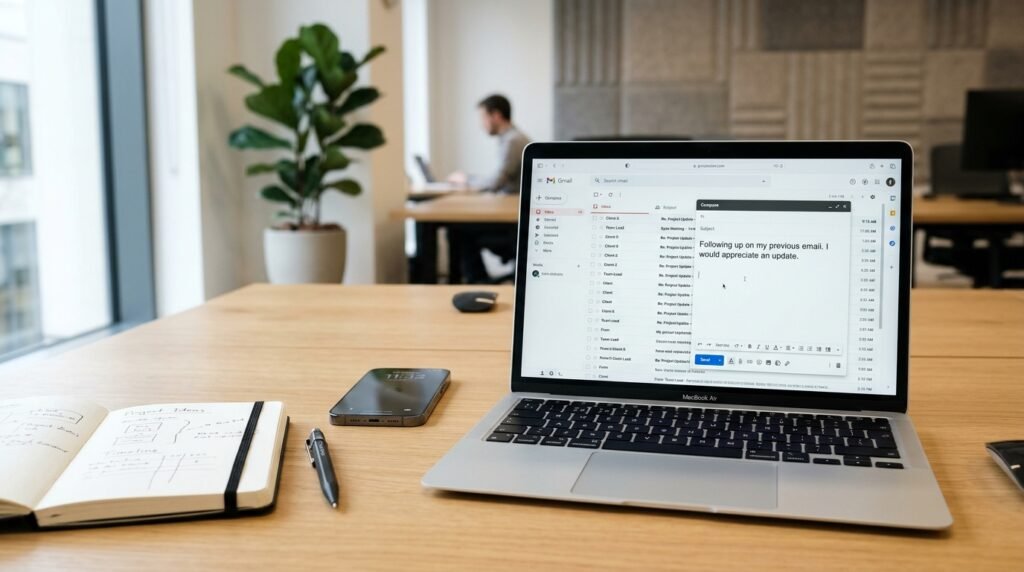
Here are some useful follow-up email endings:
- Just following up on my previous email. I would appreciate an update when you have a moment.
- Could you please let me know if you have had a chance to review my request?
- I wanted to check whether you had any updates on this matter.
- I would appreciate your response whenever you have a chance.
- Please let me know if you need any additional information from me.
Example 13:
I’m following up on the proposal I sent last week. Have you had a chance to review it? I would appreciate any updates when convenient.
Best regards,
Alex
This is a polite way to remind someone about an unanswered email without sounding impatient.
How to End an Email Asking Someone to Confirm Something
When you need confirmation, ask the recipient to verify one specific detail. Avoid using unclear phrases that could lead to another round of emails.
Useful closing lines include:
- Please confirm whether the proposed date works for you.
- Could you verify the details and let me know if everything is correct?
- I would appreciate your confirmation before proceeding.
- Please reply to confirm your attendance.
- Let me know if you agree with the proposed arrangement.
Example 14:
The meeting is scheduled for November 12 at 10 AM. Could you please confirm whether this time works for you?
Thank you.
Best regards,
Olivia
The reader knows exactly what they need to confirm.
How to End an Email Without Sounding Pushy
You can request a reply without making the recipient feel pressured. The key is to use respectful language and give them a reasonable amount of time.

Follow these simple tips:
- Use polite requests: Say “Could you please let me know?” instead of “Reply immediately.”
- Give a clear reason: Explain why you need the answer.
- Set reasonable deadlines: Avoid demanding an instant reply unless there is a real emergency.
- Avoid repeated reminders: Give the recipient time to respond before sending another email.
- Show appreciation: Thank them for reviewing your message or helping with your request.
Example 15:
Whenever you have a chance, could you please share your thoughts on the attached document? I appreciate your time and help.
This phrase is friendly and respectful. It works well when the request is important but not urgent.
What Is the Difference Between an Email Closing Line and a Sign-Off?
An email closing line tells the reader what you expect them to do next. An email sign-off is the short phrase used to end your message.
They serve different purposes, so using both can make your email clearer.
| Email Closing Line | Email Sign-Off |
|---|---|
| I look forward to your response. | Best regards, |
| Please confirm by Friday. | Kind regards, |
| Let me know what you think. | Best, |
| I appreciate your feedback. | Sincerely, |
| Could you share an update? | Thank you, |
Example 16:
Please review the attached proposal and let me know if you approve the changes.
I look forward to your response.
Best regards,
Daniel
The request and closing sentence explain what you need, while the sign-off ends the email politely.
Complete Email Examples That Require a Response
Here are complete email examples for common situations. You can change the names, dates, and details to fit your needs.
Example 1: Professional Email Requesting a Response
Subject: Request for Project Feedback
Hi Sarah,
I’ve attached the updated project plan for your review. Could you please share your feedback by Thursday so we can finalize the next steps?
Thank you for your time. I look forward to hearing from you.
Best regards,
John
This email is suitable for a coworker or business partner. It includes a clear request and a reasonable deadline.
Example 2: Email to a Manager Requesting Approval
Subject: Approval Needed for the New Schedule
Hi Mr. Johnson,
I’ve prepared the revised work schedule and attached it for your review. Could you please confirm whether I can proceed with this version?
I would appreciate your approval by Wednesday.
Kind regards,
Emma
This example is suitable when you need your manager’s approval before taking the next step.
Example 3: Email to a Client Requesting Confirmation
Subject: Confirmation of Project Details
Dear Mr. Williams,
Thank you for discussing the project requirements with us. I’ve included the updated details in the attached document.
Could you please review the information and confirm whether everything is correct?
Thank you for your time. I look forward to your confirmation.
Best regards,
Robert
This email works well for client communication because it clearly asks for confirmation.
Example 4: Follow-Up Email Requesting a Reply
Subject: Following Up on My Previous Email
Hi Michael,
I wanted to follow up on the proposal I sent earlier this week. Have you had a chance to review it?
I would appreciate an update whenever you have a moment.
Best regards,
Anna
This message is useful when you have not received an answer to your previous email.
Example 5: Email Requesting an Urgent Response
Subject: Urgent: Confirmation Needed Today
Hi David,
We need to finalize the presentation before the end of the day. Could you please review the attached file and confirm whether the information is correct by 1 PM?
Thank you for your quick response.
Best regards,
Jessica
This example works when a reply is needed within a short period.
Example 6: Email Asking for an Interview Update
Subject: Follow-Up on Interview Status
Dear Ms. Brown,
Thank you for taking the time to interview me for the Marketing Assistant position. I enjoyed learning more about the role and your team.
I would appreciate any updates you can share about the hiring process. I look forward to hearing from you.
Sincerely,
Daniel Smith
This is a polite way to ask a recruiter about the status of a job application.
Email Sign-Offs to Avoid When You Need a Response
Some email endings can make your message sound unclear, impatient, or too demanding.
Here are a few phrases to use carefully:
| Phrase | Why to Avoid It | Better Alternative |
|---|---|---|
| Reply ASAP! | Can sound demanding. | Could you please respond today? |
| Waiting for your reply. | May sound impatient. | I look forward to hearing from you. |
| Respond immediately. | Sounds like an order. | Your prompt response would be appreciated. |
| Get back to me. | Can sound too direct. | Please let me know when you have a chance. |
| I need an answer now. | May sound aggressive. | Could you please confirm this as soon as possible? |
| Thanks in advance. | Can sound like you expect the person to agree. | Thank you for considering my request. |
Choose a phrase that matches the situation. A friendly request usually works better than a demanding closing.
FAQs About Ending an Email That Requires a Response
How do you end an email that requires a response?
End your email with a clear request, such as “I look forward to hearing from you” or “Please let me know your thoughts.” Add a suitable sign-off like Best regards or Kind regards and your name.
What is the best closing sentence when waiting for a reply?
“I look forward to hearing from you” is a good general choice. If you need a reply by a certain date, include that date in your closing sentence.
How do you politely ask someone to respond to an email?
Use a friendly question such as “Could you please let me know your thoughts when you have a moment?” This makes your request clear without sounding demanding.
What is a professional way to say I need your response?
You can write, “I would appreciate your response by Friday” or “Your feedback would be greatly appreciated.” Both phrases are suitable for professional emails.
How do you end an email that needs an urgent reply?
Mention the deadline clearly. For example, “Could you please confirm by 3 PM today so we can complete the next step?” This explains what you need and when you need it.
Is it professional to say I look forward to hearing from you?
Yes. I look forward to hearing from you is a polite and widely used phrase in professional emails. It works well when you expect the recipient to reply.
Should I write Thank you or Best regards at the end of an email?
Both are acceptable. Use Thank you when asking for help or a favor. Use Best regards for a neutral and professional ending.
How do you end an email when you are waiting for approval?
You can write, “Could you please review and approve the attached document? I would appreciate your confirmation by Thursday.” This clearly explains the action you need.
What is a polite way to end a follow-up email?
Try writing, “I wanted to check whether you had a chance to review my previous message. I would appreciate any update when convenient.” This reminds the recipient without sounding impatient.
How do you end an email without sounding demanding?
Use respectful phrases such as “Whenever you have a moment, please let me know” or “I would appreciate your feedback when convenient.” Give a deadline only when one is needed.
Conclusion
Knowing how to end an email that requires a response can help you get clearer answers while keeping your communication polite and professional.
The best approach is to write a clear closing sentence, explain what response you need, and include a reasonable deadline when necessary. Then finish with a suitable sign-off such as Best regards, Kind regards, or Thank you.
For most professional emails, I look forward to hearing from you is a safe choice. If you need a specific answer, ask a direct question instead. A clear and respectful ending makes it easier for the recipient to understand what you expect and respond.

Emily Carter (Content Writer & Communication Specialist) is a content writer and communication specialist at AllTypeInfo.com. She writes clear, practical, and easy-to-follow guides on email responses, message replies, writing templates, and everyday communication tips. Her goal is to help readers communicate with confidence in both personal and professional settings.