A sudden loud noise makes your heart race. Someone raises their voice, and you immediately become defensive. You may also feel unable to speak, leave the room, or agree with someone just to avoid an argument. These reactions can sometimes be linked to a trauma response.
But what is a trauma response, and why does it happen?
A trauma response is the way your mind and body react to an experience that feels frightening, harmful, or unsafe. These reactions can affect your emotions, thoughts, physical health, and relationships. Some people become angry or anxious, while others feel numb, avoid certain situations, or try to keep everyone happy.
In this guide, you will learn what a trauma response means, explore the four common responses (fight, flight, freeze, and fawn), recognize common signs, and discover healthy ways to cope. You will also learn when professional support may help.
What Is Trauma Response?
A trauma response is an automatic physical, emotional, or behavioral reaction to a real or perceived threat. It can happen during a frightening experience or when something later reminds a person of that experience.
The brain and body have natural survival systems that help protect us from danger. When someone feels threatened, the body may prepare to fight, escape, become still, or avoid conflict.
These reactions are often called survival responses. They can happen without a person making a conscious choice.
For example, someone who experienced frequent shouting during childhood may feel extremely anxious when a person raises their voice as an adult. Even if the current situation is safe, the raised voice may remind their brain of an earlier experience.
A trauma response does not mean someone is weak, difficult, or overreacting on purpose. It may be an automatic reaction shaped by past experiences.
Example 1:
A person hears their partner speaking loudly during a disagreement. Their heart starts racing, their hands become sweaty, and they feel an immediate need to leave the room.
This may be a trauma-related stress reaction if the situation reminds them of an earlier frightening experience. Their body may be reacting to a perceived threat rather than the current disagreement alone.
What Is Trauma?
Trauma refers to the emotional and physical effects of an event or series of events that a person experiences as harmful or life-threatening.
Examples of experiences that may cause trauma include:
- Physical or emotional abuse.
- Sexual assault.
- Childhood neglect.
- Domestic violence.
- Serious accidents.
- Natural disasters.
- War or violent events.
- Sudden loss of a loved one.
- Repeated exposure to frightening situations.
Not everyone who experiences a difficult event develops lasting trauma symptoms. People react differently based on their experiences, circumstances, support systems, and other factors.
How Does the Body Respond to Trauma?
When the brain senses danger, it activates the body’s stress response system.
The body may release stress hormones, including adrenaline and cortisol. These chemicals help prepare the body to respond to a possible threat.
Some common physical changes include:
- Faster heartbeat.
- Rapid or shallow breathing.
- Muscle tension.
- Sweating.
- Shaking.
- Upset stomach.
- Dizziness.
- Feeling alert or unable to relax.
These changes can happen during a dangerous situation or when a person encounters a reminder of a past experience.
Example 2:
Someone who survived a serious car accident feels their chest tighten whenever they hear the sound of car brakes.
The sound may act as a trauma trigger. Their body reacts as if danger could happen again, even though they are not currently in an accident.
What Are the Four Types of Trauma Responses?
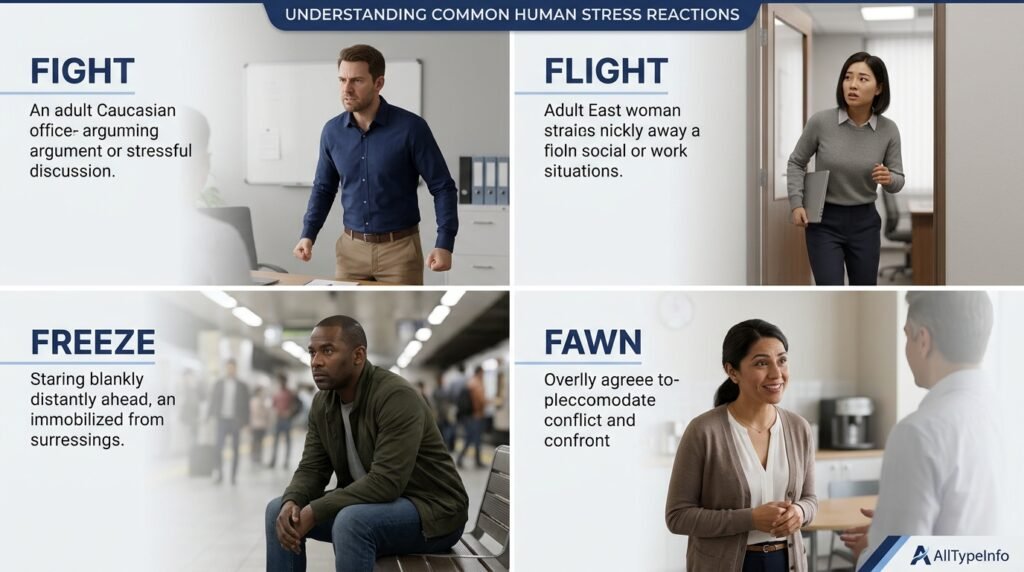
The four commonly discussed trauma responses are fight, flight, freeze, and fawn. Each describes a different way someone may react when they feel threatened or unsafe.
These responses are not personality types or medical diagnoses. A person may experience different responses in different situations.
1. Fight Response
The fight response happens when someone reacts to a perceived threat by becoming defensive, angry, confrontational, or controlling.
The body prepares to face the danger instead of escaping it.
Common signs include:
- Sudden anger or irritation.
- Raising your voice.
- Becoming defensive.
- Feeling the need to control a situation.
- Arguing over small issues.
- Difficulty calming down during conflict.
- Feeling easily threatened by criticism.
A person experiencing this response may become angry even when another person is not trying to hurt them.
Example 3:
A manager gives an employee feedback about a small mistake. The employee immediately becomes defensive, raises their voice, and feels personally attacked.
This reaction may be connected to past experiences where criticism was followed by punishment or humiliation. However, one defensive reaction does not automatically mean someone has experienced trauma.
2. Flight Response
The flight response happens when someone tries to escape, avoid, or move away from a situation that feels threatening.
This does not always mean physically running away. It can also involve avoiding conversations, relationships, responsibilities, or uncomfortable feelings.
Common signs include:
- Leaving uncomfortable situations.
- Avoiding difficult conversations.
- Feeling restless or unable to sit still.
- Staying constantly busy.
- Overthinking possible problems.
- Working excessively to avoid emotions.
- Feeling a strong need to escape conflict.
Some people may also use distraction or constant activity to avoid reminders of painful experiences.
Example 4:
Someone receives a message asking to discuss a relationship problem. Instead of replying, they become anxious and stop answering messages for several days.
This could be an avoidance reaction. If it is connected to earlier frightening experiences, it may be part of a trauma-related pattern.
3. Freeze Response
The freeze response happens when someone feels unable to fight or escape a perceived threat. They may become still, silent, numb, or mentally disconnected.
Some people describe this feeling as being stuck or unable to think clearly.
Common signs include:
- Difficulty speaking.
- Feeling emotionally numb.
- Going blank during arguments.
- Being unable to make decisions.
- Feeling disconnected from your surroundings.
- Having trouble moving or responding.
- Feeling mentally overwhelmed.
A freeze reaction is an automatic response. It does not mean someone agrees with what is happening or chooses to remain silent.
Example 5:
During an argument, someone suddenly stops talking. They know what they want to say, but their mind feels blank, and they cannot respond.
This may be a freeze response. Their body and mind may be reacting to a situation that feels unsafe or overwhelming.
4. Fawn Response
The fawn response describes an attempt to stay safe by pleasing, agreeing with, or appeasing another person.
Someone may put another person’s needs first because they fear anger, rejection, punishment, or conflict.
Common signs include:
- Saying yes when you want to say no.
- Apologizing too often.
- Avoiding disagreements.
- Feeling responsible for other people’s emotions.
- Struggling to set boundaries.
- Trying to keep everyone happy.
- Ignoring your own needs to avoid conflict.
The term fawn response is commonly used in trauma education, although it is not a formal psychiatric diagnosis.
Example 6:
A person feels uncomfortable with a request from a friend but agrees anyway because they are afraid the friend will become angry or stop talking to them.
This may reflect a fawn-like response. The person may be trying to avoid conflict at the expense of their own comfort.
Comparison of the Four Trauma Responses
| Response | Main Reaction | Common Behavior |
|---|---|---|
| Fight | Confront the threat | Anger, defensiveness, arguing |
| Flight | Escape the threat | Avoidance, restlessness, leaving |
| Freeze | Become still or shut down | Silence, numbness, going blank |
| Fawn | Please or appease | People-pleasing, excessive apologizing |
No response is automatically better or worse than another. People may experience more than one response, and their reactions can change depending on the situation.
What Are the Common Signs of a Trauma Response?
A trauma response can affect the way a person thinks, feels, behaves, and reacts physically.
Some signs appear during stressful situations. Others may continue long after a frightening event.

Here are common signs to recognize.
1. Emotional Signs
Emotional reactions may include:
- Sudden anger.
- Anxiety or fear.
- Feeling overwhelmed.
- Unexplained sadness.
- Shame or guilt.
- Emotional numbness.
- Feeling unsafe around other people.
- Strong reactions to criticism.
A person may also find it difficult to manage emotions during disagreements or unexpected changes.
2. Physical Signs
The body may react to stress in several ways:
- Racing heartbeat.
- Sweaty palms.
- Muscle tension.
- Shaking.
- Headaches.
- Stomach discomfort.
- Trouble sleeping.
- Feeling tired or constantly alert.
These symptoms can have many causes, so they should not automatically be blamed on trauma.
3. Behavioral Signs
Some people notice changes in their everyday behavior, such as:
- Avoiding certain people.
- Staying away from specific places.
- Canceling plans because of anxiety.
- Constantly checking their surroundings.
- Struggling to trust others.
- Trying too hard to please people.
- Becoming defensive during normal conversations.
Example 7:
A person avoids family gatherings because loud conversations make them feel nervous and overwhelmed.
This behavior may be related to an earlier stressful experience. However, the reason for avoidance can vary from person to person.
4. Mental and Cognitive Signs
Trauma-related stress may also affect thinking and concentration.
Possible signs include:
- Racing thoughts.
- Difficulty focusing.
- Trouble making decisions.
- Repeated memories of a frightening event.
- Expecting something bad to happen.
- Feeling confused during stressful situations.
- Difficulty remembering parts of an experience.
Some people experience hypervigilance, which means constantly watching for possible danger.
What Can Trigger a Trauma Response?
A trauma trigger is something that reminds a person of a past frightening or painful experience and brings back a strong emotional or physical reaction.
Triggers are different for everyone. Something that feels normal to one person may feel threatening to another.
Common triggers include:
1. Loud Voices or Arguments
People who have experienced repeated shouting or conflict may feel anxious when someone raises their voice.
2. Certain Sounds or Smells
A particular song, smell, alarm, or sudden noise may remind someone of a difficult event.
3. Relationship Problems
Feeling ignored, rejected, criticized, or abandoned may bring back emotions connected to earlier experiences.
4. Specific Places
A hospital, school, home, or workplace may remind someone of a painful experience.
5. Unexpected Physical Contact
A sudden touch or unwanted closeness may cause fear or discomfort, especially for someone with a history of physical harm.
6. Feeling Out of Control
Unexpected changes, uncertainty, or situations where someone feels powerless may cause a strong stress reaction.
Example 8:
A person who experienced bullying at school feels nervous when entering a room full of unfamiliar people.
The new situation may remind them of earlier social experiences. Their reaction may include sweating, avoiding eye contact, or wanting to leave.
A trigger does not always mean a person has PTSD. It is possible to have a strong emotional reaction without meeting the criteria for a mental health disorder.
What Is a Trauma Response in Relationships?
A trauma response in relationships happens when past painful experiences affect how someone reacts to a partner, friend, family member, or other close person.
It may influence communication, trust, emotional safety, and personal boundaries.
For example, someone who experienced abandonment may become anxious when their partner does not reply to a message. Another person may avoid emotional conversations because they associate conflict with danger.
Common relationship patterns include:
1. Fear of Abandonment
Someone may constantly worry that their partner will leave them.
They may need frequent reassurance or become anxious when communication changes.
2. Difficulty Trusting Others
Past betrayal or abuse may make it difficult to trust new people.
A person may expect others to hurt them, even when there is no clear sign of danger.
3. People-Pleasing
Someone may agree with everything their partner says to avoid arguments.
They may hide their true feelings because they fear rejection or anger.
4. Avoiding Conflict
A person may shut down or leave whenever a disagreement begins.
They may feel unable to express their thoughts during stressful conversations.
5. Becoming Defensive
Some people react strongly to small comments because they feel criticized or threatened.
Example 9:
A woman asks her partner for some quiet time. Her partner immediately worries that she is ending the relationship and starts sending repeated messages asking for reassurance.
This reaction may be linked to past experiences of rejection or abandonment. However, relationship anxiety can have several causes, and a professional can help identify the pattern.
Can Trauma Responses Affect Healthy Relationships?
Yes. Trauma-related reactions may make communication and emotional closeness harder.
However, having a trauma response does not mean someone cannot have a healthy relationship.
With self-awareness, clear boundaries, supportive communication, and professional help when needed, people can learn healthier ways to respond to stress.
What Is the Difference Between Trauma Response and PTSD?
A trauma response is a broad term for reactions to frightening or harmful experiences. Post-traumatic stress disorder (PTSD) is a specific mental health condition that can develop after exposure to a traumatic event.
The two terms are related, but they do not mean the same thing.
| Trauma Response | PTSD |
|---|---|
| Describes reactions to perceived or actual threats | A recognized mental health condition |
| May be temporary or ongoing | Has specific diagnostic criteria |
| Can involve emotional, physical, and behavioral changes | Includes specific groups of trauma-related symptoms |
| Does not automatically require a diagnosis | Requires assessment by a qualified professional |
| Can happen without PTSD | Develops in some people after trauma |
Common Symptoms of PTSD
PTSD symptoms are often grouped into four main areas:
- Intrusive memories: Unwanted memories, nightmares, or flashbacks.
- Avoidance: Staying away from thoughts, people, places, or activities linked to the event.
- Changes in mood and thinking: Persistent fear, guilt, shame, emotional numbness, or negative beliefs.
- Changes in arousal and reactions: Being easily startled, feeling constantly alert, becoming irritable, or having sleep problems.
For adults, PTSD symptoms generally need to last longer than one month and cause significant distress or problems with daily life. A qualified mental health professional must assess the symptoms before making a diagnosis.
Example 10:
After surviving a serious accident, someone experiences repeated nightmares, avoids driving, and feels constantly alert for several months.
These symptoms may be signs of PTSD, but only a qualified professional can assess whether the person meets the diagnostic criteria.
How Can You Calm a Trauma Response?
You may not be able to stop an automatic reaction immediately, but you can learn ways to manage stress and feel safer.

Here are some practical steps that may help.
1. Practice Slow Breathing
Slow breathing may help reduce physical tension and make it easier to focus.
Try this simple exercise:
- Sit somewhere comfortable.
- Relax your shoulders.
- Breathe in gently through your nose.
- Breathe out slowly.
- Repeat for a few minutes without forcing your breath.
If focusing on breathing makes you uncomfortable, try another grounding activity instead.
2. Use the 5-4-3-2-1 Grounding Technique
Grounding means bringing your attention back to the present moment.
Try the following exercise:
- 5 things you can see.
- 4 things you can feel.
- 3 things you can hear.
- 2 things you can smell.
- 1 thing you can taste.
This activity may help you shift your attention away from overwhelming thoughts.
Example 11:
During a stressful conversation, someone notices their heart racing. They pause, look around the room, identify five objects, and focus on their feet touching the floor.
This grounding activity may help them reconnect with their surroundings and feel more present.
3. Identify Your Triggers
Try to notice which situations cause strong emotional reactions.
You can write down:
- What happened before the reaction?
- What did you feel?
- What thoughts came into your mind?
- How did your body respond?
- What helped you feel safer?
Over time, these notes may help you recognize patterns.
4. Set Healthy Boundaries
Personal boundaries are limits that protect your time, feelings, comfort, and safety.
You can practice simple statements such as:
- I need some time to think.
- I am not comfortable discussing this right now.
- Please speak to me calmly.
- I need some personal space.
- I cannot agree to that request.
You do not need to explain every boundary in detail.
5. Talk to Someone You Trust
Speaking with a trusted friend, family member, or supportive person may help you feel less alone.
Choose someone who listens without judging you or forcing you to share details before you are ready.
6. Maintain Healthy Daily Habits
Basic daily habits may support emotional health.
Try to:
- Get enough sleep.
- Eat regular meals.
- Drink enough water.
- Take gentle walks.
- Spend time in safe surroundings.
- Stay connected with supportive people.
- Make time for activities you enjoy.
These habits cannot replace mental health care, but they may support your recovery.
7. Consider Professional Support
A licensed therapist or mental health professional can help you identify trauma-related patterns and develop healthy coping skills.
Depending on your needs, a professional may recommend trauma-focused cognitive behavioral therapy (TF-CBT), cognitive processing therapy (CPT), or eye movement desensitization and reprocessing (EMDR).
The right approach depends on the person’s situation, symptoms, preferences, and clinical needs.
If your symptoms interfere with work, relationships, sleep, or daily activities, consider arranging an appointment with a qualified professional.
If you feel at risk of harming yourself or someone else, seek immediate help from local emergency services or a crisis service.
Can You Heal From a Trauma Response?
Yes. Many people learn to manage trauma-related reactions and improve their emotional well-being with time, support, and suitable care.
Healing does not mean forgetting what happened. It means learning to feel safer in the present, recognize emotional reactions, and respond to difficult situations in healthier ways.
The process may include:
- Recognizing your emotional patterns.
- Learning what triggers your stress reactions.
- Building supportive relationships.
- Practicing healthy boundaries.
- Developing coping skills.
- Working with a trained therapist.
- Giving yourself time to recover.
Progress may look different for each person. Some people notice changes over time, while others need ongoing support.
Example 12:
A person who once avoided every difficult conversation begins practicing calm communication with a therapist. Over time, they learn to express their needs without immediately leaving or becoming defensive.
This shows how professional support and regular practice may help someone develop healthier responses to stressful situations.
How to Support Someone Experiencing a Trauma Response
If someone you care about is experiencing a strong emotional reaction, your response can make a difference.
You do not need to act as their therapist. Focus on helping them feel safe and respected.
Here are some helpful ways to respond.
1. Stay Calm
Speak in a calm voice and avoid shouting, blaming, or making sudden movements.
2. Give Them Space
Some people need time alone when they feel overwhelmed. Ask what would help instead of forcing them to talk.
3. Listen Without Judging
Allow them to share their feelings at their own pace.
Avoid statements such as:
- You are overreacting.
- Just forget about it.
- Why can’t you move on?
- It is all in your head.
4. Ask What They Need
A simple question can help:
Are you comfortable talking, or would you prefer some quiet time?
This gives the person a chance to express their needs.
5. Respect Their Boundaries
Do not force physical contact, demand personal details, or pressure someone to discuss painful memories.
Example 13:
Your friend becomes quiet after hearing a loud argument. Instead of asking repeated questions, you calmly say, “I’m here if you need me. Would you like to sit somewhere quieter?”
This response offers support without putting pressure on the person.
Frequently Asked Questions About Trauma Responses
1. What are the four types of trauma responses?
The four commonly discussed trauma responses are fight, flight, freeze, and fawn. Fight involves confronting a threat, flight involves escaping, freeze involves becoming still or shutting down, and fawn involves trying to please or appease someone to avoid conflict or harm.
2. How do I know if I am having a trauma response?
You may be experiencing a trauma-related reaction if a situation causes sudden fear, anger, anxiety, emotional numbness, avoidance, or a strong physical stress reaction. However, these signs can have other causes, so they do not confirm trauma on their own.
3. Can you have a trauma response without having PTSD?
Yes. A person can experience trauma-related reactions without having PTSD. PTSD is a specific mental health condition with defined symptoms and diagnostic criteria.
4. What is the most common trauma response?
There is no single response that applies to everyone. People may experience fight, flight, freeze, or fawn depending on their experiences and the situation. Some people experience more than one response.
5. Can a trauma response happen years after an event?
Yes. A reminder of an earlier experience may bring back strong emotional or physical reactions years later. Triggers can include sounds, places, conversations, smells, or relationship situations.
6. Is people-pleasing a trauma response?
People-pleasing can sometimes be linked to a fawn response, especially when someone tries to avoid conflict or harm by agreeing with others. However, people may also please others for reasons unrelated to trauma.
7. How long does a trauma response last?
It depends on the person and situation. Some stress reactions last a few minutes or hours, while other trauma-related symptoms may continue for weeks or longer. Persistent symptoms that affect daily life deserve professional attention.
8. Can trauma responses affect relationships?
Yes. Trauma-related reactions may affect trust, communication, emotional closeness, and personal boundaries. Support, healthy communication, and therapy may help people build healthier relationship patterns.
9. Can you control a trauma response?
Trauma responses are often automatic, so you may not be able to control the initial reaction. However, grounding exercises, coping skills, supportive relationships, and professional care may help you manage your reactions over time.
10. When should you seek professional help for a trauma response?
Consider professional help if you experience repeated anxiety, nightmares, flashbacks, emotional numbness, avoidance, sleep problems, or difficulty managing everyday activities. A qualified mental health professional can assess your symptoms and discuss suitable care.
Conclusion
A trauma response is the way your mind and body react to experiences that feel frightening, harmful, or unsafe. The four commonly discussed responses are fight, flight, freeze, and fawn. Each one represents a different way of responding to a perceived threat.
These reactions are not signs of weakness, and they do not automatically mean someone has PTSD. They can affect emotions, physical health, behavior, and relationships, but people can learn healthier ways to manage them.
Start by noticing your triggers, practicing simple grounding exercises, setting healthy boundaries, and seeking support when needed. If trauma-related symptoms affect your daily life, speaking with a qualified mental health professional can be a helpful next step.

Emily Carter (Content Writer & Communication Specialist) is a content writer and communication specialist at AllTypeInfo.com. She writes clear, practical, and easy-to-follow guides on email responses, message replies, writing templates, and everyday communication tips. Her goal is to help readers communicate with confidence in both personal and professional settings.