The Islamic greeting and response are important parts of Muslim communication. Muslims commonly greet each other by saying As-salamu alaykum, which means “Peace be upon you.” The person receiving the greeting usually replies with Wa alaykum as-salam, meaning “And peace be upon you too.”
These greetings express peace, kindness, and respect. You may hear them at home, in a mosque, at school, at work, or during a conversation with Muslim friends.
If you want to learn the correct Islamic greeting, its response, Arabic spelling, pronunciation, and different ways to use it, this guide explains everything with simple examples.
What Is the Islamic Greeting and Response?
The Islamic greeting is commonly known as As-salamu alaykum (السلام عليكم). It is an Arabic greeting that means Peace be upon you.
Muslims use this greeting when meeting someone, starting a conversation, entering a gathering, or greeting friends and family.
The standard response is Wa alaykum as-salam (وعليكم السلام), which means And peace be upon you too.
Both expressions are based on the Arabic word Salam, which means peace.
Here is a simple breakdown:
| Arabic Greeting | English Meaning |
|---|---|
| السلام عليكم | Peace be upon you |
| As-salamu alaykum | Peace be upon you |
| وعليكم السلام | And peace be upon you too |
| Wa alaykum as-salam | And peace be upon you too |
The greeting is more than a casual hello. It is a prayer for peace and well-being.
Example 1:
Ahmed meets his Muslim friend at the grocery store and says, As-salamu alaykum. His friend replies, Wa alaykum as-salam.
This is a common way for Muslims to greet each other during everyday activities.
What Is the Correct Response to As-Salamu Alaykum?
The correct and commonly used response to As-salamu alaykum is Wa alaykum as-salam.
You can also use a longer response that includes a prayer for Allah’s mercy and blessings.
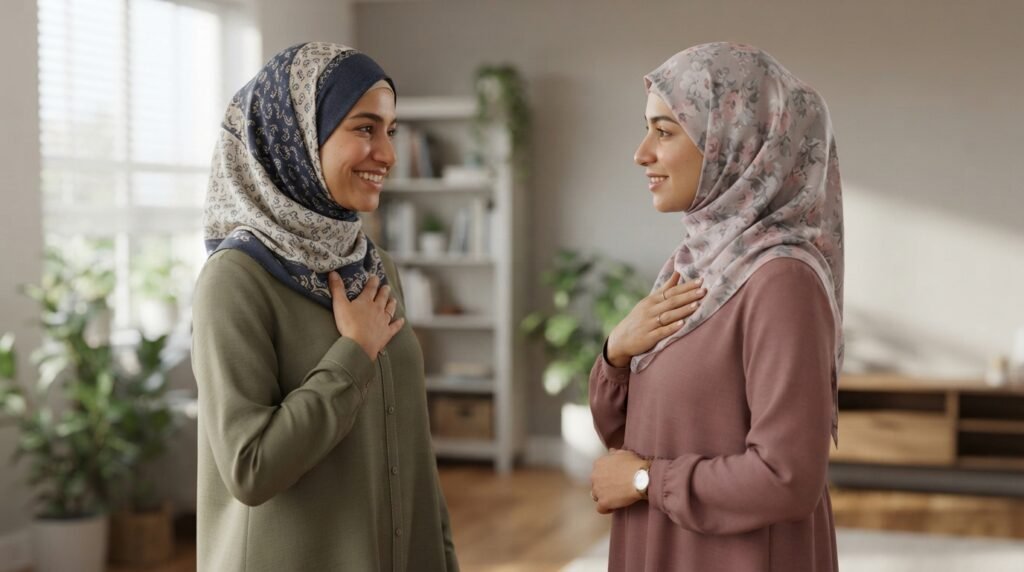
Here are the common forms:
| Greeting | Correct Response |
|---|---|
| As-salamu alaykum | Wa alaykum as-salam |
| As-salamu alaykum wa rahmatullah | Wa alaykum as-salam wa rahmatullah |
| As-salamu alaykum wa rahmatullahi wa barakatuh | Wa alaykum as-salam wa rahmatullahi wa barakatuh |
The response should be at least equal to the greeting. Islamic teaching also encourages returning a greeting with something better.
Example 2:
Your coworker greets you by saying, As-salamu alaykum. You can respond, Wa alaykum as-salam wa rahmatullah.
This response returns the greeting and adds a prayer for Allah’s mercy.
What Does As-Salamu Alaykum Mean?
As-salamu alaykum is an Arabic phrase that means Peace be upon you.
It is made up of Arabic words that express the idea of peace being given to another person.
Here is a simple explanation:
- As-Salam: Peace.
- Alaykum: Upon you.
Together, the phrase expresses a wish for peace for the person receiving the greeting.
Muslims use it to show kindness, respect, and goodwill.
Example 3:
A student enters a classroom and greets the teacher by saying, As-salamu alaykum.
The student is wishing the teacher peace as a sign of respect.
What Does Wa Alaykum As-Salam Mean?
Wa alaykum as-salam is the standard response to the Islamic greeting.
It means And peace be upon you too.
The phrase returns the same good wish to the person who offered the greeting.
Word by word:
- Wa: And.
- Alaykum: Upon you.
- As-Salam: Peace.
This reply is used by Muslims in everyday conversations and formal gatherings.
Example 4:
Fatima says, As-salamu alaykum, when she visits her aunt. Her aunt smiles and replies, Wa alaykum as-salam.
The reply shows warmth and returns the greeting.
What Is the Full Islamic Greeting?
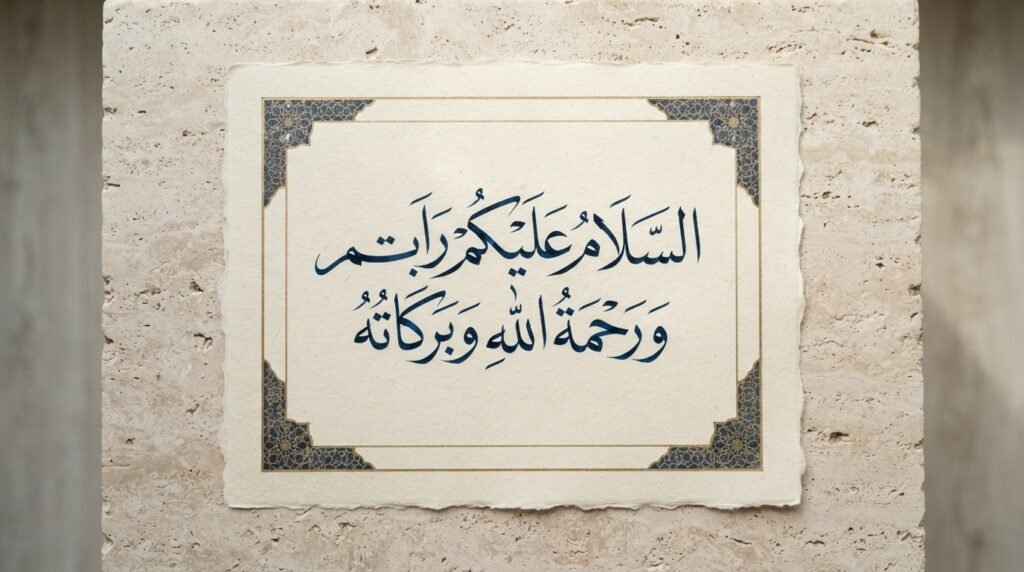
The full Islamic greeting is:
As-salamu alaykum wa rahmatullahi wa barakatuh.
Arabic:
السلام عليكم ورحمة الله وبركاته
English meaning:
Peace be upon you, and the mercy of Allah, and His blessings.
It is a longer and more complete form of the Islamic greeting.
The matching full response is:
Wa alaykum as-salam wa rahmatullahi wa barakatuh.
Arabic:
وعليكم السلام ورحمة الله وبركاته
English meaning:
And upon you be peace, and the mercy of Allah, and His blessings.
The greeting and response can be used when meeting family members, friends, guests, and other Muslims.
Example 5:
When Bilal visits his grandparents, he greets them with As-salamu alaykum wa rahmatullahi wa barakatuh. They return the greeting with the same words.
This is a respectful way to greet family members with a longer prayer.
Three Levels of Islamic Greeting and Response
There are three commonly used forms of the Islamic greeting. Each adds more words to the prayer.
| Level | Islamic Greeting | English Meaning |
|---|---|---|
| Short | As-salamu alaykum | Peace be upon you |
| Medium | As-salamu alaykum wa rahmatullah | Peace be upon you and the mercy of Allah |
| Full | As-salamu alaykum wa rahmatullahi wa barakatuh | Peace be upon you, and the mercy of Allah, and His blessings |
Their matching responses are:
1. Short response
Wa alaykum as-salam.
2. Medium response
Wa alaykum as-salam wa rahmatullah.
3. Full response
Wa alaykum as-salam wa rahmatullahi wa barakatuh.
The longer forms add prayers for mercy and blessings.
Example 6:
A Muslim friend sends you a message saying, As-salamu alaykum wa rahmatullah. You can reply, Wa alaykum as-salam wa rahmatullah.
This is an equal response to the greeting you received.
How to Pronounce Islamic Greetings
Arabic pronunciation may feel new to people who do not speak Arabic. However, you can learn the common Islamic greeting by breaking it into smaller parts.
| Arabic Phrase | Easy Pronunciation |
|---|---|
| السلام عليكم | As-sa-la-mu a-lay-kum |
| وعليكم السلام | Wa a-lay-kum as-sa-lam |
| ورحمة الله | Wa rah-ma-tul-lah |
| وبركاته | Wa ba-ra-ka-tuh |
Here are the complete phrases:
Islamic greeting:
As-salamu alaykum.
Response:
Wa alaykum as-salam.
Full greeting:
As-salamu alaykum wa rahmatullahi wa barakatuh.
Full response:
Wa alaykum as-salam wa rahmatullahi wa barakatuh.
These English spellings are approximate guides. Arabic sounds may not match English letters exactly.
Example 7:
A new Muslim student wants to greet a classmate but is unsure about the pronunciation. The student practices saying As-salamu alaykum slowly before using it.
Practicing each part separately can make the greeting easier to say.
How to Use Islamic Greetings in Everyday Life
The Islamic greeting can be used in many everyday situations. It is suitable for personal conversations, family visits, social gatherings, and many formal settings.

Here are some common situations.
1. Greeting Friends
You can greet your Muslim friends when you meet them at school, work, or outside.
Example 8:
You meet your friend after a long time and say, As-salamu alaykum. Your friend replies, Wa alaykum as-salam! How have you been?
This is a friendly way to start a conversation.
2. Greeting Family Members
Muslims often use Salam when greeting parents, siblings, grandparents, and other relatives.
Example 9:
A daughter comes home from school and says, As-salamu alaykum, Mom. Her mother responds, Wa alaykum as-salam, sweetheart.
This makes a simple family greeting warm and respectful.
3. Greeting Someone at Work
You can use the Islamic greeting when meeting Muslim coworkers or attending a workplace gathering.
Example 10:
You enter the office in the morning and greet your Muslim coworker with As-salamu alaykum. They reply, Wa alaykum as-salam.
It is a polite way to begin a conversation.
4. Greeting Someone Through a Text Message
The greeting can also be used in digital communication.
Example 11:
You send your friend a message saying, As-salamu alaykum! I hope you are doing well.
Your friend may respond with Wa alaykum as-salam. I’m doing well, thank you!
5. Greeting a Group of People
You can use As-salamu alaykum when entering a room or meeting several people.
Example 12:
A guest enters a family gathering and says, As-salamu alaykum, everyone. The people in the room respond, Wa alaykum as-salam.
This greeting works for both small and large gatherings.
Islamic Greeting Etiquette
Islamic greetings are connected with good manners and respect. A few simple practices can help you use them correctly.
1. Start With Salam
When meeting someone, you can begin with As-salamu alaykum instead of starting with an ordinary greeting.
2. Return the Greeting
If someone greets you with Salam, return the greeting politely.
3. Use a Clear and Friendly Voice
Say the greeting in a clear and respectful way. There is no need to shout or speak too loudly.
4. Use the Full Greeting When Appropriate
You can use the longer greeting, As-salamu alaykum wa rahmatullahi wa barakatuh, when you want to offer the complete prayer.
5. Be Respectful in Every Situation
A greeting should be offered with kindness. Your tone and behavior should match the peaceful meaning of the words.
6. Avoid Ignoring Someone’s Greeting
Try to acknowledge a greeting when you hear it. A polite response helps keep communication friendly.
The Quran also teaches believers to return a greeting with one that is better or at least equal to it.
Example 13:
During a family visit, an older relative greets you with As-salamu alaykum. You respond with Wa alaykum as-salam wa rahmatullah and greet them warmly.
This is an example of returning a greeting with additional kind words.
What Does the Quran Say About Returning a Greeting?
The Quran teaches Muslims to return greetings with a better greeting or at least one of equal value.
This guidance appears in Surah An-Nisa, verse 86.
The verse explains that when someone offers you a greeting, you should respond with something better or return it in the same manner.
This teaching supports the practice of answering As-salamu alaykum with Wa alaykum as-salam.
For example:
- If someone says As-salamu alaykum, you can reply Wa alaykum as-salam.
- You can also add wa rahmatullah to offer a longer response.
- If someone gives the full greeting, you can return the full greeting.
The main lesson is to respond to others with courtesy and kindness.
Example 14:
A visitor greets a host with As-salamu alaykum. The host replies, Wa alaykum as-salam wa rahmatullah.
The host returns the greeting with an additional prayer for mercy.
Common Mistakes When Using Islamic Greetings
People who are new to Islamic greetings may make small mistakes in spelling, pronunciation, or replies.
Here are some common ones.
1. Saying Only Salam Without a Full Reply
Some people reply with just Salam when someone says As-salamu alaykum.
Although people may use shortened forms in casual conversation, the complete response is Wa alaykum as-salam.
2. Confusing the Greeting With the Response
As-salamu alaykum is the greeting, while Wa alaykum as-salam is the response.
They are related but are used in different parts of a conversation.
3. Mixing Up the Word Order
The common greeting is As-salamu alaykum, not Alaykum as-salam.
The standard response begins with Wa alaykum as-salam.
4. Forgetting the Meaning
The greeting is a prayer for peace. It is more meaningful when you say it with kindness and respect.
5. Worrying Too Much About English Spelling
You may see different English spellings, such as:
- Assalamu Alaikum
- As-salamu Alaykum
- Assalamualaikum
- Salaam Alaikum
These are common ways of writing the Arabic phrase in English letters. The Arabic spelling remains the same.
Example 15:
Someone writes Assalamualaikum in a text message. You recognize it as the Islamic greeting and reply, Wa Alaikum Assalam.
Different English spellings do not change the basic meaning of the greeting.
Islamic Greeting and Response: Quick Reference Table
Use this table to check the most common Islamic greetings and their replies.
| Greeting | Response | Meaning |
|---|---|---|
| As-salamu alaykum | Wa alaykum as-salam | Peace be upon you / And peace be upon you too |
| As-salamu alaykum wa rahmatullah | Wa alaykum as-salam wa rahmatullah | Peace and Allah’s mercy be upon you |
| As-salamu alaykum wa rahmatullahi wa barakatuh | Wa alaykum as-salam wa rahmatullahi wa barakatuh | Peace, mercy, and blessings of Allah be upon you |
| Salam | Wa alaykum as-salam | Peace / And peace be upon you too |
Quick tip: If you are unsure which reply to use, Wa alaykum as-salam is the standard response to As-salamu alaykum.
FAQs About Islamic Greeting and Response
1. What is the correct Islamic greeting?
The common Islamic greeting is As-salamu alaykum, which means Peace be upon you.
2. What is the correct response to As-salamu alaykum?
The correct and commonly used response is Wa alaykum as-salam, meaning And peace be upon you too.
3. What does Wa alaykum as-salam mean in English?
It means And peace be upon you too. It is the standard reply to the Islamic greeting.
4. What is the full Islamic greeting?
The full greeting is As-salamu alaykum wa rahmatullahi wa barakatuh. It means Peace be upon you, and the mercy of Allah, and His blessings.
5. What is the full response to the Islamic greeting?
The full response is Wa alaykum as-salam wa rahmatullahi wa barakatuh. It returns the greeting and the prayer for peace, mercy, and blessings.
6. Can non-Muslims say As-salamu alaykum?
Yes. Non-Muslims can use As-salamu alaykum as a respectful greeting when speaking with Muslims. It is a good idea to learn its meaning and pronunciation before using it.
7. Can I reply to Salam with Wa alaykum as-salam?
Yes. Wa alaykum as-salam is the commonly used response to the Islamic greeting, including its shorter form, Salam.
8. How do you write As-salamu alaykum in Arabic?
It is written as السلام عليكم.
9. How do you write Wa alaykum as-salam in Arabic?
It is written as وعليكم السلام.
10. What is the difference between Salam and As-salamu alaykum?
Salam is a shorter Arabic word meaning peace. As-salamu alaykum is a complete greeting meaning peace be upon you.
11. Can I use Islamic greetings in text messages?
Yes. You can write As-salamu alaykum when starting a text conversation. The other person can reply with Wa alaykum as-salam.
12. What does As-salamu alaykum wa rahmatullahi wa barakatuh mean?
It means Peace be upon you, and the mercy of Allah, and His blessings. It is the longer form of the Islamic greeting.
Conclusion
The Islamic greeting and response are simple but meaningful ways to show peace, kindness, and respect. As-salamu alaykum means Peace be upon you, while Wa alaykum as-salam means And peace be upon you too.
You can use these greetings with Muslim friends, family members, coworkers, and guests. You can also choose the longer form, As-salamu alaykum wa rahmatullahi wa barakatuh, when you want to offer a more complete greeting.
The best approach is to learn the correct words, say them with respect, and return every greeting with kindness.

Emily Carter (Content Writer & Communication Specialist) is a content writer and communication specialist at AllTypeInfo.com. She writes clear, practical, and easy-to-follow guides on email responses, message replies, writing templates, and everyday communication tips. Her goal is to help readers communicate with confidence in both personal and professional settings.