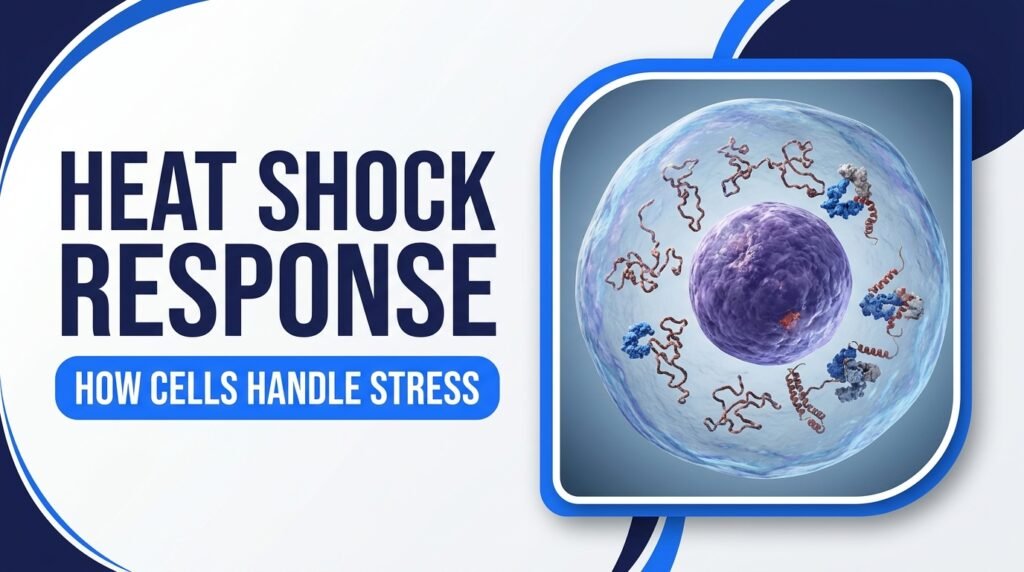
The human body contains trillions of cells, and each cell depends on proteins to perform important tasks. These proteins help cells grow, repair damage, send signals, and carry out daily activities. However, high temperatures and other forms of stress can damage proteins and affect how cells work.
This is where the heat shock response comes in. It is a natural protective process that cells use to deal with heat and other types of stress. During this process, cells produce special proteins called heat shock proteins (HSPs). These proteins help protect damaged proteins and support normal cell activity.
In this guide, you will learn what the heat shock response is, how it works, what role HSF1 plays, and why this process matters in biology, health, and disease.
What Is the Heat Shock Response?
The heat shock response (HSR) is a protective reaction that cells activate when they experience heat or certain other types of stress.
Its main job is to protect proteins from damage. Heat and other stress conditions can cause proteins to lose their normal shape. When this happens, proteins may stop working correctly or stick together in harmful groups.
To deal with this problem, cells increase the production of heat shock proteins (HSPs). These proteins act as molecular helpers. They support proper protein folding, help damaged proteins recover when possible, and assist in removing proteins that cannot be repaired.
The heat shock response is found in many types of living organisms, including humans, animals, plants, and microorganisms.
Example 1:
When a cell experiences a sudden increase in temperature, some of its proteins may begin to unfold. The cell activates the heat shock response and produces more heat shock proteins to help manage the damage.
This example shows how cells respond to heat before protein damage affects their normal activities.
Why Is the Heat Shock Response Important?
Proteins need a specific three-dimensional shape to perform their jobs. Even a small change in their shape can affect their function.
Heat and other stressful conditions can disturb this shape. Without a protective response, damaged proteins may build up inside cells and interfere with important processes.
The heat shock response helps cells deal with these problems in several ways.
1. Protects Proteins From Damage
Heat shock proteins help maintain the correct shape of proteins. Some can bind to exposed parts of damaged proteins and stop them from sticking together.
This support helps cells maintain their normal functions during stressful conditions.
2. Supports Protein Repair
Some damaged proteins can return to their working shape. Certain molecular chaperones, including members of the HSP70 family, help this process.
However, not every damaged protein can be repaired. Severely damaged proteins may need to be broken down and replaced.
3. Reduces Protein Clumping
When proteins lose their normal shape, they may stick together and form clusters called protein aggregates.
Heat shock proteins help reduce harmful protein clumping by stabilizing proteins and supporting their proper folding.
4. Helps Cells Survive Stress
The heat shock response supports cell survival during stressful conditions. It helps cells manage damage and maintain protein balance.
However, its protective effect has limits. Severe or prolonged stress can cause damage that cells cannot repair.
Example 2:
A group of cells experiences high temperatures during a laboratory experiment. Some proteins begin to lose their normal shape, so the cells increase the production of HSP70 to help manage the damaged proteins.
This example shows how heat shock proteins support cells during temperature-related stress.
How Does the Heat Shock Response Work?
The heat shock response involves several connected steps. The process begins when cells detect a problem with protein folding or other forms of cellular stress.
In human cells, Heat Shock Factor 1 (HSF1) is a major regulator of this response.
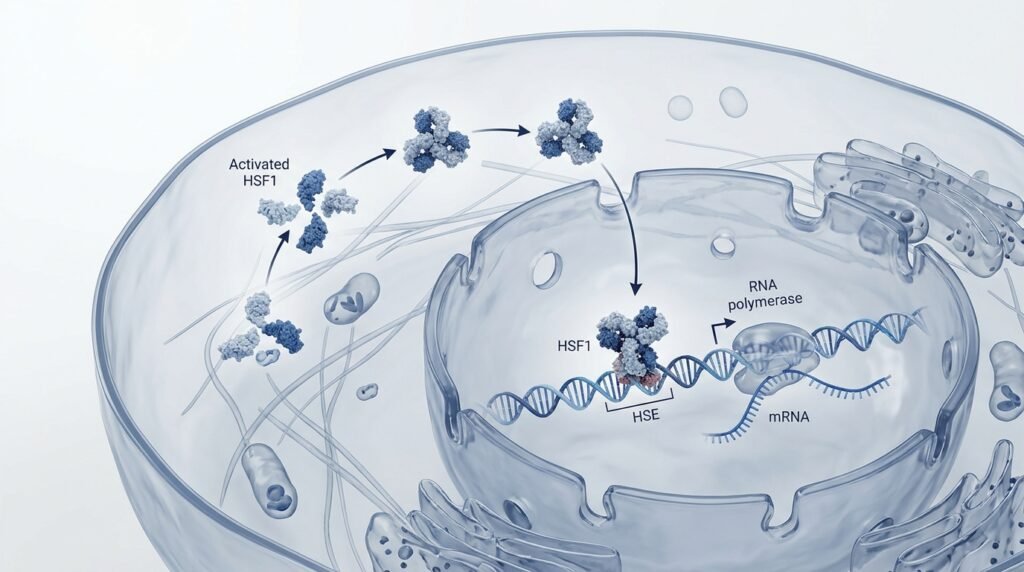
Here is how the process generally works.
Step 1: Cells Experience Stress
The process begins when cells experience heat or another condition that affects protein stability.
Common triggers include:
- High temperatures
- Oxidative stress
- Heavy metal exposure
- Certain chemicals
- Conditions that cause protein misfolding
These conditions can increase the number of damaged or unfolded proteins inside cells.
Step 2: HSF1 Becomes Active
Under normal conditions, HSF1 is mainly kept in an inactive state through interactions with regulatory proteins and molecular chaperones.
When cellular stress increases, this control changes. HSF1 becomes activated through a series of molecular events.
It can then form a structure called a trimer, which contains three HSF1 molecules.
Step 3: HSF1 Moves Into the Nucleus
The nucleus is the part of a cell that contains most of its genetic material.
After activation, HSF1 accumulates in the nucleus. There, it attaches to specific DNA sequences called heat shock elements (HSEs).
These DNA sequences help control the activity of genes involved in the heat shock response.
Step 4: Heat Shock Protein Genes Become Active
When HSF1 binds to heat shock elements, it helps activate specific genes.
These genes provide instructions for making different heat shock proteins.
As a result, the cell can increase the production of proteins that help manage stress and protect other proteins.
Step 5: Heat Shock Proteins Help the Cell Recover
Newly produced heat shock proteins help stabilize proteins, support proper folding, reduce protein aggregation, and assist with protein quality control.
Some proteins can recover their normal shape, while others may need to be removed.
Step 6: The Response Slows Down
Once the stress becomes less severe, the cell reduces the heat shock response.
Proteins such as HSP70 help regulate HSF1 activity. This feedback process prevents the response from staying active longer than needed.
Example 3:
A researcher exposes cultured human cells to controlled heat stress. The cells activate HSF1, increase heat shock protein production, and begin managing the damaged proteins.
This example shows the main stages of the heat shock response in a laboratory setting.
What Are Heat Shock Proteins?
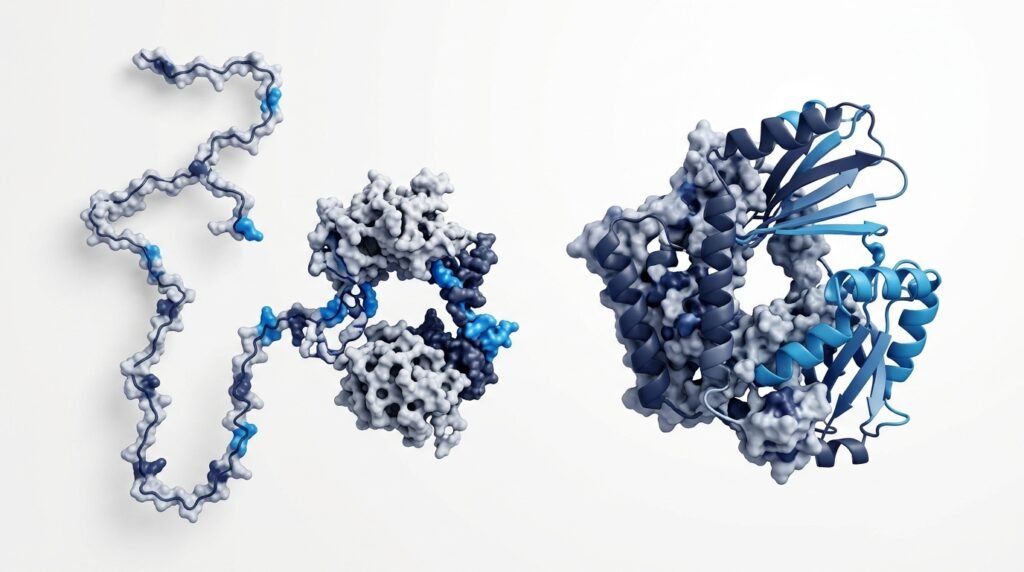
Heat shock proteins (HSPs) are a group of proteins that help other proteins fold correctly, remain stable, and recover from certain types of damage.
They are called heat shock proteins because scientists first identified many of them through studies of cells exposed to high temperatures.
However, these proteins also perform important jobs under normal conditions.
They belong to a larger group called molecular chaperones.
Different heat shock proteins perform different tasks. Some help newly made proteins fold, while others prevent damaged proteins from sticking together or support their removal.
Main Types of Heat Shock Proteins
HSP70
HSP70 is one of the best-known heat shock proteins.
Its main functions include:
- Helping proteins fold correctly.
- Stabilizing proteins under stress.
- Preventing harmful protein aggregation.
- Supporting protein repair and quality control.
- Helping regulate the heat shock response.
HSP70 works with other helper proteins to support protein stability.
HSP90
HSP90 helps maintain the correct shape and function of many important proteins.
Some of its main roles include:
- Supporting proteins involved in cell signaling.
- Helping certain proteins remain stable.
- Assisting with the proper function of regulatory proteins.
- Supporting normal cellular activities.
HSP90 also plays a role in controlling the activity of HSF1 under certain conditions.
HSP60
HSP60 is mainly found in mitochondria, which are structures that help cells produce energy.
It supports protein folding inside mitochondria and helps maintain their normal functions.
HSP27
HSP27 is a small heat shock protein that helps protect cells against different types of stress.
It can stabilize proteins, reduce protein aggregation, and help regulate cell survival.
Example 4:
A newly made protein has difficulty reaching its correct shape. HSP70 helps it fold properly, while other molecular chaperones may provide additional support.
This example shows that heat shock proteins also work during normal cell activity, not just during heat exposure.
What Is HSF1 and What Does It Do?
Heat Shock Factor 1 (HSF1) is a transcription factor that controls many genes involved in the heat shock response.
A transcription factor is a protein that helps control which genes are active or inactive.
HSF1 plays a major role in activating heat shock protein genes when cells experience stress.
Its main functions include:
- Detecting or responding to changes linked to cellular stress.
- Becoming active through changes in its structure and regulation.
- Moving into the nucleus.
- Attaching to heat shock elements (HSEs) in DNA.
- Helping activate heat shock protein genes.
- Supporting the cell’s response to protein damage.
HSF1 is especially important in mammals, where it acts as a major regulator of the heat shock response.
Other heat shock factors, such as HSF2 and HSF4, also have roles in specific biological processes.
Example 5:
During heat stress, activated HSF1 attaches to heat shock elements in DNA. This helps the cell increase the production of proteins such as HSP70.
This example explains how a transcription factor controls the production of protective proteins.
What Can Trigger the Heat Shock Response?
Although the name suggests that only high temperatures activate this process, several other conditions can also trigger it.
The common feature is that these conditions can disturb protein stability or create cellular stress.
1. High Temperature
High temperatures can cause proteins to unfold or lose their normal shape.
This is one of the best-known triggers of the heat shock response.
2. Oxidative Stress
Oxidative stress occurs when reactive molecules called free radicals and other oxidants exceed the cell’s ability to control them.
These molecules can damage proteins and other cell components.
The heat shock response may help cells manage the resulting protein damage.
3. Heavy Metals
Some heavy metals can interfere with normal protein function.
Exposure to certain metals may cause protein misfolding and activate stress-related protective pathways.
4. Chemical Stress
Certain chemicals can disturb protein structure and normal cell activity.
Depending on the chemical and level of exposure, cells may activate the heat shock response.
5. Other Forms of Cellular Stress
Some conditions, including oxygen shortage and other forms of cellular damage, can affect protein stability.
These conditions may activate parts of the heat shock response, although the exact pathways can differ.
Example 6:
A laboratory researcher exposes cells to a chemical that causes protein misfolding. The cells respond by increasing certain protective proteins, even though the temperature remains normal.
This example shows why the heat shock response is linked to more than heat alone.
Heat Shock Response and Protein Folding
Protein folding is the process through which a newly made protein takes its correct three-dimensional shape.
This shape allows the protein to perform its specific job.
For example, some proteins act as enzymes, others carry signals, and some help build important cell structures.
When proteins fold incorrectly, they may lose their function or form harmful aggregates.
The heat shock response helps protect this process by increasing the activity of molecular chaperones.
These chaperones can:
- Help newly made proteins fold.
- Stabilize unfolded proteins.
- Prevent damaged proteins from sticking together.
- Support the recovery of proteins that can still be repaired.
- Help direct severely damaged proteins toward removal.
The balance between protein production, folding, repair, and removal is called protein homeostasis, or proteostasis.
Maintaining this balance is important for healthy cell activity.
Example 7:
A cell produces a protein that does not fold correctly. A molecular chaperone binds to the protein and helps it reach a stable shape instead of forming a harmful aggregate.
This example explains how protein folding and the heat shock response are connected.
Heat Shock Response in Health and Disease
The heat shock response has important roles in normal cell activity and several disease-related processes.
Its effects can be helpful or harmful, depending on the situation.
Role in Neurodegenerative Diseases
Some brain-related diseases involve the buildup of incorrectly folded proteins.
Examples include:
- Alzheimer’s disease
- Parkinson’s disease
- Huntington’s disease
Researchers study heat shock proteins because they may help cells manage protein misfolding and aggregation.
However, changes in heat shock response activity are complex. Increasing these proteins does not automatically prevent or treat these diseases.
Role in Cancer
Cancer cells often experience several forms of stress as they grow and divide.
Some cancer cells use HSF1 and heat shock proteins to help maintain important proteins and survive stressful conditions.
For this reason, scientists are studying the heat shock response as a possible target for cancer research.
However, this does not mean that heat shock proteins always cause cancer. Their effects depend on the cell type and biological conditions.
Role in Aging
As cells age, their ability to maintain proper protein folding and remove damaged proteins can change.
Researchers study heat shock proteins to learn how cells maintain protein balance during aging.
The heat shock response may help protect cells, but it is only one part of the many biological processes involved in aging.
Example 8:
Researchers studying Alzheimer’s disease examine whether heat shock proteins can help brain cells manage the buildup of incorrectly folded proteins.
This example shows how scientists investigate the role of cellular stress responses in brain-related diseases. It does not mean that heat shock proteins are an established treatment.
Heat Shock Response vs. Heat Stress
These two terms are related, but they do not mean the same thing.
| Heat Stress | Heat Shock Response |
|---|---|
| A condition that affects cells due to high temperature. | A protective reaction activated by cells. |
| Can cause protein damage. | Helps cells manage protein damage. |
| Acts as a stress trigger. | Acts as a cellular response. |
| May disturb normal cell activity. | Supports protein stability and cell survival. |
In simple terms, heat stress is the problem, while the heat shock response is one of the ways cells react to that problem.
Example 9:
A cell experiences high temperature, causing some proteins to unfold. This condition is heat stress, while the activation of HSF1 and production of HSPs are parts of the heat shock response.
This example makes the difference between the two terms clear.
What Happens When the Heat Shock Response Fails?
The heat shock response helps cells manage stress, but it cannot repair every type of damage.
When the response is too weak, delayed, or unable to meet the level of stress, damaged proteins may build up.
This can affect several important cell functions.
Possible effects include:
- Increased protein misfolding.
- More protein aggregation.
- Disturbed cell signaling.
- Problems with protein quality control.
- Increased risk of cell damage or death.
The result depends on the type of cell, the level of stress, and how long the stress continues.
Some cells may recover after the stress ends. Others may suffer lasting damage.
It is also possible for an overly active heat shock response to support harmful cell behavior in certain conditions, including some cancers.
This is why researchers study both the activation and control of the heat shock response.
How Do Scientists Study the Heat Shock Response?
Scientists use different laboratory methods to study how cells react to heat and other stress conditions.

Some common methods include:
1. Cell Culture Experiments
Researchers grow cells in controlled laboratory conditions and expose them to specific stress levels.
They can then study changes in protein production and cell activity.
2. Western Blotting
Western blotting is a laboratory method used to detect specific proteins.
Researchers may use it to measure changes in proteins such as HSP70, HSP90, and HSF1.
3. Gene Expression Analysis
Scientists study changes in gene activity to see whether heat shock protein genes become more active after stress.
4. Microscopy
Microscopy helps researchers observe where proteins are located inside cells.
For example, scientists can examine whether activated HSF1 moves into the nucleus.
5. Protein Analysis
Researchers use different protein analysis methods to study protein folding, aggregation, and stability.
These methods help explain how cells respond to different forms of stress.
Example 10:
A research team compares two groups of cultured cells. One group remains at normal temperature, while the other experiences controlled heat stress. The researchers then measure HSP70 levels to compare their responses.
This example shows how laboratory experiments can help scientists study the heat shock response.
Frequently Asked Questions About the Heat Shock Response
What is the main function of the heat shock response?
The main function of the heat shock response is to protect cells from protein damage caused by heat and other forms of stress. It increases the production of heat shock proteins, which help maintain protein stability and support cell survival.
What activates the heat shock response?
High temperatures, oxidative stress, heavy metals, and certain chemicals can activate the heat shock response. These conditions may cause proteins to unfold or become damaged.
What is the role of HSF1 in the heat shock response?
HSF1 is a major transcription factor that controls the heat shock response. It becomes active during cellular stress, binds to specific DNA sequences, and helps activate heat shock protein genes.
What are heat shock proteins?
Heat shock proteins (HSPs) are molecular chaperones that help other proteins fold correctly, remain stable, and avoid harmful aggregation. Examples include HSP70, HSP90, HSP60, and HSP27.
Is the heat shock response found in humans?
Yes. The heat shock response occurs in human cells and many other organisms. It helps cells manage protein damage and maintain normal functions during stressful conditions.
Is the heat shock response the same as heat stress?
No. Heat stress is the condition that affects cells because of high temperatures. The heat shock response is the protective process that cells activate to manage the effects of that stress.
Can the heat shock response help prevent disease?
The heat shock response supports protein quality control, which is relevant to several diseases involving protein misfolding. However, it is not a proven way to prevent or treat diseases such as Alzheimer’s or cancer.
What is the difference between HSP70 and HSP90?
HSP70 mainly helps with protein folding, stabilization, and stress-related protein quality control. HSP90 supports the stability and function of many regulatory and signaling proteins. Both are important molecular chaperones, but they have different roles.
Does the heat shock response happen without heat?
Yes. Certain non-heat conditions, such as oxidative stress and exposure to some chemicals, can also activate the heat shock response because they can disturb protein stability.
How long does the heat shock response last?
There is no single fixed duration. It depends on the type and level of stress, the cell type, and how quickly the cell recovers. The response generally decreases as stress is controlled and protein balance improves.
Conclusion
The heat shock response is an important protective process that helps cells manage heat and other forms of stress. It works mainly by activating HSF1 and increasing the production of heat shock proteins, including HSP70 and HSP90.
These proteins help maintain proper protein folding, reduce harmful protein aggregation, and support cell survival.
The process also plays a role in research on aging, cancer, and neurodegenerative diseases. Studying it helps scientists learn how cells protect themselves and why protein damage can lead to disease.
The key point is simple: the heat shock response helps cells protect their proteins and maintain normal activity when they face stressful conditions.

Emily Carter (Content Writer & Communication Specialist) is a content writer and communication specialist at AllTypeInfo.com. She writes clear, practical, and easy-to-follow guides on email responses, message replies, writing templates, and everyday communication tips. Her goal is to help readers communicate with confidence in both personal and professional settings.