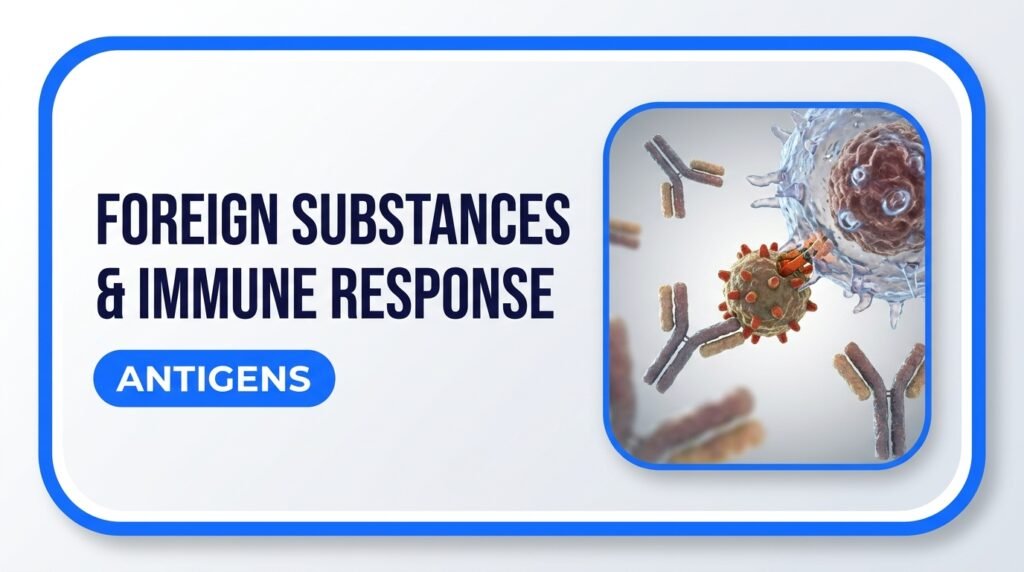
Have you ever wondered how your body recognizes harmful germs, viruses, or other foreign materials? Your immune system has a special way of identifying substances that may pose a threat. These substances are commonly called antigens.
The term antigen is widely used in biology and immunology. Antigens help the immune system recognize foreign materials and respond to them. A substance that directly triggers an immune response is more precisely called an immunogen.
In this article, you will learn what antigens are, how they work, which substances can act as antigens, and how your body responds to them. You will also learn the difference between antigens, immunogens, and antibodies.
What Are Foreign Substances That Elicit an Immune Response Called?
Foreign substances that cause or trigger an immune response are commonly called antigens. In more precise scientific language, substances that can directly start an immune response are called immunogens.
An antigen is a substance that the immune system can recognize. It may come from bacteria, viruses, fungi, pollen, or other foreign materials. Some antigens are found on the surface of germs, while others come from chemicals or substances that enter the body.
When the immune system recognizes an antigen, it may activate special immune cells. These cells help fight the foreign material. The response can include the production of antibodies, which are proteins that recognize and attach to specific antigens.
Example 1:
A person catches a virus. Proteins on the surface of the virus act as antigens, helping the immune system recognize the infection.
This example shows how the immune system identifies foreign materials and starts a defense response.
What Does the Word Antigen Mean?
The word antigen comes from the idea of antibody generation. It is used for substances that can be recognized by specific parts of the immune system.
Antigens can be made of different biological materials, including:
- Proteins: Found on bacteria, viruses, and other biological materials.
- Carbohydrates: Sugars that may appear on the surfaces of cells and microorganisms.
- Lipids: Fat-based molecules found in cell membranes.
- Nucleic acids: DNA and RNA, which carry genetic information.
Not every antigen can trigger an immune response on its own. This is why scientists sometimes use the more specific term immunogen.
What Is an Immunogen?
An immunogen is a substance that can activate the immune system and produce a specific immune response.
For example, a protein from a harmful microorganism may act as an immunogen. The immune system recognizes it and activates cells that help fight the infection.
The terms antigen and immunogen are often used in similar ways in basic biology lessons. However, they have different meanings in more detailed scientific discussions.
How Do Antigens Work in the Immune System?
Antigens help the immune system identify substances that may be harmful or foreign. When an antigen enters the body, different immune cells may recognize it and begin a defense process.
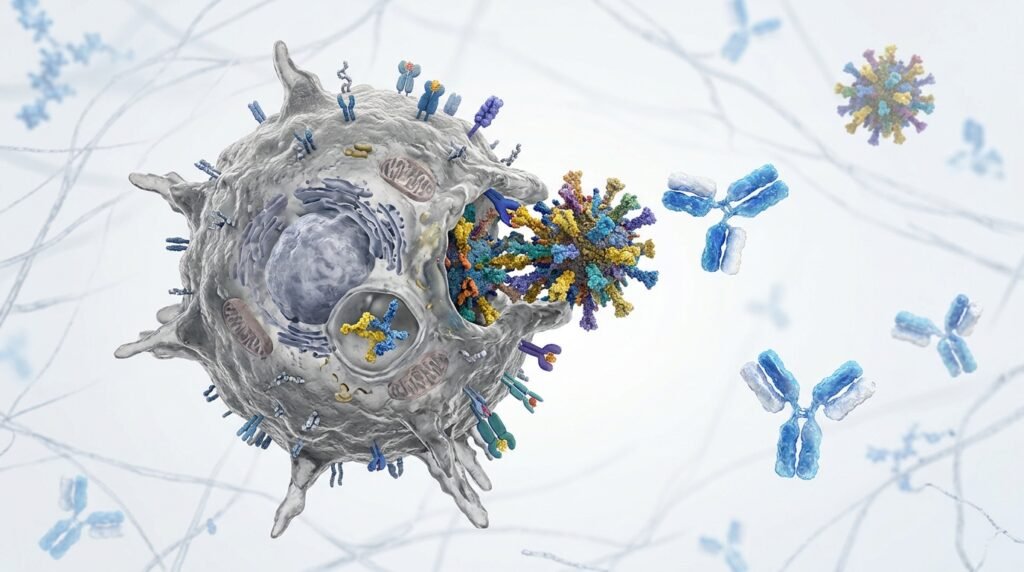
Here is how this process generally works:
1. A Foreign Substance Enters the Body
A foreign substance may enter through breathing, eating, an insect bite, or a cut in the skin.
For example, bacteria may enter the body through an open wound. These bacteria carry molecules that the immune system can recognize as antigens.
Example 2:
A person gets a small cut while working in the garden. Bacteria enter through the damaged skin and expose the immune system to foreign antigens.
This example shows why the skin acts as an important barrier against microorganisms.
2. Immune Cells Recognize the Antigens
Specialized immune cells help identify foreign materials. Some of these cells are called antigen-presenting cells (APCs).
Examples include:
- Dendritic cells
- Macrophages
- B cells
Some of these cells collect foreign materials, break them into smaller pieces, and display those pieces to other immune cells.
This process helps activate the body’s specific immune defenses.
3. The Immune System Activates Its Defense

After recognizing an antigen, the immune system may activate B cells and T cells.
- B cells can develop into plasma cells that produce antibodies.
- T cells help control immune activity or destroy infected cells.
- Memory cells help the immune system respond more quickly if it encounters the same antigen again.
The exact response depends on the type of antigen and the immune cells involved.
Example 3:
When a person receives a vaccine, the immune system encounters specific antigens from the vaccine and develops a response against them.
This process helps prepare the body to recognize the related germ if it encounters it later.
4. Antibodies Recognize Specific Antigens
Antibodies are proteins made by plasma cells, which develop from activated B cells.
Each antibody can recognize a particular antigen or part of an antigen. When an antibody attaches to its target, it may block the target or help other immune cells remove it.
This process is an important part of the body’s adaptive immune response.
What Are the Common Types of Antigens?
Antigens can come from different sources. Scientists classify them based on where they come from and how they relate to the body.
1. Exogenous Antigens
Exogenous antigens are substances that enter the body from outside.
Common sources include:
- Bacteria
- Viruses
- Fungi
- Pollen
- Food proteins
- Environmental particles
These substances may enter through the nose, mouth, lungs, or damaged skin.
Example 4:
A person breathes in pollen during spring. Certain pollen proteins can act as antigens and trigger an allergic response.
This example explains why some people experience sneezing, itching, or watery eyes after exposure to pollen.
2. Endogenous Antigens
Endogenous antigens are produced inside the body’s cells.
They may come from normal cell activity or from infections inside cells. For example, a virus that infects a cell can produce viral proteins inside that cell.
The immune system can detect pieces of these proteins when they are displayed on the cell surface.
Example 5:
A virus enters a body cell and begins making viral proteins. Pieces of these proteins are displayed on the cell surface, helping T cells identify the infected cell.
This process helps the immune system find and remove infected cells.
3. Autoantigens
Autoantigens are normal substances from the body’s own cells and tissues.
A healthy immune system usually learns to recognize these substances as part of the body. However, in an autoimmune disease, the immune system mistakenly attacks certain healthy tissues.
Examples of conditions involving immune reactions against the body’s own substances include:
- Type 1 diabetes
- Rheumatoid arthritis
- Systemic lupus erythematosus
Example 6:
In type 1 diabetes, the immune system mistakenly attacks insulin-producing cells in the pancreas.
This example shows how an immune response can sometimes target the body’s own cells instead of foreign materials.
4. Alloantigens

Alloantigens are substances that differ between members of the same species.
They are important in blood transfusions and organ transplants. If a person receives blood or tissue with certain unfamiliar antigens, the immune system may react against them.
Example 7:
A person with type A blood receives type B blood. The immune system may recognize the B blood group antigens as foreign and cause a dangerous transfusion reaction.
This is why doctors check blood types and compatibility before a transfusion.
What Is the Difference Between Antigens, Immunogens, and Antibodies?
These three terms are closely related, but they do not mean the same thing.
| Term | Meaning | Main Role |
|---|---|---|
| Antigen | A substance recognized by a specific antibody or immune receptor | Provides a target for immune recognition |
| Immunogen | A substance capable of triggering an immune response | Activates the immune system |
| Antibody | A protein made by plasma cells | Recognizes and binds to a specific antigen |
Antigen vs. Immunogen
The main difference is their ability to trigger an immune response.
An antigen can bind to a specific antibody or immune receptor. An immunogen can activate the immune system and produce a response.
All immunogens are antigens, but not all antigens are immunogens.
Example 8:
A small chemical called a hapten may bind to an antibody but cannot usually trigger an immune response by itself. When it attaches to a larger carrier protein, the combined substance may trigger a response.
This example explains why a substance can be recognized by the immune system without being able to activate it independently.
Antigen vs. Antibody
An antigen is the target that the immune system recognizes. An antibody is a protein that binds to that target.
Think of them as two different parts of an immune reaction:
- Antigen: The substance being recognized.
- Antibody: The protein that recognizes and binds to it.
For example, a protein on the surface of a virus may act as an antigen. The body may produce antibodies that attach to that protein.
What Are Some Examples of Antigens?
Antigens are found in many places. They may come from microorganisms, food, environmental materials, or even the body’s own cells.
Here are some common examples:
| Source | Example of Antigen | Possible Immune Response |
|---|---|---|
| Bacteria | Bacterial surface proteins | Immune defense against infection |
| Viruses | Viral surface proteins | Antibody and T-cell responses |
| Pollen | Pollen proteins | Allergic reactions in sensitive people |
| Food | Peanut proteins | Food allergy in some people |
| Blood | ABO blood group antigens | Transfusion reactions |
| Transplanted organs | Donor tissue antigens | Possible transplant rejection |
Are Bacteria and Viruses Antigens?
Bacteria and viruses are not single antigens. They contain many different molecules that can act as antigens.
For example, proteins on the surface of a bacterium can be recognized by the immune system. Viral surface proteins can also act as antigens.
These structures help immune cells recognize the microorganisms.
Can Food Cause an Antigen Response?
Yes. Some food proteins can act as antigens.
In people with food allergies, the immune system reacts to certain food proteins as if they were harmful. Common food allergens include peanuts, milk, eggs, soy, wheat, fish, shellfish, and tree nuts.
The reaction may cause symptoms such as itching, swelling, hives, or breathing problems. Severe allergic reactions require immediate emergency medical care.
Why Are Antigens Important?
Antigens play an important role in several parts of human health and medicine.
1. They Help the Body Recognize Infections
Antigens allow the immune system to identify specific microorganisms and infected cells.
This recognition helps the body start an appropriate immune response.
2. They Help Vaccines Prepare the Immune System
Many vaccines contain antigens or instructions that help the body make a harmless version of an antigen.
The immune system responds by developing specific defenses, including antibodies and memory cells.
This preparation can help protect against future infections.
3. They Help Doctors Match Blood Types
Blood group antigens are important when checking blood compatibility.
Doctors use blood typing and other tests to reduce the risk of harmful reactions during transfusions.
4. They Help With Organ Transplants
Antigens found on the surface of cells can affect how the immune system responds to transplanted organs.
Doctors check tissue compatibility and may prescribe medicines to reduce the risk of organ rejection.
5. They Help Diagnose Certain Diseases
Doctors and laboratory workers use antigen tests to detect specific substances linked to infections and other conditions.
For example, some medical tests look for antigens from viruses or bacteria in a person’s sample.
The results can help healthcare professionals make medical decisions.
What Happens When the Immune System Does Not Recognize an Antigen Correctly?
The immune system must recognize foreign substances while avoiding unnecessary attacks on healthy body tissues.
Sometimes, this process does not work as expected.
There are two important examples:
Allergic Reactions
An allergy happens when the immune system reacts strongly to a substance that is usually harmless.
Common triggers include pollen, dust mites, certain foods, and animal proteins.
In some allergic reactions, the body produces IgE antibodies, which can lead to the release of chemicals such as histamine.
Autoimmune Diseases
An autoimmune disease occurs when the immune system mistakenly attacks healthy parts of the body.
This can lead to inflammation and tissue damage.
Examples include rheumatoid arthritis, type 1 diabetes, and lupus.
These conditions show why the immune system needs to recognize the difference between foreign materials and the body’s own tissues.
Frequently Asked Questions
1. What are foreign substances that trigger an immune response called?
They are commonly called antigens. The more precise term for a substance that can directly trigger an immune response is immunogen.
2. What is the main function of an antigen?
The main role of an antigen is to act as a target that the immune system can recognize. This recognition helps the body identify foreign materials and activate specific immune defenses.
3. Are antigens and antibodies the same?
No. Antigens are substances recognized by the immune system, while antibodies are proteins made by immune cells that bind to specific antigens.
4. Can bacteria and viruses act as antigens?
Yes. Bacteria and viruses contain proteins and other molecules that can act as antigens. These molecules help the immune system recognize infections.
5. What is the difference between an antigen and an immunogen?
An antigen can bind to a specific immune receptor or antibody. An immunogen can actually trigger an immune response. All immunogens are antigens, but not all antigens are immunogens.
6. What are examples of antigens?
Common examples include bacterial proteins, viral surface proteins, pollen proteins, food proteins, and blood group markers.
7. Do antigens always cause disease?
No. Antigens do not always cause disease. Some come from harmless substances, vaccines, food, or normal body cells. Their effects depend on the type of substance and the immune system’s response.
8. What are haptens in immunology?
Haptens are small substances that can bind to specific antibodies but usually cannot trigger an immune response on their own. They may become immunogenic when attached to a larger carrier protein.
9. How do vaccines use antigens?
Vaccines expose the immune system to specific antigens or provide instructions for making them. This helps the body develop immune defenses and memory cells that may respond to future exposure.
10. What is the difference between foreign antigens and autoantigens?
Foreign antigens come from outside the body or from other organisms. Autoantigens are substances from the body’s own cells and tissues. A healthy immune system usually avoids attacking normal autoantigens.
Conclusion
Foreign substances that elicit an immune response are commonly called antigens. However, the more precise scientific term for a substance that can directly trigger an immune response is immunogen.
Antigens help the immune system recognize bacteria, viruses, allergens, and other substances. They also play an important role in vaccination, blood transfusions, organ transplants, and disease testing.
For a biology or immunology question, remember this simple distinction: antigens are recognized by the immune system, while immunogens can trigger an immune response.

Emily Carter (Content Writer & Communication Specialist) is a content writer and communication specialist at AllTypeInfo.com. She writes clear, practical, and easy-to-follow guides on email responses, message replies, writing templates, and everyday communication tips. Her goal is to help readers communicate with confidence in both personal and professional settings.