Your body has natural ways to protect itself from harmful bacteria, viruses, chemicals, and physical injuries. At the smallest level, your cells also have defense systems that help them respond to threats.
One scientific concept that explains this process is the cell danger response (CDR). Researcher Robert K. Naviaux introduced this framework to explain how cells change their behavior and metabolism when they face harmful conditions.
The cell danger response involves changes in mitochondria, energy production, inflammation, and communication between cells. These changes may help protect the body while it deals with a threat.
But what happens when this response does not return to its normal state? And how does it relate to the body’s healing process?
This article explains what the cell danger response means, its three proposed stages, how mitochondria are involved, and what scientific research currently tells us.
What Is the Cell Danger Response?
The cell danger response (CDR) is a biological process in which cells change their normal activities when they face a threat.
These threats may include:
- Bacterial or viral infections.
- Physical injuries.
- Chemical exposure.
- Environmental stress.
- Changes in oxygen levels.
- Other conditions that damage or stress cells.
The main purpose of this response is to protect cells and help the body deal with harmful conditions.
The concept was developed by Robert K. Naviaux, a researcher in mitochondrial and metabolic biology. His research describes how cells use their mitochondria and chemical signals to respond to danger.
During this response, cells may change how they produce energy, communicate with other cells, and manage inflammation.
The CDR is a scientific framework. It brings together several known biological processes, including cellular stress, inflammation, immune activity, and mitochondrial changes.
Example 1:
A person gets a small cut while preparing food. Damaged cells release chemical signals that alert nearby cells and help start the body’s repair process.
This example shows how cells respond to physical injury. Their activities change to help protect the damaged area and support healing.
How Does the Cell Danger Response Work?
The cell danger response involves several connected activities inside and around cells.
When a cell faces a threat, it may change its normal metabolic activity. These changes help the cell respond to the problem and communicate with nearby cells.
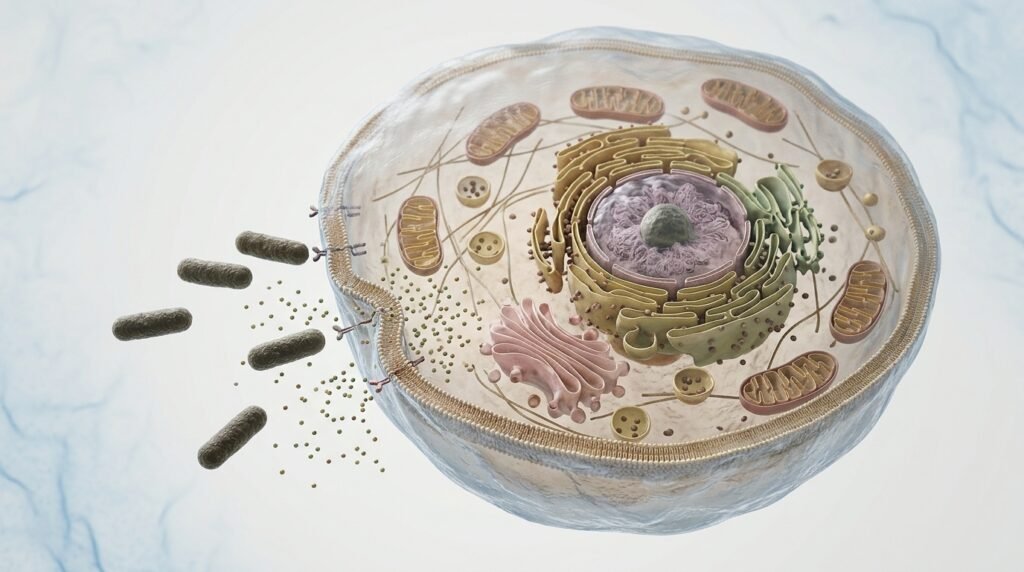
Here are some of the main processes involved.
1. Detecting a Threat
Cells can detect changes in their surroundings. These changes may come from infections, injuries, chemicals, or other harmful conditions.
The cell responds to these signals by changing its normal activities.
For example, cells can detect parts of bacteria and viruses through special proteins called pattern recognition receptors.
These receptors help the immune system identify signs of infection or damage.
2. Changing Energy Production
Mitochondria are structures inside cells that help produce energy.
During cellular stress, mitochondria may change how they use oxygen and nutrients. They may also affect the release of chemical signals.
These changes can influence how the cell responds to danger.
3. Sending Chemical Signals
Cells communicate through different chemical substances.
One important molecule is adenosine triphosphate (ATP). ATP is commonly known as the main energy-carrying molecule in cells.
However, ATP can also act as a signal when it is released outside cells.
This process is connected to purinergic signaling, which helps cells communicate with nearby cells and respond to changes in their environment.
4. Activating Defense Responses
Cells may activate several defense systems, including:
- Inflammation: Helps the body respond to injury and infection.
- Oxidative stress responses: Help cells manage reactive oxygen molecules.
- Immune signaling: Helps coordinate the body’s defense activities.
- Metabolic changes: Adjust how cells use energy and nutrients.
These activities work together to help cells respond to harmful conditions.
Example 2:
During a bacterial infection, immune cells recognize signs of bacteria and release chemical signals. These signals help bring other immune cells to the affected area.
This example shows how cellular signals support the body’s defense against infection.
What Are the Three Stages of the Cell Danger Response?
Robert Naviaux’s cell danger response model describes three main stages.
These stages explain how cells may move from an initial defense response toward repair and normal activity.
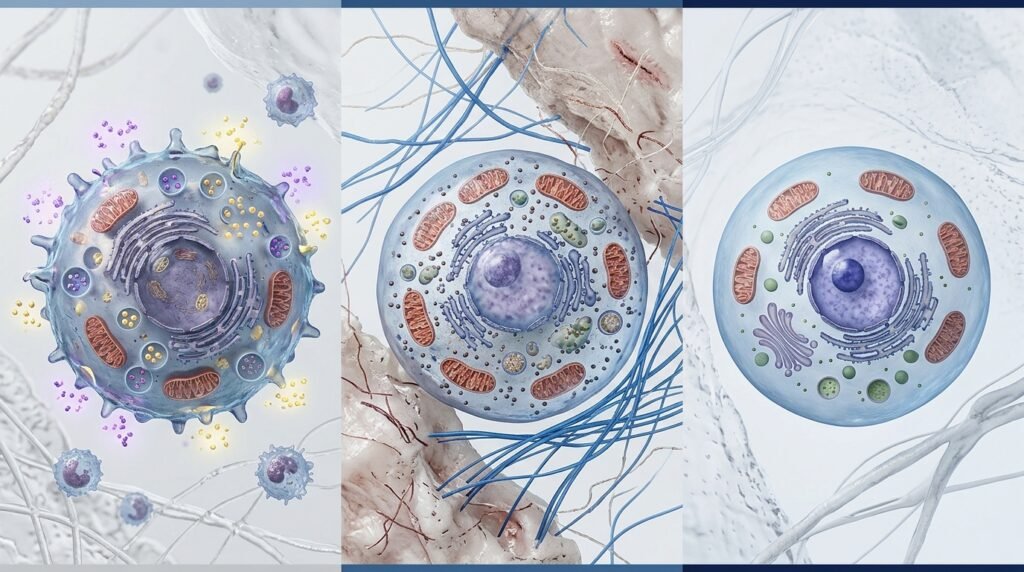
The three proposed stages are:
- CDR1: Active Defense
- CDR2: Repair and Protection
- CDR3: Recovery and Return to Normal Function
Each stage involves different cellular activities.
Stage 1: CDR1 – Active Defense
CDR1 is the first stage of the proposed cell danger response.
It begins when cells detect a harmful condition. The body starts its defense activities to manage the threat.
During this stage:
- Cells detect signs of danger.
- Chemical signals are released.
- Inflammatory activity may increase.
- Immune responses become active.
- Mitochondrial activity may change.
The goal is to help protect cells and limit further damage.
Example 3:
A person develops a viral infection. Their immune system recognizes the virus and starts producing signals that help coordinate the body’s defense response.
This example shows the type of protective activity associated with the first stage.
Stage 2: CDR2 – Repair and Protection
The second stage is called CDR2.
After the initial threat has been controlled, the body needs to repair damaged tissues and restore normal cell activity.
During this proposed stage:
- Cells begin repair activities.
- The body works to replace damaged structures.
- Inflammatory activity may change.
- Cells adjust their energy use.
- Tissue repair processes become active.
This stage helps prepare damaged areas for recovery.
Example 4:
After a person receives a minor skin injury, nearby cells begin repair activities. New tissue forms as the damaged area starts to heal.
This example illustrates the body’s natural repair process.
Stage 3: CDR3 – Recovery and Normal Function
CDR3 is the third stage in the model.
It describes the process of returning cells and tissues toward normal activities after the danger has been managed and repair has progressed.
During this stage:
- Normal cell communication is restored.
- Tissue functions continue to recover.
- Metabolic activities adjust.
- Inflammatory signals decrease when no longer needed.
- Cells return to their usual roles.
The goal is to complete the recovery process and restore normal biological activity.
Example 5:
After a minor cut has healed, the skin gradually returns to its normal appearance and protective function.
This example shows the general idea of recovery after an injury.
Important: These three stages are part of the CDR research model. They should not be treated as a standard medical test or a fixed timeline that every person follows.
What Role Do Mitochondria Play in the Cell Danger Response?
Mitochondria are small structures inside most human cells. Their best-known job is to help produce energy.
However, they also take part in several other biological activities.

These include:
- Controlling parts of cellular metabolism.
- Supporting cell communication.
- Helping regulate cell survival.
- Taking part in responses to cellular stress.
- Influencing immune and inflammatory activities.
In the cell danger response model, mitochondria have an important role because they help cells respond to changes in their environment.
When a cell experiences stress, mitochondrial activity may change. These changes can affect energy production and the release of signaling molecules.
Researchers study these processes to learn how cells respond to injury and how normal activity returns after stress.
Example 6:
When muscle cells experience intense physical activity, their energy needs increase. Mitochondria adjust their activity to help meet those energy demands.
This example shows why mitochondrial activity is closely connected to cellular energy needs.
What Is the Connection Between the Cell Danger Response and ATP?
ATP (adenosine triphosphate) is a molecule that stores and transfers energy inside cells.
It supports many activities, including muscle movement, chemical reactions, and the transport of substances across cell membranes.
However, ATP also has another role.
When ATP moves outside a cell, it can act as a chemical messenger. It can connect with special cell-surface receptors and send signals to nearby cells.
This activity is called purinergic signaling.
In the cell danger response model, extracellular ATP is one of the signals involved in communication between cells during stress and recovery.
The release and breakdown of ATP can help regulate different biological activities.
Example 7:
When cells are damaged after an injury, they may release ATP outside their membranes. Nearby cells can detect this signal and respond to the damaged area.
This example explains how ATP can work as both an energy molecule and a communication signal.
What Happens When the Cell Danger Response Continues for Too Long?
A normal defense response is useful because it helps protect cells from harmful conditions.
However, biological systems also need to return to normal activity after a threat has been controlled.
In his research, Naviaux proposed that an abnormally persistent cell danger response may interfere with the normal healing process.
This idea is linked to changes in:
- Cellular metabolism.
- Mitochondrial activity.
- Inflammatory signaling.
- Immune system communication.
- Energy use.
- Tissue repair.
Researchers are studying whether changes in these processes contribute to certain long-term health conditions.
However, the relationship is still being investigated. It is not established that persistent CDR activity causes all chronic illnesses.
Can a Persistent Cell Danger Response Cause Chronic Illness?
The CDR framework has been discussed in research involving several long-term health conditions.
These include:
- Chronic fatigue-related conditions.
- Certain inflammatory disorders.
- Post-viral health problems.
- Mitochondrial disorders.
- Some neurological conditions.
The proposed connection is that changes in cellular metabolism and signaling may affect normal tissue function.
However, these conditions have different causes and biological features. The CDR model has not been confirmed as a single cause of these illnesses.
A person with long-lasting symptoms needs a proper medical assessment rather than assuming that their cells are stuck in a danger response.
Example 8:
A person continues to experience fatigue after recovering from an infection. A healthcare professional may investigate several possible causes, including sleep problems, anemia, medication effects, and post-infection conditions.
This example shows why ongoing symptoms need a medical assessment rather than a diagnosis based on the CDR theory alone.
What Does Scientific Research Say About the Cell Danger Response?
The cell danger response has been studied in scientific papers focused on mitochondria, metabolism, inflammation, and cellular communication.
Some key research includes:
1. Robert Naviaux’s 2014 Research
In 2014, Robert Naviaux published a research paper titled Metabolic Features of the Cell Danger Response.
The paper described how cells respond to chemical, physical, and biological threats.
It discussed several processes, including:
- Changes in mitochondrial activity.
- Cellular energy production.
- Oxidative stress.
- Inflammation.
- Purinergic signaling.
- Metabolic changes during cellular stress.
This paper helped establish the scientific framework for the CDR concept.
2. Research Published in 2019
A 2019 paper titled Incomplete Healing as a Cause of Aging: The Role of Mitochondria and the Cell Danger Response explored how mitochondrial activity and incomplete healing may relate to biological aging.
The research discussed the possible role of cellular stress and metabolic changes in the aging process.
It offered a broader view of how cells respond to repeated stress over time.
3. Research Published in 2020
In 2020, Naviaux published a paper about CDR biology and its connection to environmental health.
The paper discussed how environmental conditions may affect mitochondrial activity and cellular defense responses.
It also explored the possible relationship between persistent cellular stress and long-term health problems.
4. Research Published in 2026
A clinical study published on June 30, 2026, examined a five-phase treatment protocol based on the cell danger response framework.
The study included 100 patients with chronic post-exposure illness and reported improvements in several health measures.
However, these findings need careful interpretation.
The reported results do not establish that the treatment works for everyone or that the CDR framework is a proven treatment system. Larger, well-controlled studies and independent research are needed to confirm the findings.
Is the Cell Danger Response Scientifically Proven?
Some parts of the model are based on established biology.
For example, scientists already know that:
- Cells respond to physical and chemical stress.
- Mitochondria help regulate cellular metabolism.
- ATP can act as a signal outside cells.
- Inflammation is part of the body’s defense system.
- Cells use different processes to repair damaged tissue.
However, the complete CDR framework is still a developing scientific model.
More clinical research is needed to confirm how well it explains particular diseases and whether treatments based on the model provide reliable benefits.
Can Doctors Test for the Cell Danger Response?
There is currently no widely accepted, standard clinical test that can diagnose the complete cell danger response as a medical condition.
Researchers may study different biological markers related to the model.
These can include:
- Metabolic markers: Substances that provide information about chemical activity in the body.
- Inflammatory markers: Measurements that help assess inflammatory activity.
- Mitochondrial markers: Indicators related to mitochondrial function.
- ATP-related signaling: Research measurements involving cellular communication.
However, these tests do not independently confirm that a person has a persistent cell danger response.
Doctors usually select medical tests based on a person’s symptoms, medical history, and possible health conditions.
A healthcare professional can also help rule out other causes of fatigue, pain, inflammation, or other ongoing symptoms.
How Can You Support Normal Cellular Health?
The CDR is a research framework, not a condition that people can diagnose or treat on their own.
Still, several general health habits support normal body function and cellular health.
1. Eat a Balanced Diet
Your body needs nutrients to support normal cellular activities.
Include foods such as:
- Fresh vegetables.
- Fruits.
- Whole grains.
- Beans and lentils.
- Nuts and seeds.
- Fish and other healthy protein sources.
A balanced diet helps provide the nutrients your body needs for normal metabolism.
2. Get Enough Sleep
Sleep supports several body processes, including tissue repair, immune activity, and normal metabolism.
Most adults need at least seven hours of sleep each night.
Try to maintain a regular sleep schedule and create a comfortable sleeping environment.
3. Stay Physically Active
Regular physical activity supports cardiovascular health, muscle function, and metabolic health.
Walking, cycling, swimming, and other suitable activities can help maintain general fitness.
Choose activities that match your health and fitness level.
4. Avoid Smoking
Smoking exposes the body to harmful chemicals and can damage cells and tissues.
Avoiding tobacco products supports better overall health.
5. Manage Ongoing Health Problems
Long-term health conditions may affect many body systems.
Follow medical advice, attend recommended checkups, and discuss ongoing symptoms with a qualified healthcare professional.
Do not use unproven supplements or treatments to try to switch off the cell danger response.
Example 9:
A person who wants to improve their general health starts walking regularly, eats more vegetables, maintains a sleep schedule, and attends routine medical appointments.
These habits support overall health, although they are not proven treatments for the cell danger response.
Is Cell Danger Response Treatment Available?
There is no universally accepted treatment specifically approved to switch off or reverse the cell danger response.
Researchers are studying different approaches related to mitochondrial function, cellular metabolism, and purinergic signaling.
One research area involves antipurinergic therapy (APT), which explores ways to influence purinergic signaling.
Some early findings have been reported in laboratory and animal studies. Clinical research is also developing, but this does not mean these treatments are established solutions for human diseases.
People should be careful with products or programs that promise to reset mitochondria, remove a cell danger response, or cure several chronic conditions through one treatment.
Always discuss treatment decisions with a qualified healthcare professional.
FAQs About the Cell Danger Response
1. What does cell danger response mean?
The cell danger response (CDR) describes how cells change their activities when they face harmful conditions. It involves mitochondria, cellular metabolism, inflammation, and chemical signals that help cells respond to threats.
2. Who developed the cell danger response theory?
Robert K. Naviaux, a researcher in mitochondrial and metabolic biology, developed the cell danger response framework. His research describes how cells respond to threats and how these responses may relate to healing.
3. What are the three stages of the cell danger response?
The three proposed stages are:
- CDR1: Active defense.
- CDR2: Repair and protection.
- CDR3: Recovery and normal function.
These stages describe the proposed progression of cellular responses after a threat.
4. What role do mitochondria play in the cell danger response?
Mitochondria help cells produce energy and respond to changes in their surroundings. In the CDR model, they also influence cellular metabolism, stress responses, and communication between cells.
5. Is the cell danger response a disease?
No. The cell danger response is a scientific framework, not a recognized disease or a standard medical diagnosis. It describes biological activities that occur when cells respond to threats.
6. Can the cell danger response stay active for too long?
According to the CDR model, an abnormal or prolonged response may interfere with normal cellular activities and healing. However, more research is needed to confirm how this process relates to specific human diseases.
7. Is there a blood test for the cell danger response?
There is currently no widely accepted blood test that can diagnose the complete CDR. Researchers study different metabolic and inflammatory markers, but these measurements do not provide a confirmed CDR diagnosis.
8. Is the cell danger response connected to chronic fatigue?
Researchers have explored possible links between the CDR framework, mitochondrial activity, and chronic fatigue-related conditions. However, the CDR has not been established as the cause of chronic fatigue syndrome.
9. What is purinergic signaling in the cell danger response?
Purinergic signaling is a form of cell communication involving molecules such as ATP and ADP. These molecules can interact with receptors on cell surfaces and influence activities such as inflammation and immune signaling.
10. Can lifestyle changes reverse the cell danger response?
There is no strong clinical evidence that lifestyle changes can directly reverse the CDR. However, healthy eating, regular sleep, suitable exercise, and medical care support general health and normal body function.
Conclusion
The cell danger response is a scientific framework that explains how cells respond to harmful conditions and adjust their normal activities to protect themselves.
Its three proposed stages, CDR1, CDR2, and CDR3, describe active defense, repair, and recovery. The framework also highlights the role of mitochondria, ATP, cellular metabolism, and purinergic signaling.
Research has helped scientists learn more about how these processes work together. However, many questions remain about the connection between the complete CDR model and long-term human illnesses.
The best approach is to treat the cell danger response as an area of ongoing scientific research rather than a confirmed diagnosis or a treatment plan. If you have ongoing symptoms, speak with a qualified healthcare professional to find their cause and discuss suitable care.

Emily Carter (Content Writer & Communication Specialist) is a content writer and communication specialist at AllTypeInfo.com. She writes clear, practical, and easy-to-follow guides on email responses, message replies, writing templates, and everyday communication tips. Her goal is to help readers communicate with confidence in both personal and professional settings.