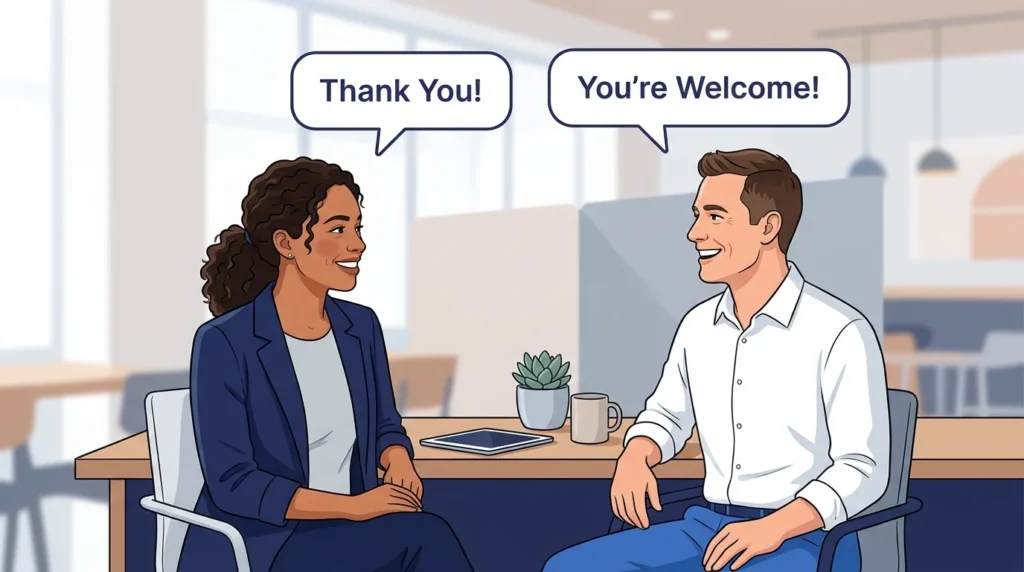
When someone says thank you, replying with you’re welcome is polite and perfectly correct. However, you can use many other phrases to sound more friendly, warm, professional, or casual. The best choice depends on what the person is thanking you for and how well you know them.
Whether you’re replying to a coworker, helping a friend, answering a customer, or sending a quick text, having a few alternatives makes everyday conversations feel more natural. Below are 35 different ways to say you’re welcome, along with examples that show when each phrase works best. Learning a few polite replies for everyday conversations can help you respond naturally to thank-you messages, greetings, and other common social situations.
Key Takeaways
- My pleasure sounds polite and professional.
- No problem works well in casual conversations.
- Happy to help shows a friendly attitude.
- Anytime suggests you’re willing to help again.
- Don’t mention it makes a small favor feel less formal.
- Glad I could help expresses sincere kindness.
- Match your reply to the person and situation.
1. Common and Polite Ways to Say You’re Welcome
These phrases work in everyday conversations, at school, at work, and when speaking with people you don’t know well.
1. My Pleasure
This phrase shows that you were happy to help. It sounds polite and warm without being too formal.
Example:
Person A: Thank you for helping me with my presentation.
Person B: My pleasure!
Best for: Work, customer service, and thoughtful favors.
2. You’re Very Welcome
This is a friendly way to accept someone’s thanks. It works especially well when the person seems very grateful.
Example:
Person A: Thank you so much for your help.
Person B: You’re very welcome!
Best for: Friends, coworkers, customers, and guests.
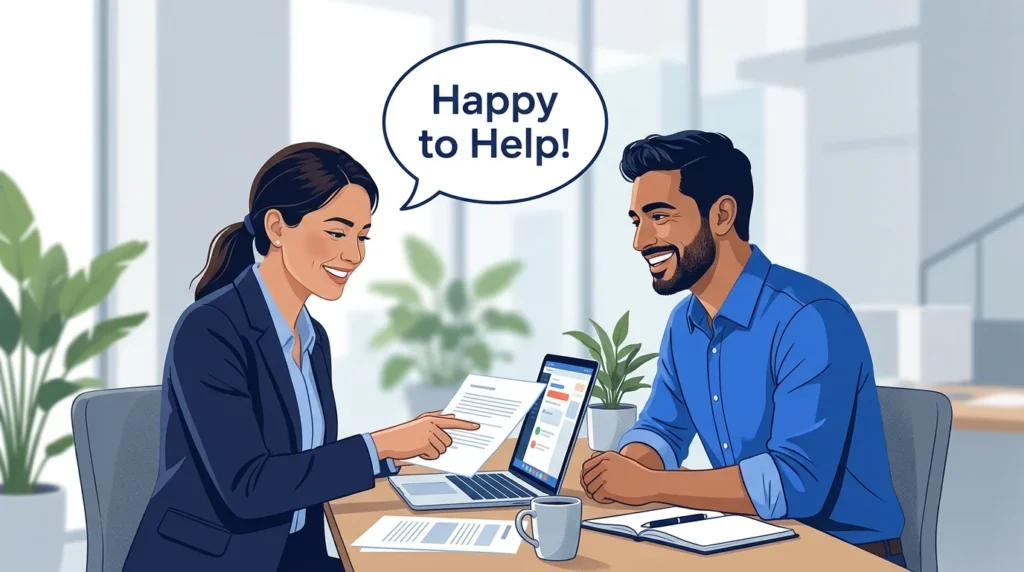
3. Happy to Help
Use this phrase when you want someone to know that helping them was no trouble.
Example:
Person A: Thanks for explaining the assignment.
Person B: Happy to help!
Best for: School, work, and everyday favors.
4. Glad I Could Help
This phrase shows that you’re pleased your help made a difference.
Example:
Person A: Thanks for helping me fix my computer.
Person B: Glad I could help!
Best for: Solving problems and giving useful advice.
5. Of Course
This short reply makes helping someone sound natural and easy.
Example:
Person A: Thank you for lending me your notes.
Person B: Of course!
Best for: Friends, family, and familiar coworkers.
6. Anytime
This phrase tells the other person that you would be happy to help again.
Example:
Person A: Thanks for giving me a ride home.
Person B: Anytime!
Best for: Friends, relatives, and people you regularly help.
7. Don’t Mention It
This expression means the favor was small enough that the other person doesn’t need to make a big deal about it.
Example:
Person A: Thanks for holding the door open.
Person B: Don’t mention it!
Best for: Small favors and casual conversations.
8. No Problem at All
This phrase reassures someone that helping them wasn’t a burden.
Example:
Person A: Thank you for staying late to help me.
Person B: No problem at all!
Best for: Friendly conversations and relaxed workplace exchanges.
2. Casual Ways to Say You’re Welcome
Use these expressions with friends, family, classmates, or coworkers you know well. Some are very informal, so they may not suit every business setting.
9. No Problem
A simple, relaxed reply that means you didn’t mind helping.
Example:
Person A: Thanks for sharing your charger.
Person B: No problem!
Best for: Everyday conversations.
10. No Worries
This phrase tells someone there’s nothing to worry about. It sounds friendly and relaxed.
Example:
Person A: Thanks for waiting for me.
Person B: No worries!
Best for: Friends, family, and informal chats.
11. Sure Thing
This is an easygoing way to respond to someone’s thanks.
Example:
Person A: Thanks for sending me the pictures.
Person B: Sure thing!
Best for: Friends and casual work conversations.
12. You Got It
This upbeat phrase shows that helping was easy and you’re glad to do it.
Example:
Person A: Thanks for picking up my package.
Person B: You got it!
Best for: Friends, teammates, and familiar coworkers.
13. No Big Deal
Use this phrase to show that you don’t think the favor was a major effort.
Example:
Person A: Thanks for helping me carry these bags.
Person B: No big deal!
Best for: Small favors between people who know each other.
14. No Sweat
This informal expression means the task was easy or caused no trouble.
Example:
Person A: Thanks for fixing the settings on my phone.
Person B: No sweat!
Best for: Relaxed conversations with friends.
15. You Bet
This friendly American expression is a casual way to acknowledge someone’s thanks.
Example:
Person A: Thanks for saving me a seat.
Person B: You bet!
Best for: Informal conversations and friendly exchanges.
16. All Good
This short phrase reassures the other person that everything is fine.
Example:
Person A: Thanks for waiting while I finished my call.
Person B: All good!
Best for: Texts, friends, and relaxed conversations.
17. It’s All Right
This phrase works when you want to reassure someone that their request or small inconvenience was fine.
Example:
Person A: Thanks for letting me borrow your pen.
Person B: It’s all right!
Best for: Everyday situations and polite conversations.
18. Don’t Worry About It
This expression tells someone that the favor didn’t bother you.
Example:
Person A: Thanks for helping me clean up.
Person B: Don’t worry about it!
Best for: Friends, family, and informal situations.
19. Not a Problem
This is another relaxed way to say that helping was no trouble.
Example:
Person A: Thanks for answering my question.
Person B: Not a problem!
Best for: Everyday conversations and casual work chats.
3. Professional Ways to Say You’re Welcome
In the workplace, your reply can be polite without sounding stiff. These expressions work well with managers, coworkers, clients, and customers.
20. It Was My Pleasure
This is a slightly more formal version of my pleasure. It shows that you were glad to assist.
Example:
Person A: Thank you for arranging the meeting.
Person B: It was my pleasure.
Best for: Clients, business meetings, and formal conversations.
21. I’m Glad I Could Assist
This phrase sounds professional and shows that your help was useful.
Example:
Person A: Thank you for helping us complete the report.
Person B: I’m glad I could assist.
Best for: Business emails and workplace conversations.
22. Certainly
This short, polite response works when you have completed a request.
Example:
Person A: Thank you for sending the updated document.
Person B: Certainly. Let me know if you need anything else.
Best for: Customer service and formal workplace exchanges.
23. You’re Most Welcome
This expression adds warmth and formality to a standard reply.
Example:
Person A: Thank you for your time today.
Person B: You’re most welcome.
Best for: Formal meetings, client interactions, and hospitality.
24. I’m Happy to Help
This phrase sounds friendly and professional at the same time.
Example:
Person A: Thank you for walking me through the process.
Person B: I’m happy to help.
Best for: Coworkers, customers, and professional support.
25. I’m Pleased I Could Help
This phrase expresses satisfaction that your help was useful.
Example:
Person A: Thank you for helping us find a solution.
Person B: I’m pleased I could help.
Best for: Formal conversations and business communication.
26. It Was No Trouble at All
Use this phrase to reassure someone that helping them did not cause any inconvenience.
Example:
Person A: Thank you for staying a little longer.
Person B: It was no trouble at all.
Best for: Workplace favors and polite personal exchanges.
27. I’m Glad It Was Helpful
This reply focuses on the value of the help rather than the effort you made.
Example:
Person A: Thanks for your feedback on the proposal.
Person B: I’m glad it was helpful.
Best for: Emails, project discussions, and professional advice.
28. Happy to Be of Help
This phrase is courteous and slightly formal. It works well when you want to sound respectful.
Example:
Person A: Thank you for explaining the new process.
Person B: Happy to be of help.
Best for: Customer support and formal work conversations.
4. Heartfelt and Thoughtful Ways to Say You’re Welcome
Some favors mean more than others. When you’ve supported someone through a difficult time or done something meaningful, a warmer response may feel more natural.
29. It Was the Least I Could Do
This phrase shows that you felt helping was the right thing to do.
Example:
Person A: Thank you for helping me move after a difficult week.
Person B: It was the least I could do.
Best for: Meaningful favors and close relationships.
30. Anytime, I’m Here for You
This response shows care and a willingness to offer support again.
Example:
Person A: Thanks for listening when I needed someone to talk to.
Person B: Anytime, I’m here for you.
Best for: Friends, family, and people who need support.
31. That’s What Friends Are For
This expression reminds someone that friendship includes helping each other.
Example:
Person A: Thanks for helping me through this week.
Person B: That’s what friends are for!
Best for: Close friends and supportive relationships.
32. I Was Happy to Do It
This phrase makes it clear that you helped willingly.
Example:
Person A: Thank you for planning my birthday dinner.
Person B: I was happy to do it.
Best for: Special occasions and thoughtful gestures.
33. You’d Do the Same for Me
This response suggests that you trust the other person would help you, too.
Example:
Person A: Thank you for helping me prepare for the interview.
Person B: You’d do the same for me.
Best for: Close friends and supportive coworkers.
34. I’m Always Here to Help
This phrase communicates ongoing support. Use it when you genuinely mean that you’re available to help again.
Example:
Person A: Thanks for helping me learn the new system.
Person B: I’m always here to help.
Best for: Mentors, teammates, friends, and family.
35. The Pleasure Was Mine
This polite expression places the focus on the positive experience you had while helping or spending time with someone.
Example:
Person A: Thank you for taking the time to meet with me.
Person B: The pleasure was mine.
Best for: Professional meetings, introductions, and formal social events.
5. Which Alternative Should You Choose?
The right phrase depends on the setting, your relationship, and the amount of help you gave.
| Situation | Best phrase | Tone |
|---|---|---|
| A friend thanks you | No problem | Casual |
| A coworker thanks you | Happy to help | Professional and friendly |
| A customer thanks you | My pleasure | Polite |
| Someone thanks you warmly | You’re very welcome | Warm |
| A friend thanks you for support | Anytime, I’m here for you | Caring |
| Someone thanks you for a small favor | Don’t mention it | Relaxed |
| A client thanks you after a meeting | The pleasure was mine | Formal |
| Someone thanks you over text | No worries | Casual |
A Simple Rule for Choosing Your Reply
- Formal setting: Choose my pleasure or you’re very welcome.
- Casual setting: Choose no problem or sure thing.
- Emotional support: Choose I’m here for you.
- Professional email: Choose happy to help.
- Future favors: Choose anytime.
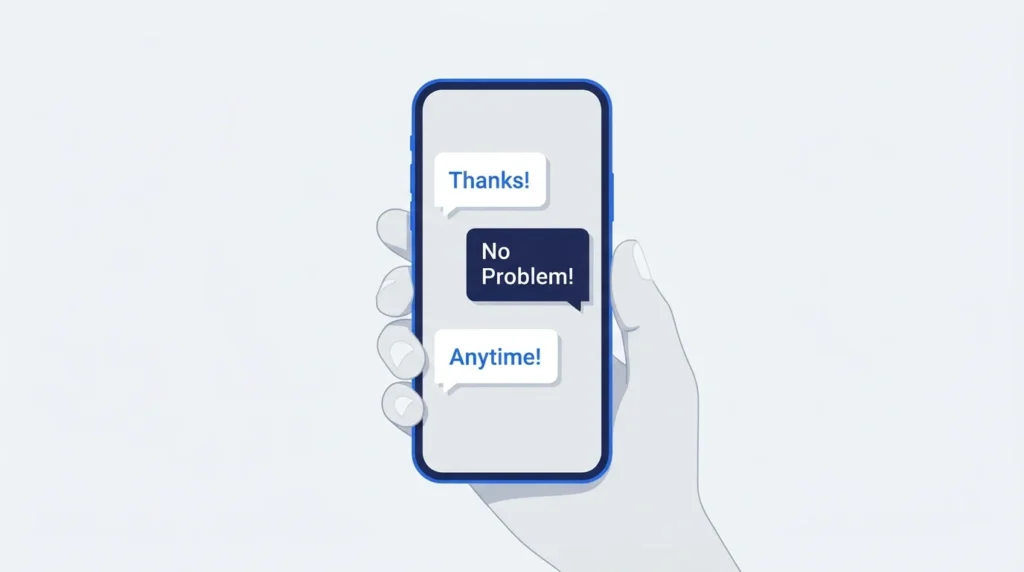
6. Different Ways to Say You’re Welcome in a Text
Text messages often work best with short, natural replies. You don’t need a long sentence after every thank-you.
Here are some options you can copy and send.
- YW: Short for you’re welcome.
- NP: Short for no problem.
- Anytime! Friendly and open.
- Of course 😊: Warm and casual.
- Happy to help! Friendly and polite.
- No worries! Relaxed and reassuring.
- You got it! Cheerful and informal.
- Glad I could help! Kind and sincere.
Text Message Examples
Example 1: A friend thanks you for sending notes.
Friend: Thanks for sending me your class notes!
You: Of course! 😊
Example 2: Someone thanks you for a quick favor.
Friend: Thanks for picking up my coffee.
You: NP!
Example 3: A coworker thanks you for sharing a file.
Coworker: Thanks for sending the updated file.
You: Happy to help!
Example 4: A friend thanks you for emotional support.
Friend: Thanks for listening to me last night.
You: Anytime. I’m here for you.
Use abbreviations like YW and NP with people who are comfortable with texting shortcuts. For business messages, complete phrases usually look more professional.
7. Common Mistakes to Avoid
Choosing the right words is useful, but your tone matters, too. A phrase that sounds friendly with a close friend may feel too casual with a customer.
- Using slang in formal emails: Choose my pleasure instead.
- Sounding dismissive: Add a warm phrase when needed.
- Making promises you can’t keep: Use anytime only when you mean it.
- Downplaying a major favor: Thank the person for their appreciation.
- Repeating the same reply: Choose a phrase that fits the situation.
- Writing “your welcome”: Use “you’re welcome,” meaning “you are welcome.”
Is “No Problem” Rude?
No. No problem is a common, friendly response to thanks in American English. It usually means that helping someone was not an inconvenience.
However, some formal situations call for a more polished reply. If a client thanks you for completing important work, my pleasure or I’m glad I could help may fit better.
Is “My Pleasure” Better Than “You’re Welcome”?
Neither phrase is always better. You’re welcome is a safe choice in almost any setting. My pleasure adds a little warmth and suggests that you were happy to help.
Choose the expression that feels natural for the situation.
8. Quick Checklist: Choosing the Right Words
Use this checklist before replying to someone who thanks you.
- Consider who you’re speaking to.
- Decide whether the setting is formal or casual.
- Think about the favor you provided.
- Choose a phrase that matches your tone.
- Keep your reply short and sincere.
- Avoid promises you don’t intend to keep.
Frequently Asked Questions
1. What are the best different ways to say you’re welcome?
Some of the most useful choices are my pleasure, happy to help, anytime, no problem, of course, and glad I could help. Each works in a slightly different situation.
2. What is a professional way to say you’re welcome?
My pleasure, I’m glad I could assist, and happy to help are good choices for work emails and conversations. They sound polite without being overly formal.
3. How can I say you’re welcome in a friendly way?
Try no worries, anytime, of course, or that’s what friends are for. These phrases work well with friends and family.
4. What is a short way to say you’re welcome in a text?
You can write YW, NP, anytime, or of course. Use abbreviations with friends and familiar contacts, and use complete phrases for formal messages.
5. Is “no worries” a polite response to thank you?
Yes. No worries is friendly and polite in most casual situations. For a formal email or an important client exchange, a phrase like my pleasure may fit better.
6. Can I say “my pleasure” to my boss?
Yes. My pleasure is polite and suitable for a boss, manager, or coworker. It works well after you’ve helped with a task or shared useful information.
7. What should I say when someone thanks me for a big favor?
Choose a warm response such as I was happy to do it or I’m always here to help. You can also mention that you’re glad your help made a difference.
8. Is it okay to say nothing after someone says thank you?
In some casual situations, a smile or nod is enough. However, a short verbal reply is a good way to acknowledge someone’s gratitude when a response is expected.
Conclusion
There are many different ways to say you’re welcome, from simple replies like no problem and of course to professional expressions like my pleasure and I’m glad I could assist. The best choice depends on the person, the setting, and the kind of help you offered.
You don’t need to memorize all 35 phrases. Start with a few that feel natural, then use others as the situation calls for them. A short, sincere response is often all you need to make a conversation feel friendly and polite.

Emily Carter (Content Writer & Communication Specialist) is a content writer and communication specialist at AllTypeInfo.com. She writes clear, practical, and easy-to-follow guides on email responses, message replies, writing templates, and everyday communication tips. Her goal is to help readers communicate with confidence in both personal and professional settings.